Ruffled Feathers Parrot Sanctuary Inc.
Where Hope Takes Flight


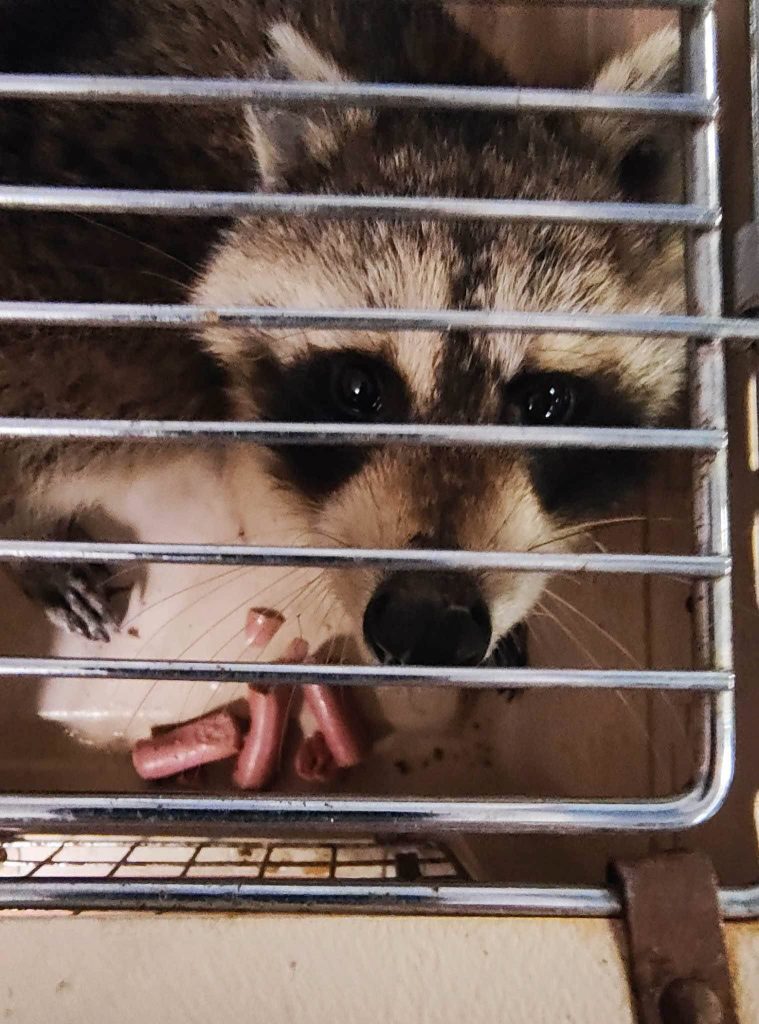
Volunteer Races to Save Injured Raccoon From Busy Street
This rescue of a raccoon hit by a car started tonight with a call about an injured raccoon still lying in the middle of a busy street.
Thankfully, one of our dedicated volunteers stepped in and was able to get the injured raccoon out of the roadway and somewhere safe for the night. Sometimes that first little bit of help makes all the difference. Getting an injured animal out of traffic keeps it from being struck again and gives us a chance to figure out what is actually going on.
When a raccoon hit by a car cannot use its back legs, there is always concern about spinal, pelvic or other serious injuries, so we will know more once it can be properly evaluated.
Our employee Chris is keeping an eye on it until I can get back there myself in about an hour. Once I can put eyes on the raccoon and get a better idea of what we are dealing with, we will know more about what needs to happen next.
I am hoping this is simply the result of being hit by the car. After some of the things we have seen come through here, there is always that little thought in the back of my mind that there could be more to the story. I certainly hope that is not the case.
I will update this post once I know more. For additional guidance on what to do when you find a raccoon that may need help, the Tufts Wildlife Clinic offers helpful information about determining when intervention may be necessary.
What Should You Do If You Find a Raccoon Hit by a Car?
An injured raccoon rescue can become dangerous very quickly if someone tries to help without knowing what to do.
Your first instinct may be to run over, pick the animal up and get it somewhere safe. I understand that instinct completely. You see an animal suffering and you want to help.
But with raccoons, helping safely is important for both you and the animal.
Whenever possible, observe the raccoon from a safe distance and contact a licensed wildlife rehabilitator, wildlife rescue organization or local animal control agency for guidance.
Keep Yourself, Pets and the Raccoon Safe
Do not attempt to grab an injured raccoon with your bare hands.
Even a raccoon that normally wants absolutely nothing to do with people may bite or scratch when it is frightened, injured or in pain. Wild animals do not understand that you are trying to help them.
Keep children and pets away from the area as well.
If the raccoon is in immediate danger from traffic or another hazard, contact someone experienced with wildlife capture before attempting to move it yourself whenever that is possible.
Take a Good Look Before Taking Action
From a safe distance, try to gather as much information as you can.
Is the raccoon bleeding? Does it appear unable to walk? Is it dragging one or more legs? Is it extremely lethargic? Does it appear confused or behave in a way that seems unusual?
Also try to determine whether you are looking at an adult or a young raccoon.
If you can safely take a photo or short video without approaching the animal, that can be extremely helpful. We deal with this all the time during wildlife rescue calls. A picture can often tell us quite a bit before anyone ever heads out the door.
It can also help prevent a simple problem we run into surprisingly often: the animal on the other end of the call sometimes turns out not to be the animal we were told it was.
Wildlife keeps things interesting.
Finding Help for an Injured Raccoon After a Car Accident
During an injured raccoon rescue, knowing who to contact can make all the difference. Reach out to a wildlife rehabilitation center, wildlife rescue organization or animal control agency in your area.
Tell them:
Where the raccoon is located
Whether it appears to be an adult or baby
What injuries or unusual behavior you can see
Whether it is in immediate danger
Whether you have a photograph or video
Whether the animal has already been moved
The more information we have, the easier it is to figure out what kind of response is needed.
Please Do Not Feed a Raccoon Hit by a Car
This is a big one.
Please do not give an injured or orphaned raccoon food or water unless a qualified wildlife rehabilitator specifically tells you to do so.
People usually do this because they are trying to be kind. Unfortunately, feeding an injured wild animal can sometimes make treatment more difficult or create additional problems.
The best thing you can usually give an injured raccoon is a quiet, safe environment while you wait for professional guidance.
What About Baby Raccoons?
Where Hope Takes Flight
Finding a baby raccoon alone does not automatically mean it has been abandoned.
Watch from a safe distance when circumstances allow and contact a wildlife rehabilitator before removing it. The mother may still be nearby or may return.
A baby that is obviously injured, cold, continuously crying, weak or in immediate danger is a different situation and deserves prompt attention.
Again, this is where a phone call, text, picture or video can save everybody a lot of guessing.
Some of our related content:


Where Hope Takes Flight