The Little Red Menace: A Cardinal Horror Story
Ruffled Feathers Parrot Sanctuary Inc.
Where Hope Takes Flight


Ruffled Feathers Parrot Sanctuary • March 14, 2025
The Little Red Menace
She weighed one ounce. She wanted blood.
She weighed about an ounce, she had just hit a window, and she still nearly took a volunteer’s finger home with her.
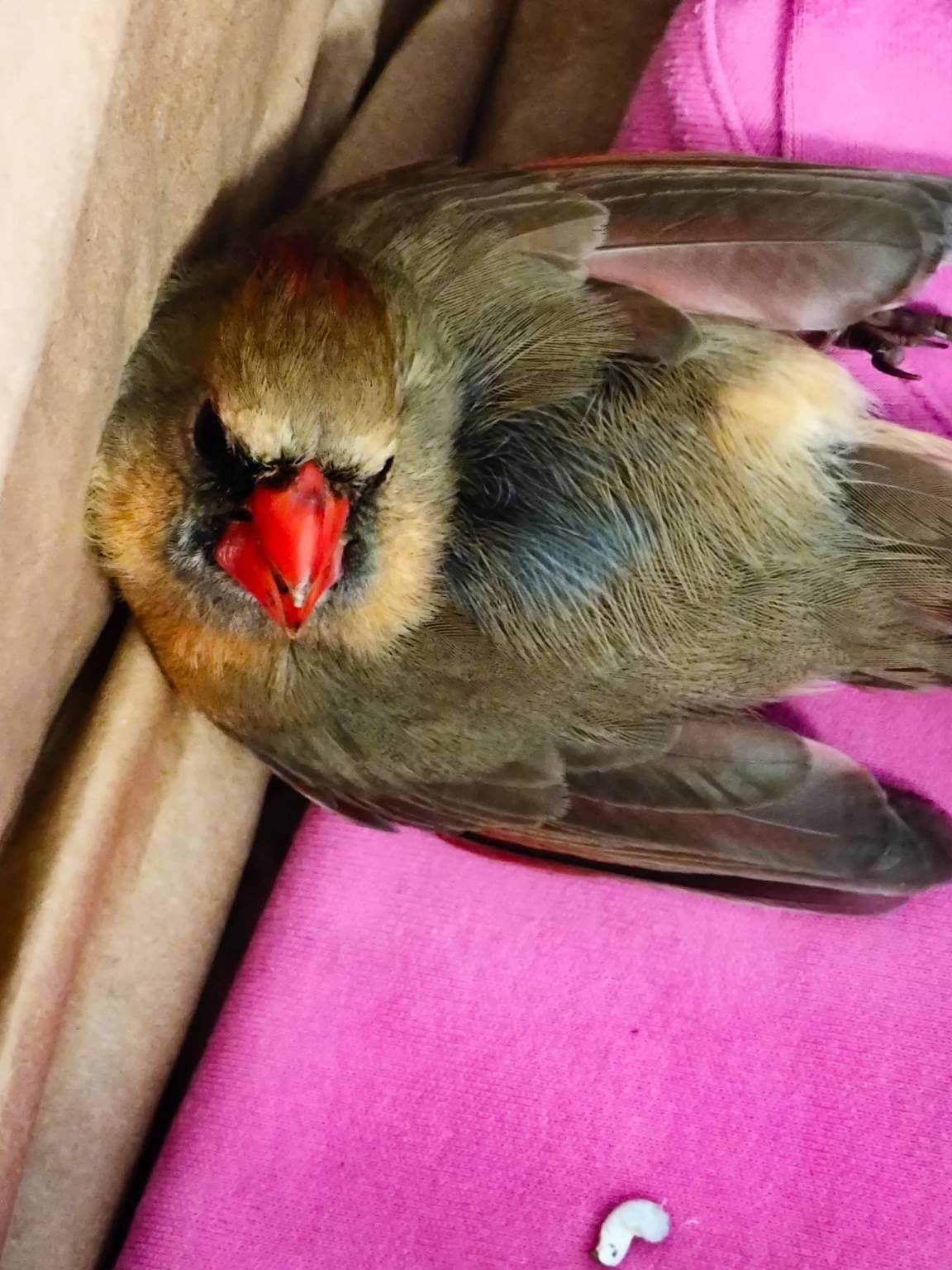
An injured cardinal after a window strike may not sound like one of wildlife rescue’s more dangerous encounters. Some people wrestle alligators. Some people go nose to nose with a cornered raccoon. And then there is our volunteer, who nearly lost a finger to a one-ounce songbird.
This is the story of Cardinal Rule #1: don’t get bit. We learned it the way most rules get learned around here. Too late.
Act I: The Fall
It started with a stunning female Northern Cardinal who found herself in trouble. She was down on the ground, dazed and unable to fly, most likely the victim of a window strike. As it turns out, cardinals are not great at telling the difference between open sky and a freshly cleaned sliding door.
Our volunteer did what we always do. She moved in to help.
Act II: The Bite
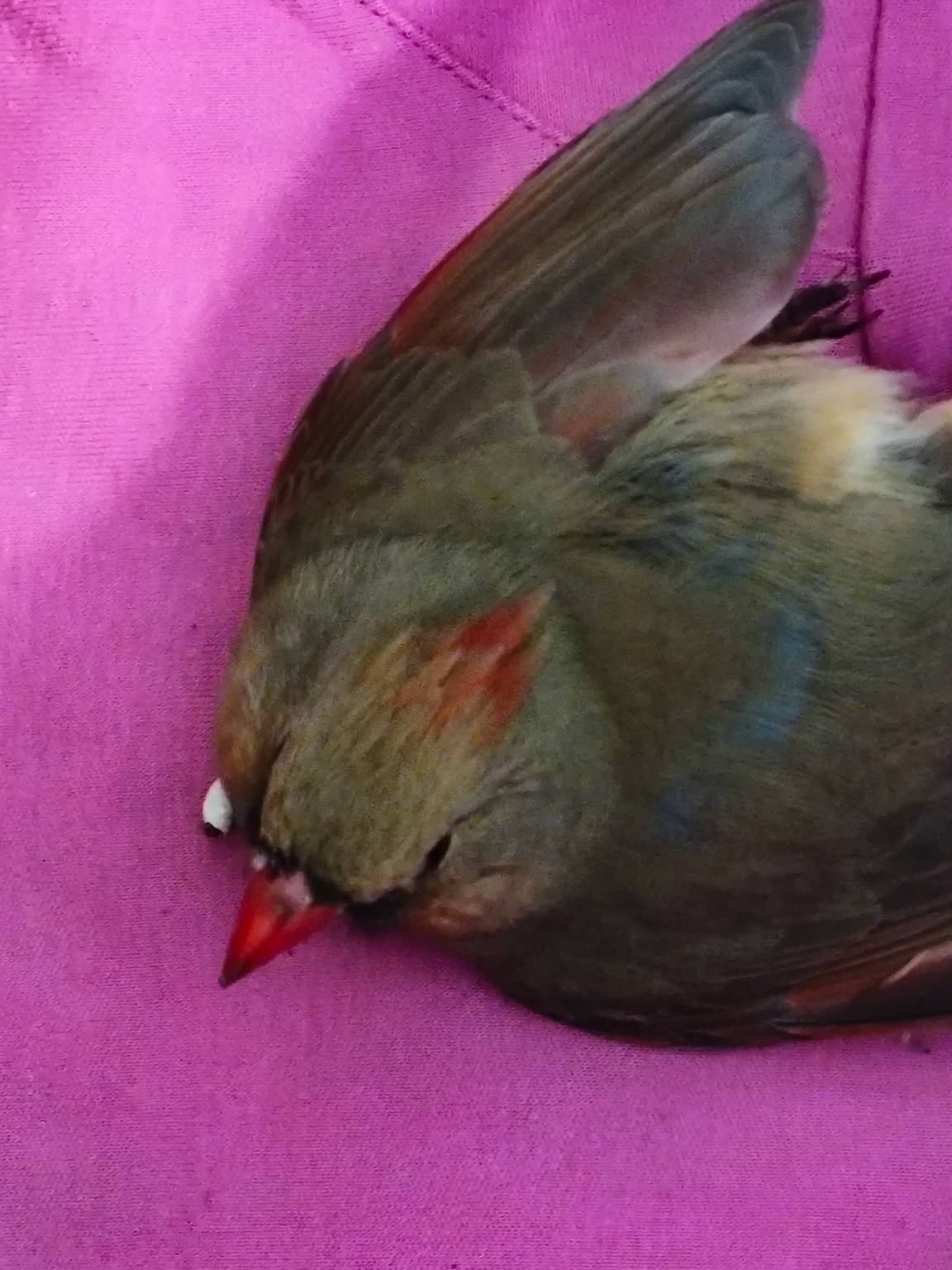
There is one thing you should know about cardinals. They are absolute savages.
This bird may have been injured, but that did not stop her from delivering a bite with the strength of a tiny, furious vise grip. That thick orange beak is built for cracking hard seeds all day long, and it does not care whether the thing between its jaws is a sunflower seed or a person who is trying to save its life.
If you have never had the pleasure of being bitten by a cardinal, imagine getting your finger stuck in a nutcracker. One with a bad attitude and a personal vendetta against you. And once they latch on? They don’t let go.
(Yes, our volunteer is fine. No, she will never trust a cardinal again.)
Imagine your finger in a nutcracker. One with a bad attitude and a personal vendetta against you.
Act III: The Examination Room
Once the very one-sided fight was over, we were able to properly assess our little red menace. Thankfully, she avoided any fractures. Wings checked out, legs checked out, and that beak was obviously in working order.
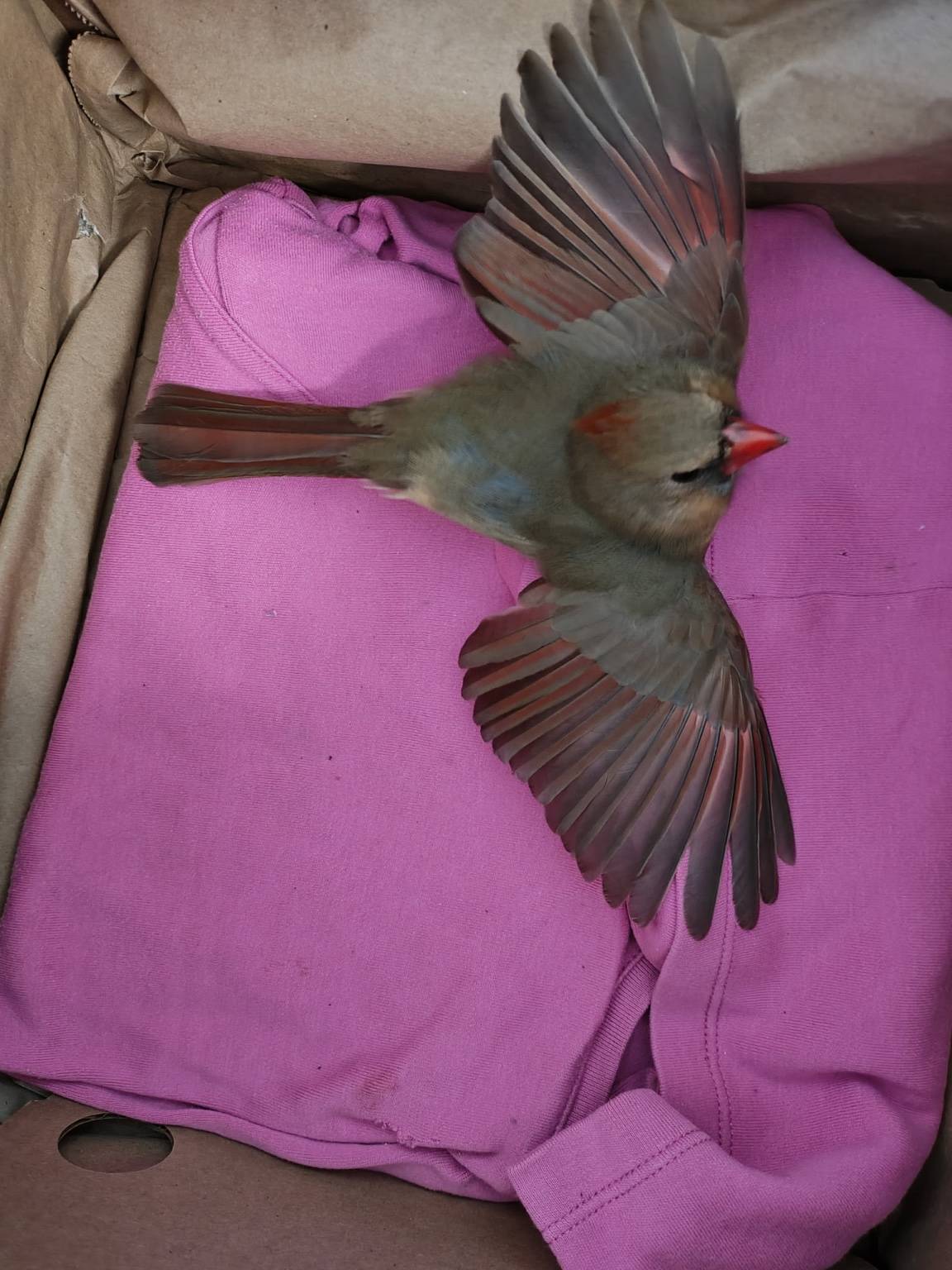
She does have signs of head trauma, which is common after a hard hit on glass, so she needs a little TLC before she is ready to go back to the wild. For now she is resting (plotting revenge, probably) with plenty of food, water, and quiet, safe space to recover.
Why Cardinals and Windows Don’t Mix
Glass is invisible to birds. A clean window reflects sky and trees, so to a cardinal it looks like more yard to fly into. Window collisions kill an enormous number of birds in North America every year, and plenty of the ones that survive end up exactly where this girl did: stunned on the ground, waiting for whatever finds them first.
Cardinals have a second problem. Come spring they get territorial, and both males and females will spot their own reflection and decide it is a rival. Some will fight that “intruder” for days. If you have ever had a cardinal tapping at your window at sunrise, now you know. It is not a visit. It is a challenge.
Five Ways to Survive the Night
Seal the portals: prevent window strikes. Bird-safe decals, screens, or exterior film break up the reflection. So does a good layer of dirt on your glass. We won’t judge. How to stop window collisions
Do not feed the beast: beware the bitey ones. Seriously. If you ever have to handle a cardinal, assume it is going to try to take a chunk out of you. Use a towel, keep your fingers clear of the beak, and get the bird into a ventilated box fast. You have been warned.
Build a safe house: give them good hiding spots. Cardinals love thick shrubs like elderberry, holly, and dogwood. Planting native greenery keeps them safe, fed, and happy. Find native plants for your zip code
Know your hunters: keep cats indoors or in a catio. A single outdoor cat can wipe out a shocking number of songbirds. Keeping cats contained protects your cat and the local wildlife at the same time. Cat-friendly options that work
Know who to call: find your local wildlife rehabbers. If you find an injured bird, knowing who to call saves precious time. Put a number in your phone today, before you need it. Find a rehabber near you
Epilogue: She’s Still Out There
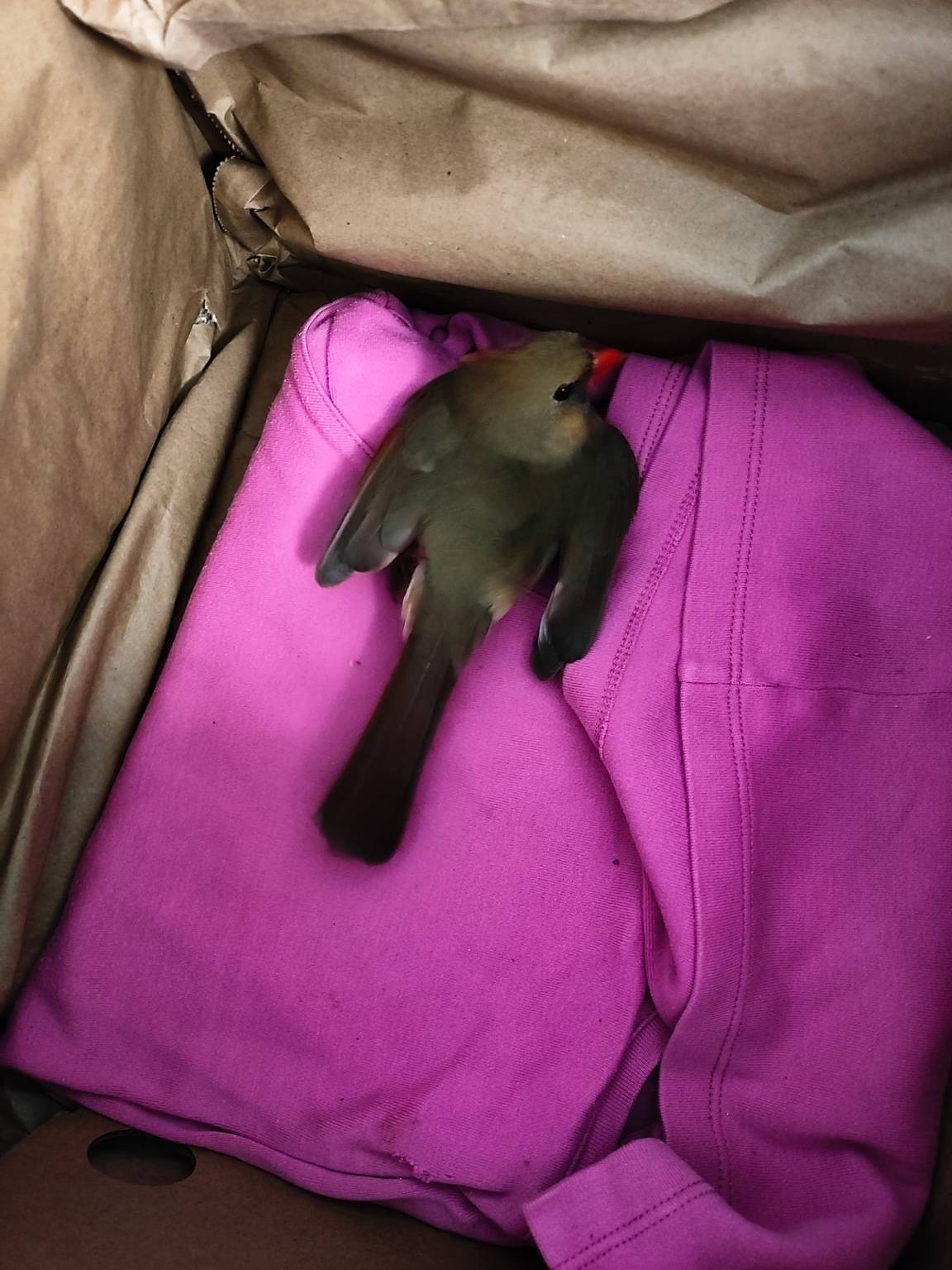
Our fiery little warrior is headed to Broadbent Wildlife, where she will stay until she is back to full strength (and maybe a little less homicidal).
Once she is cleared, she will be released back into the wild, where she can go bite someone else.
Coming soon: Cardinal 2: She Bites Back
Stay tuned for updates. And please, send thoughts and prayers to our volunteer’s finger.
Respectfully, and from a safe distance.
From all of us at Ruffled Feathers.
Related Reading
When Time Runs Out: A Juvenile Cardinal’s Final Hours and the Hidden Toll of Outdoor Cats
Heroes in the Classroom and on the Field
Community Heroes Save Injured Raccoon
#RFPSInc #BroadbentWildlife #ReelTimeAnimalRescue #BewareTheBite #CardinalsAreSavage #WildlifeRescue
Every rescue like this one starts with somebody willing to risk a finger for a bird they have never met.
Where Hope Takes Flight
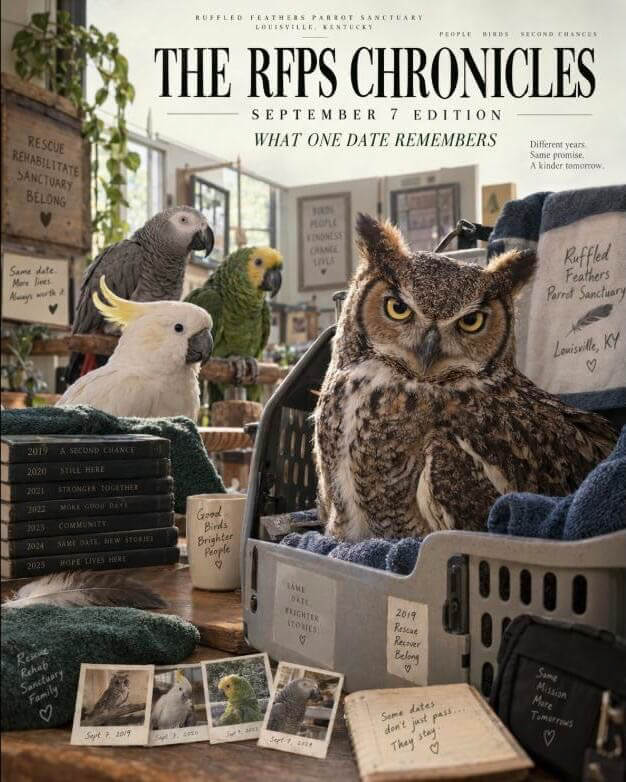
The RFPS Chronicles: What One Date Remembers
Ruffled Feathers Parrot Sanctuary Inc.
Where Hope Takes Flight
September 7 Edition
The RFPS Chronicles
What One Date Remembers
A decade of rescue, recovery, personality, and the ordinary moments that became history
Collector’s Edition No. 002
Ruffled Feathers Parrot Sanctuary Inc.
Hope Takes Flight for Parrots and Wildlife
About This Edition
The RFPS Chronicles is a long-form documentary publication and historical archive created by Ruffled Feathers Parrot Sanctuary Inc. to preserve the stories, animals, people, lessons, humor, rescue work, and ordinary moments that might otherwise disappear into old posts and forgotten timelines.
This September 7 Collector’s Edition follows one calendar date across multiple years, preserving what survived while clearly separating what was known then, what we know now, and what the historical record does not tell us.
We do not invent missing captions, identify animals without enough evidence, or fill gaps simply because a cleaner story would be easier to tell.
Social media shares moments. The RFPS Chronicles preserves them.
Editorial voice: primarily Brad, in first person where appropriate.
Original RFPS photography: Photo: Ruffled Feathers Parrot Sanctuary Inc.
AI-created imagery, where used: Illustration: AI-generated for Ruffled Feathers Parrot Sanctuary Inc.
Louisville, Kentucky
September 7, 2026
© Ruffled Feathers Parrot Sanctuary Inc.
Opening Reflection
A Date Is Never Just a Date
The RFPS Chronicles September 7 edition begins with something that does not look like much sitting on a calendar.
It is just another square. Another date waiting to be crossed off.
But once you start looking backward, a date can hold an astonishing amount of life.
One September 7 gave us birds posing for the camera like they owned the place.
Another gave us new feathers where we had stopped expecting them.
Another filled our page with birds from people all over the community.
One gave us a Great Horned Owl just before surgery.
Another gave us a shirt, a calendar plan, and one more quiet sign that RFPS was becoming something larger than the posts that built it.
One handed us an albino squirrel and turned it into a guessing game.
There are wildlife patients, squirrels, jokes, educational posts, personalities, people, and photographs whose original words are now gone.
None of those moments announced themselves as history when they happened.
Most of the time, you do not know you are making history.
You are just living it.
September 7 is not important because one extraordinary thing happened on it.
It is important because so many ordinary things did.
And ordinary things, given enough time, become a life.
That is what this edition remembers.
Most of the time, you do not know you are making history. You are just living it.
From Brad
RFPS Chronicles September 7: I Forgot How Much Was Here
I went looking for a few old September 7 posts and ended up finding pieces of our life I had completely forgotten were sitting there.
Some made me laugh.
Some brought animals back to mind immediately.
A few made me stop for a minute.
There was a bird learning to trust.
Another growing feathers I had wondered whether I would ever see again.
A squirrel being a squirrel.
A ridiculous amount of bird-photo contest activity.
Tara making an RFPS shirt.
A Great Horned Owl right before I was supposed to have surgery.
Broadbent.
Old educational posts.
Birds whose personalities came right back the second I saw their pictures.
That is probably my favorite part of doing these Chronicles.
I never know exactly what the archive is going to hand back to me.
This time, it handed back a lot.
I had forgotten how much September 7 remembered.
I am glad we went looking.
The Journey Through This Edition
2014-2015
Before the Chronicle Had a Name
The earliest surviving September 7 material, followed by a sanctuary full of personality.
2016
Tiny Signs That Things Were Getting Better
Jojo’s returning feathers, Pearl Squirrel, Magic, Kiki, and the little improvements that mattered.
2017
When the Community Came Through the Door
An all-day bird-photo contest that accidentally preserved a snapshot of the early RFPS community.
2018
Teaching Between the Rescue Calls
Wildlife education, sanctuary personalities, and enough humor to keep it from feeling like homework.
2019
The Owl Before Monday
A Great Horned Owl, an upcoming surgery, Broadbent, and one of the strongest wildlife memories in this edition.
2019
From “Killer” to Family
Rudy and Louie remind us that trust often becomes visible through very small changes.
2020
The Quiet Work of Growing
A shirt, a calendar, Tara, and the ordinary signs that RFPS was becoming something recognizable.
2024
The Work Was Still Waiting
An albino squirrel, an old guessing game, and a reminder that experience changes the decisions, not the responsibility.
RFPS Chronicles September 7 at a Glance
Wildlife Rescue
A Great Horned Owl, an albino squirrel, transport, rehabilitation, and the decisions made between capture and handoff.
Parrot Rehabilitation
Jojo, Rudy, Louie, and the quiet signs that fear and trust can change over time.
Sanctuary Life
Raylin, Pauley, Stormy Grey, Magic, Chloe, Chase, George, and plenty of ordinary bird behavior.
Community
The 2017 RFPS cover-photo contest and the people who submitted, voted, commented, and joined in.
Education
Puffins, Hobbies, toucans, penguins, and the kind of wildlife facts RFPS mixed into everyday posts.
Organizational History
Tara’s RFPS shirt, calendar planning, and the small signs of an organization finding its identity.
Personal History
Old personal posts, upcoming surgery, Broadbent mornings, and the parts of rescue life that never fit neatly into a separate category.
Humor
Pearl checking who was awake, Pauley ready to play or bite, Chloe the little sheriff, Magic eating, plain old house salad, and “What the Heck Is That?”
Life at RFPS was never made of only rescues. It was built from everything that happened in between them.
A Decade Preserved in Small Moments
RFPS Chronicles September 7 Through the Years
-
2014
The images survived. The words did not.
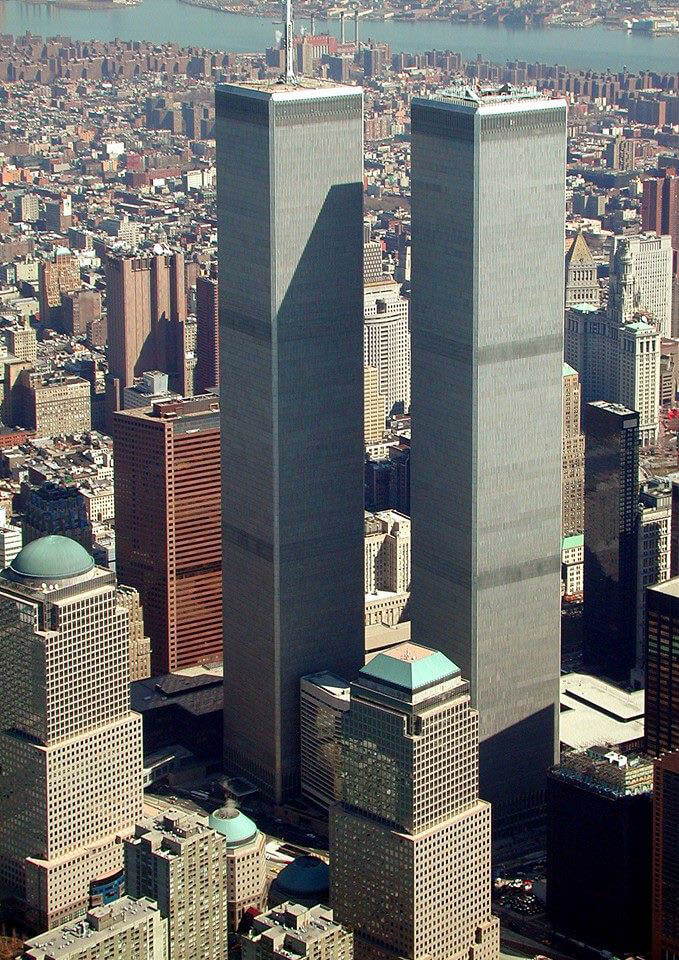
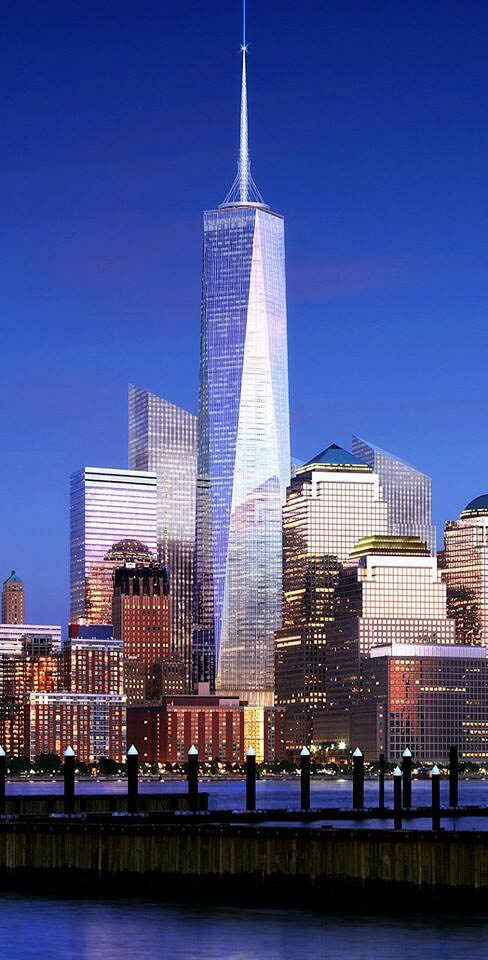
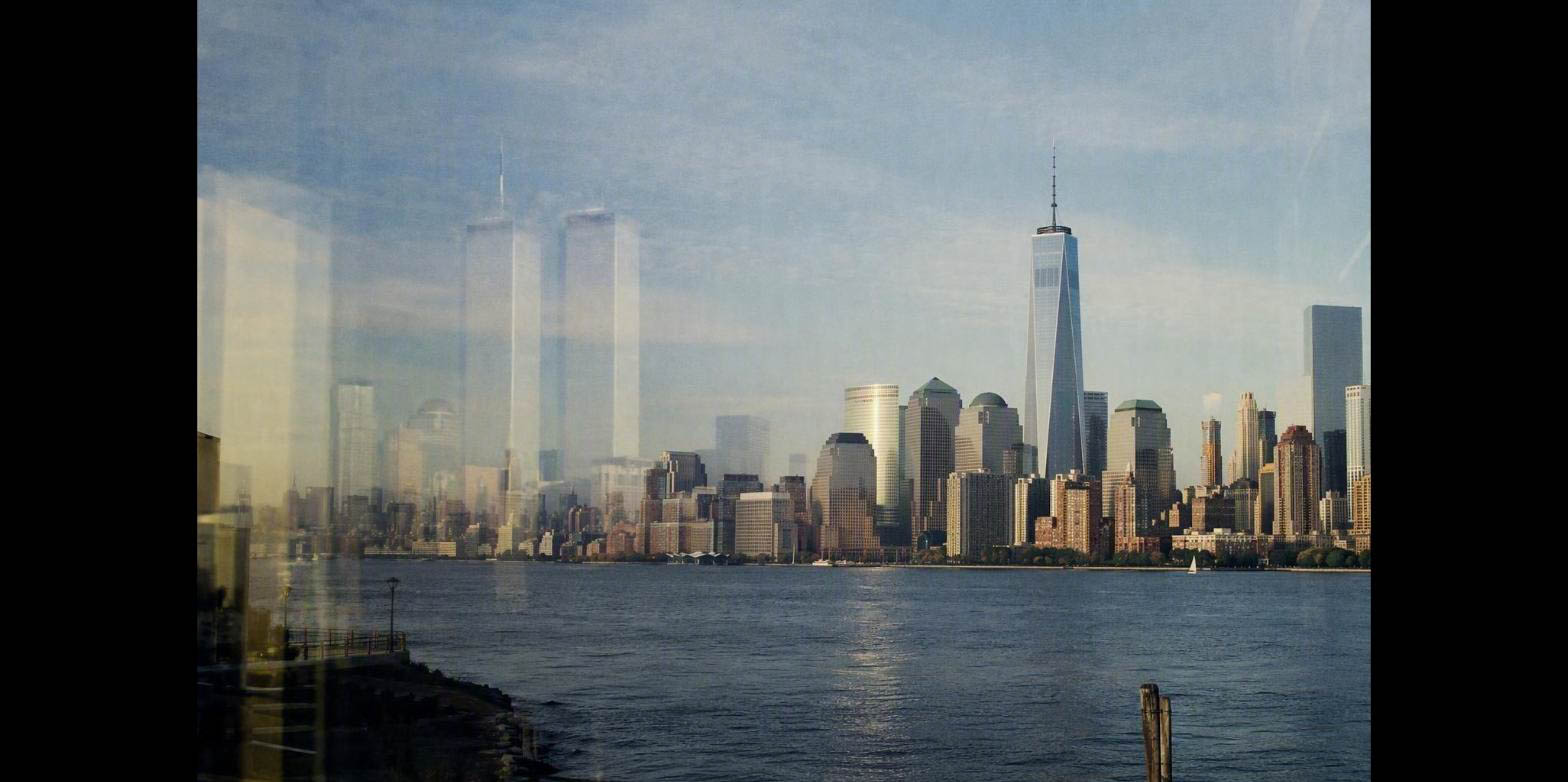
Three September 7 images connected to the World Trade Center remain in the archive, but the original captions are gone. We preserve the images without inventing the missing context.
-
2015
A sanctuary full of personality.
Raylin, Sweety, Pauley, Stormy Grey, Magic, Nyla, Petey, Bandit, and Shazam filled the day with the kind of short captions that somehow bring an animal right back to you years later.
-
2016
Small signs of progress.
Jojo was growing feathers again. Pearl Squirrel was busy being Pearl. Magic had a snack. Kiki offered a quote. Riafiki spent time outside. Ordinary life kept moving.
-
2017
The community filled the page.
RFPS spent the day posting bird-photo contest entries while supporters submitted, commented, voted, and shared.
-
2018
Education, personality, and a little nonsense.
The Eurasian Hobby, toucans, Chloe the little sheriff, Chase, George, and a plain old house salad all found room on the same September 7.
-
2019
An owl before Monday.
A Great Horned Owl arrived just before Brad was scheduled for surgery, while another September 7 post documented a Great Horned Owl headed toward Broadbent Wildlife Sanctuary.
-
2019
Trust became visible.
Rudy looked like a different bird from when he arrived, and Louie was opening up and stepping up without biting.
-
2020
The organization kept taking shape.
Tara made an RFPS shirt and was already thinking ahead to the 2021 calendars.
-
2021-2023
No September 7 material recovered for this edition.
-
2024
The work was still waiting.
An albino squirrel with an apparent eye injury became the latest September 7 moment preserved in the archive, posted as one of the old “What the Heck Is That?” guessing games.
The job of the RFPS Chronicles September 7 edition is not to fill the empty spaces with guesses. It is to keep what survived.
Chapter One · 2014-2015
RFPS Chronicles September 7: Before the Chronicle Had a Name
The first September 7 material we recovered came from 2014.
Three images survived.
The captions did not.
They involve the World Trade Center, including images of the original towers and One World Trade Center. What I wrote with them is gone.
That matters.
It would be easy to look at those images now and write a meaning into them.
We are not going to do that.
The photographs are part of the record.
The missing words are part of the record too.
RFPS Chronicles September 7: The Class of 2015
A year later, September 7 looked completely different.
There were birds everywhere.
Raylin was apparently Dad’s favorite, assuming Dad played favorites.
Pauley was prepared to play. Or bite.
Stormy Grey was ready for the camera.
Magic was striking a pose.
Shazam was staring directly back at us.
It is not a major historical event.
I am glad we have it anyway.
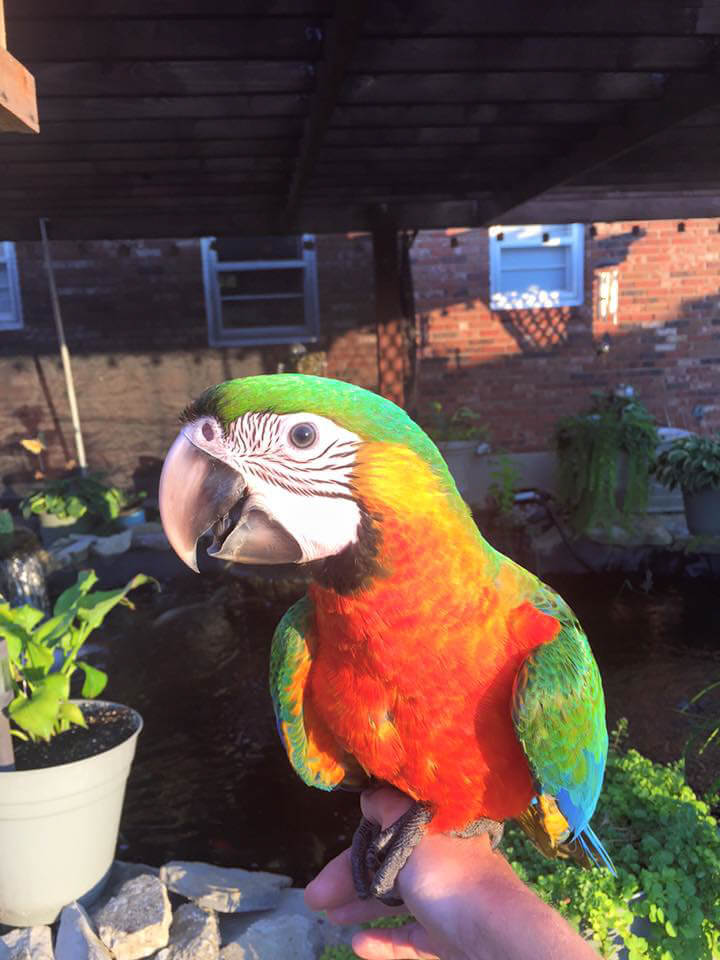
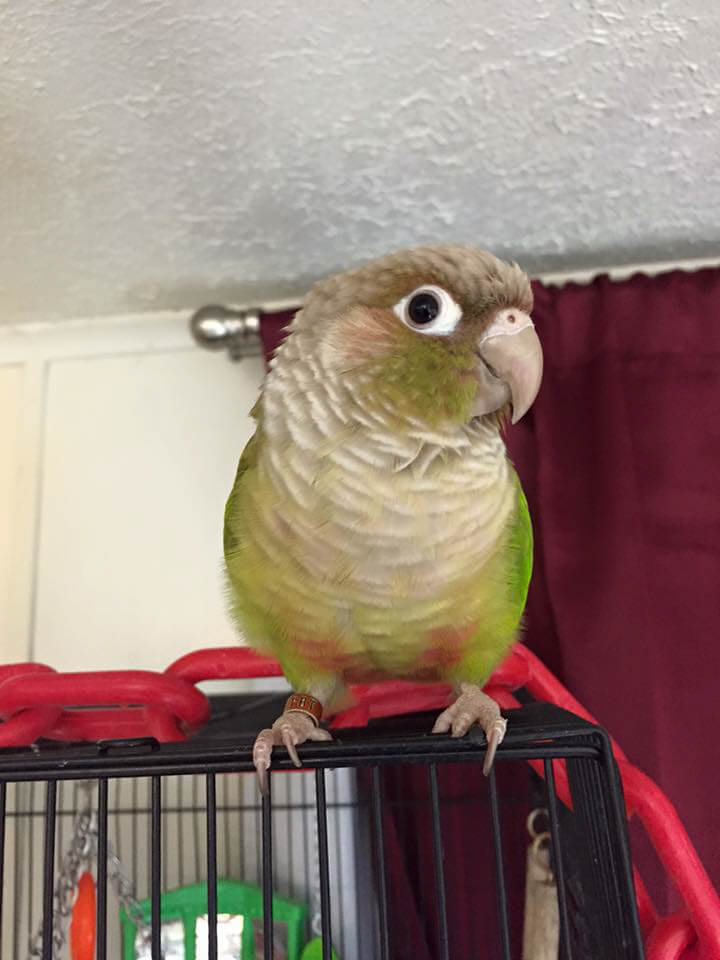
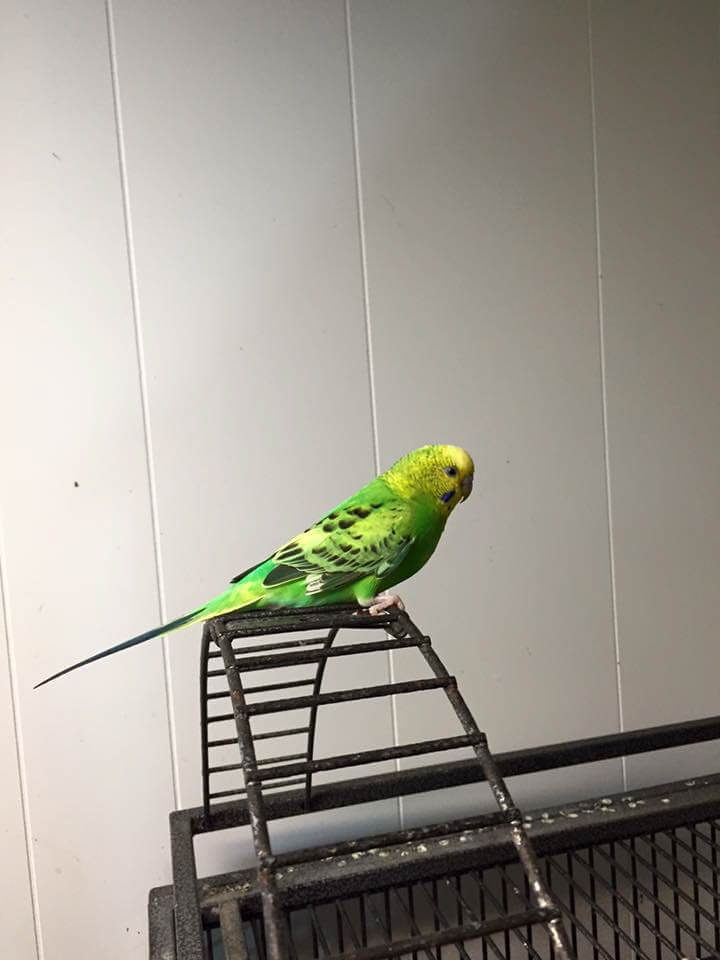
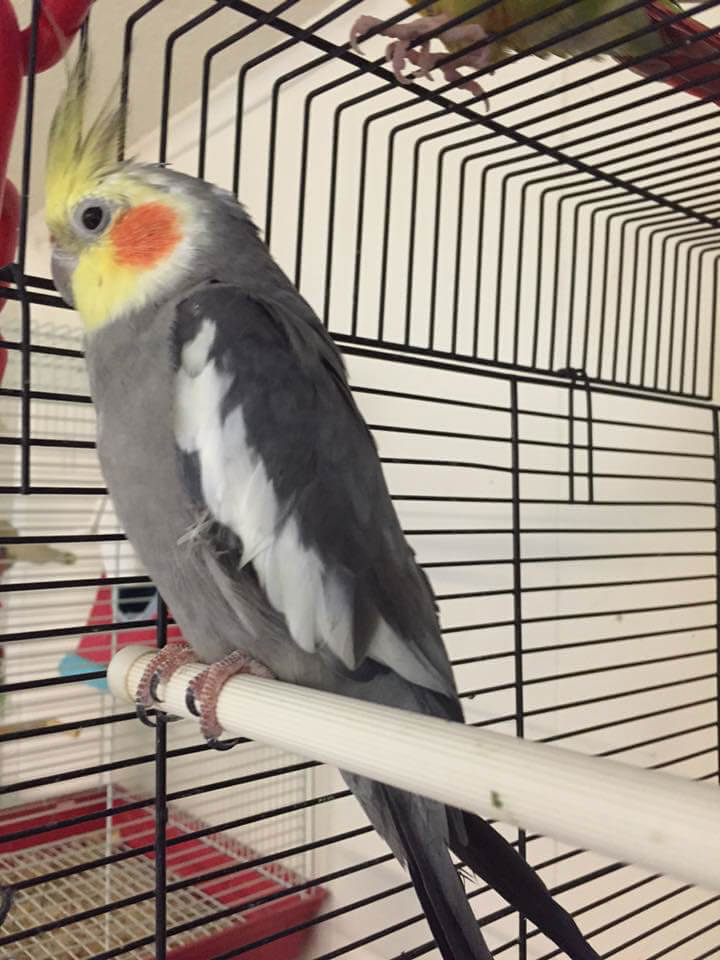
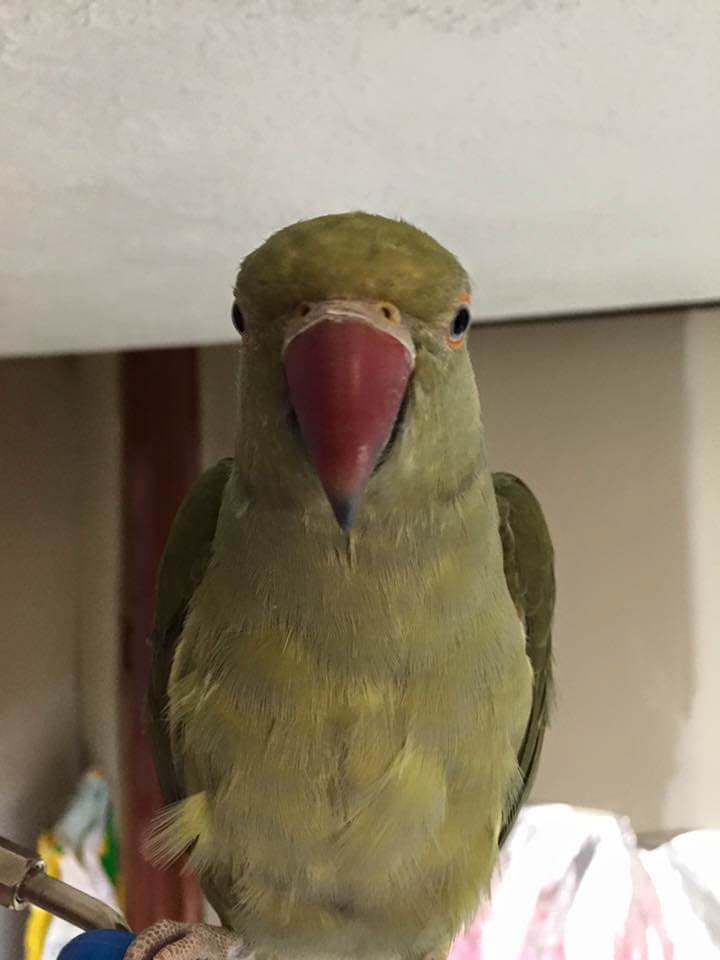
Paperwork tells me what happened. Personality reminds me who was there.
We were not trying to build an archive.
We were just living with birds.
Luckily, some of them posed for the camera.
Chapter Two · 2016
RFPS Chronicles September 7: Tiny Signs That Things Were Getting Better
Sometimes getting better is quiet.
Jojo was growing feathers again.
That sounds like a very small thing until you remember there had been a time when I wondered whether some of those feathers would ever return.
His chest was beginning to fill back in. His little “pantalooms” had grown out. He was living beside the girls, tiny as ever and apparently convinced that size had nothing to do with authority.
Most importantly, the old post says he was happy.
There was no dramatic finish line.
Just new feathers where there had not been any before.
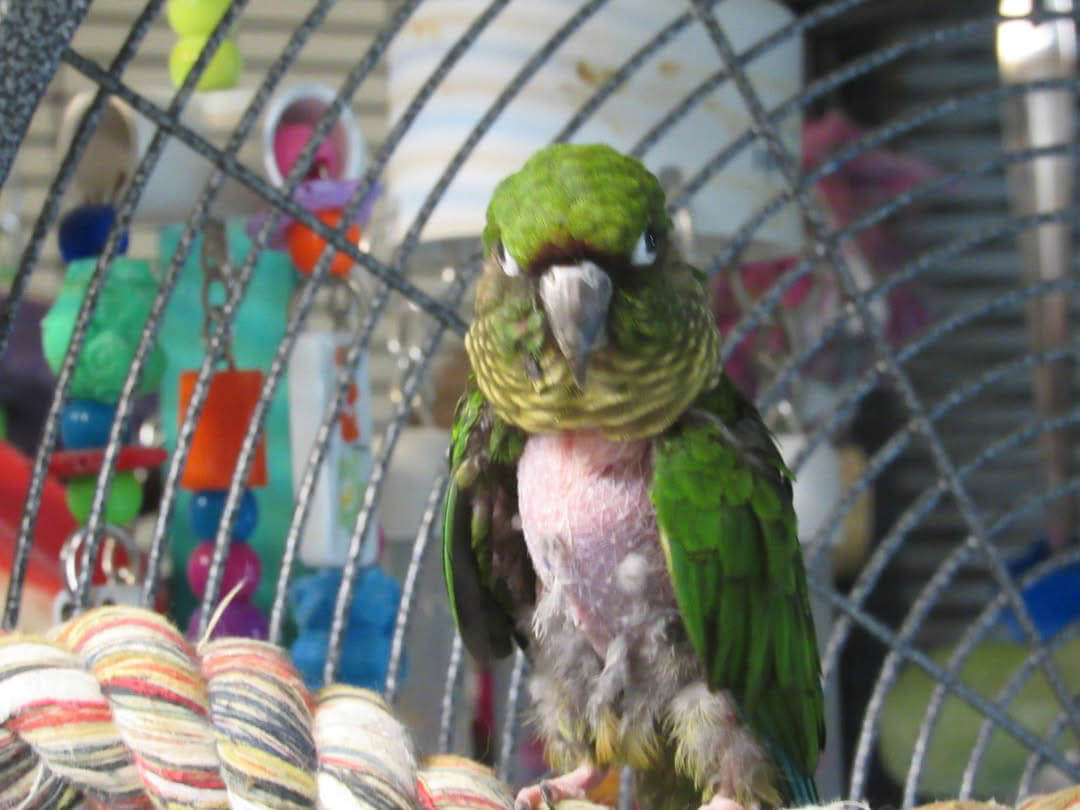
Sometimes getting better is quiet.
Meanwhile, Everyone Else Was Carrying On
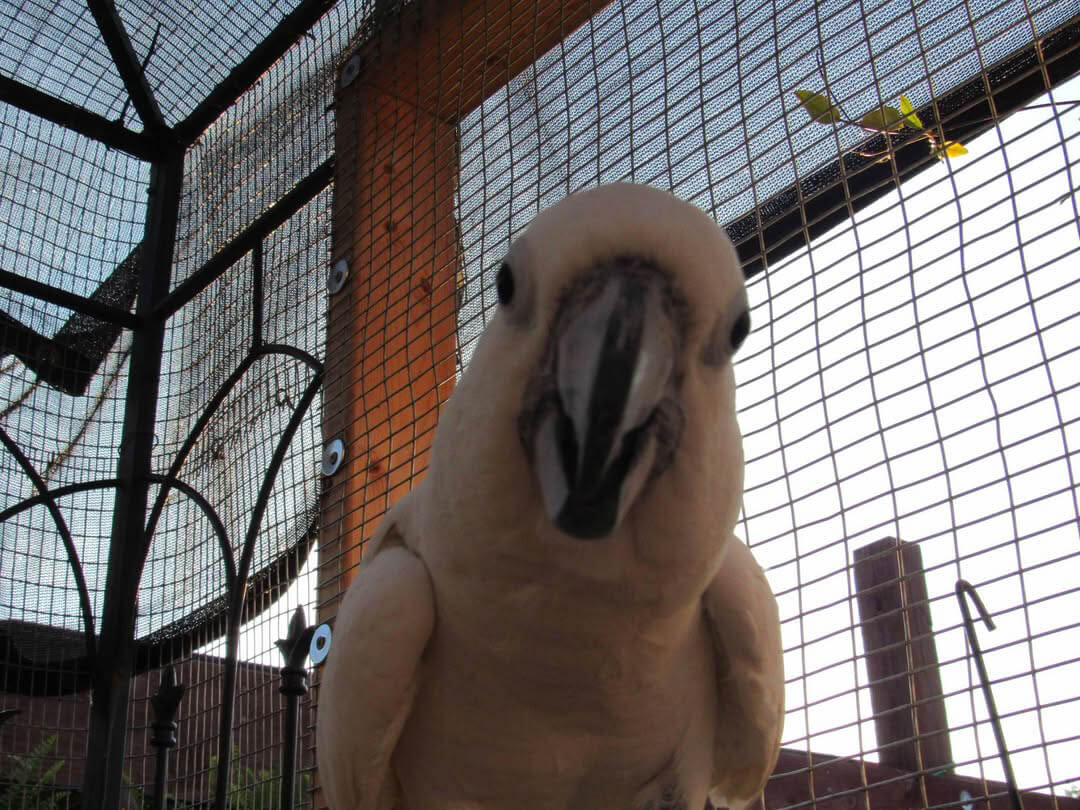
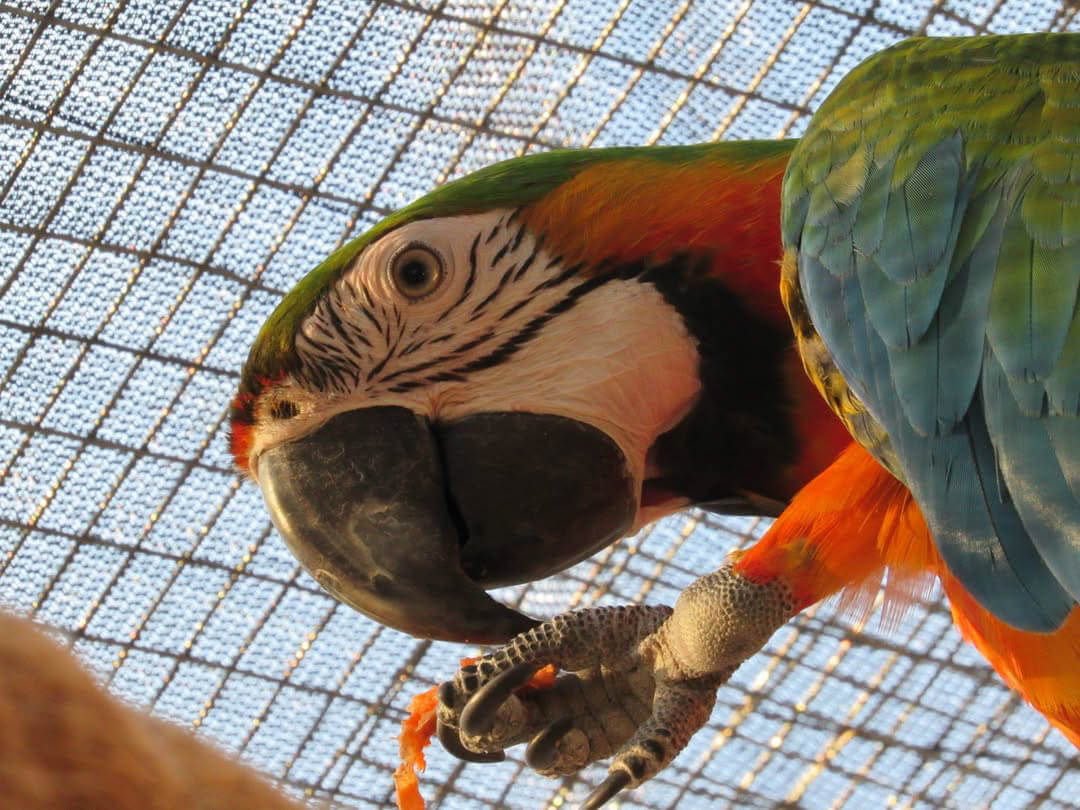
Elsewhere on September 7, Pearl Squirrel was checking whether everyone was awake.
Magic was eating.
Kiki was dispensing literature.
Riafiki was outside on a hay bale.
In other words, the rest of the sanctuary had not received the memo that we were having an emotional moment.
Kiki Had Something to Say Too
Kiki’s contribution to September 7 was a quote from The Fault in Our Stars: “The world is not a wish-granting factory.”
Apparently literature was also on the schedule.
Not a miracle.
Not a finish line.
Just something beginning to grow where you had stopped expecting it.
Chapter Three · 2017
Ruffled Feathers September 7 History: When the Community Came Through the Door
September 7, 2017 was busy for an entirely different reason.
We had a photo contest going.
Birds started showing up on the page from everywhere.
Quetzal. Missy. Miracle. Moby. Shadow. Gizmo. Presley. Diamond. Captain Jack Black Beard. Princess Penelope. Rotten.
The rules were probably more complicated than they needed to be.
One like counted as one vote. One comment counted as two. People could vote on multiple birds, and we kept posting entries throughout the day.
It was a little chaotic.
It was also fun.
The Birds People Brought to Us
Looking back now, the names are almost as much fun as the pictures.
It reads less like a contest list and more like attendance at a very strange family reunion.
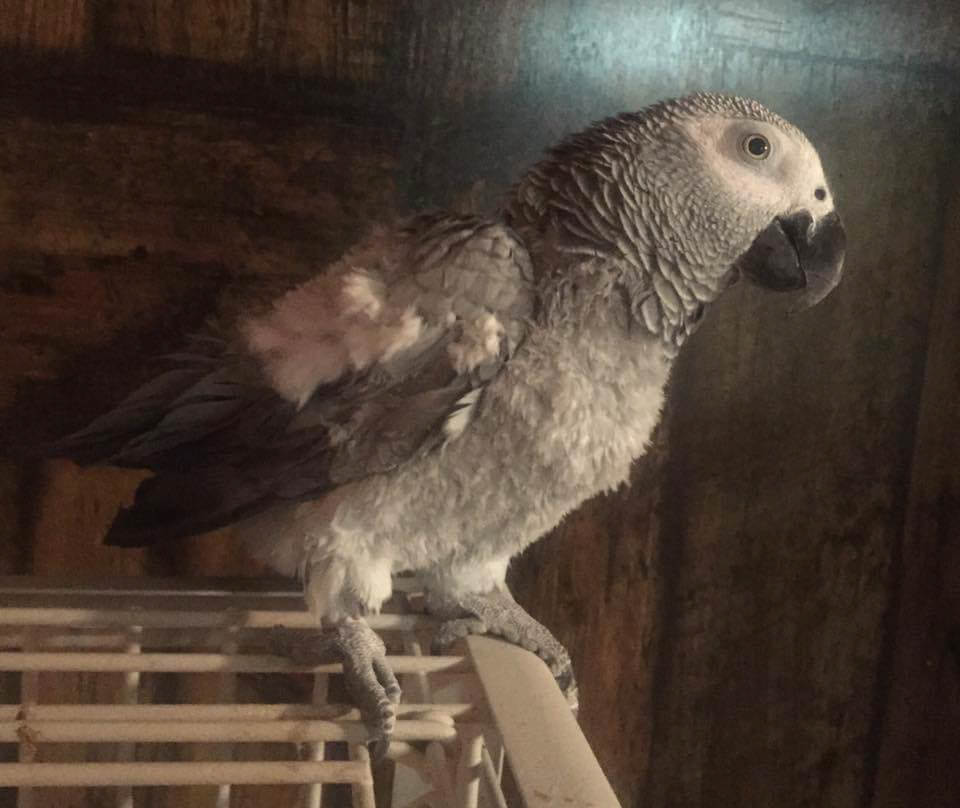
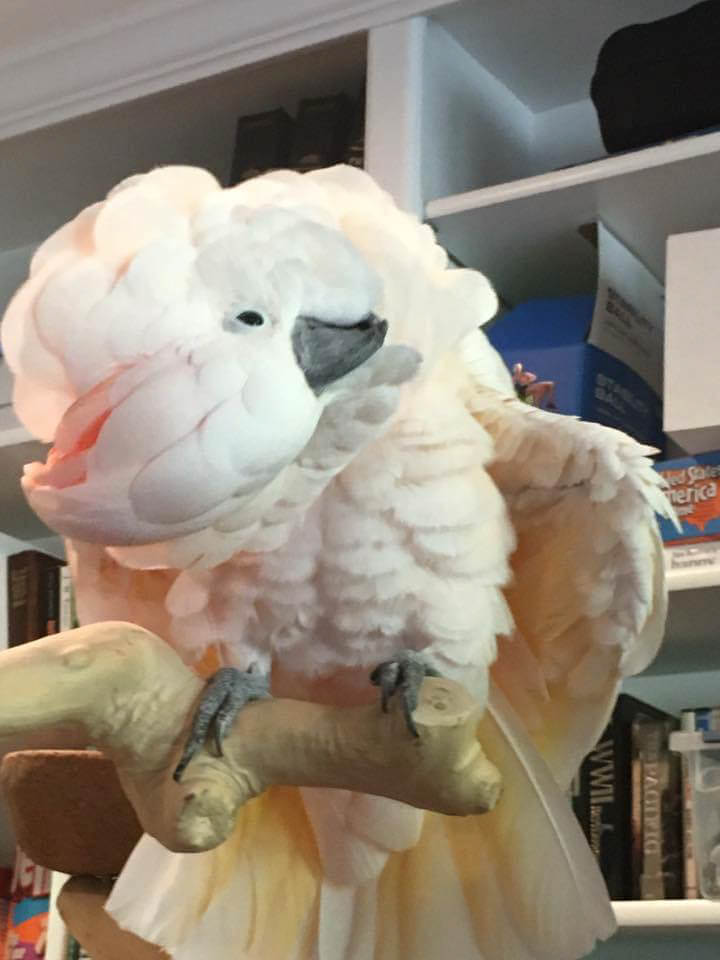
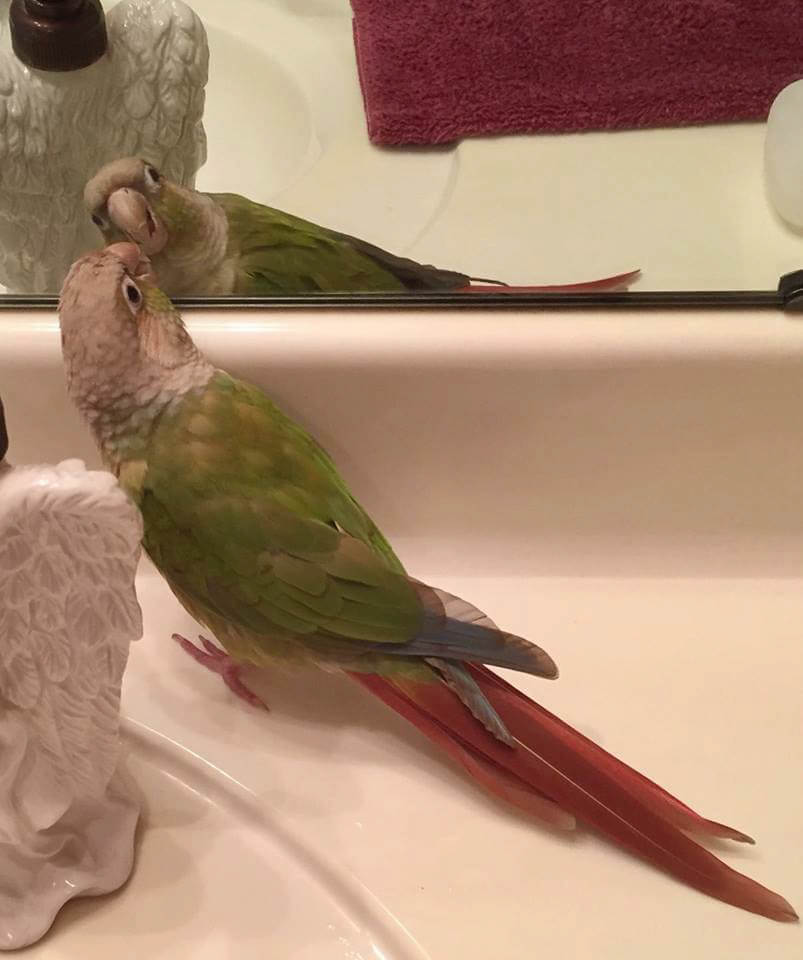
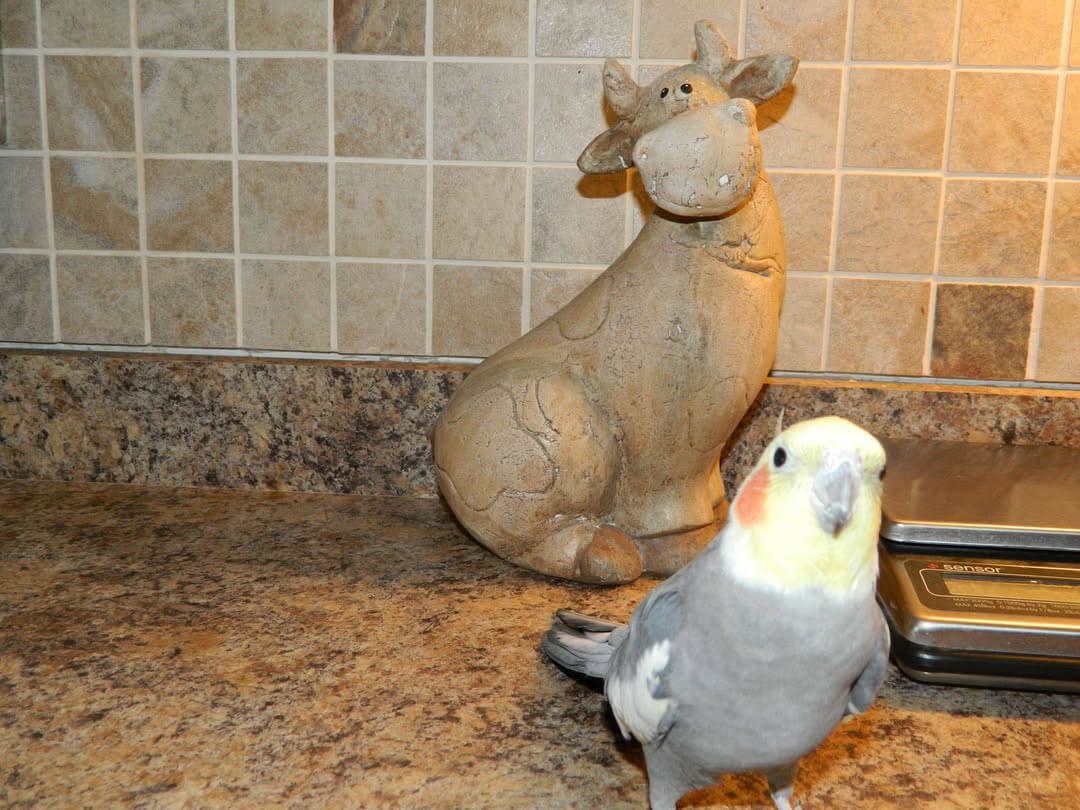
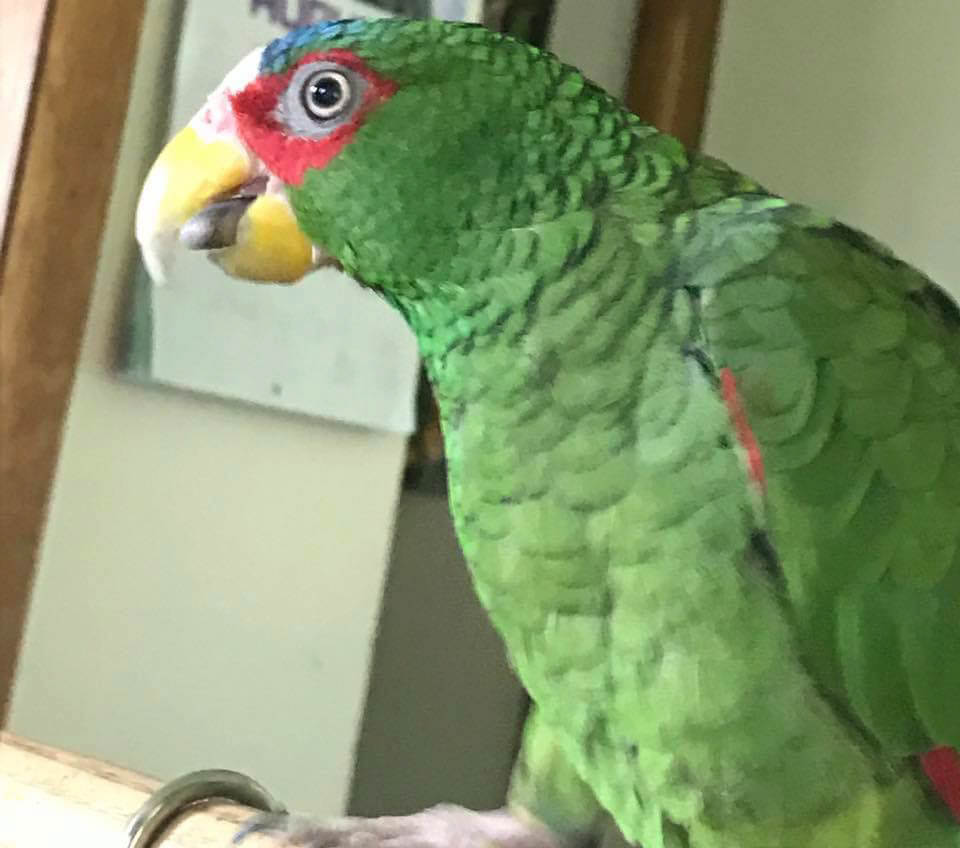
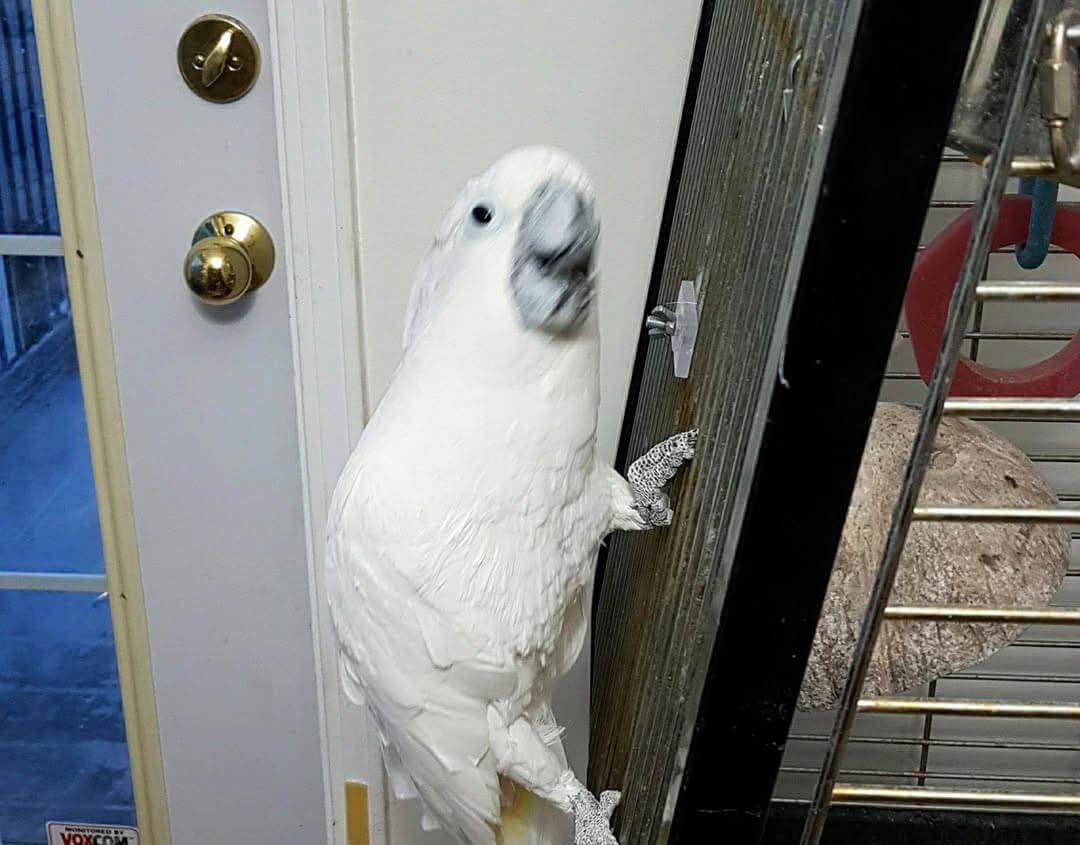
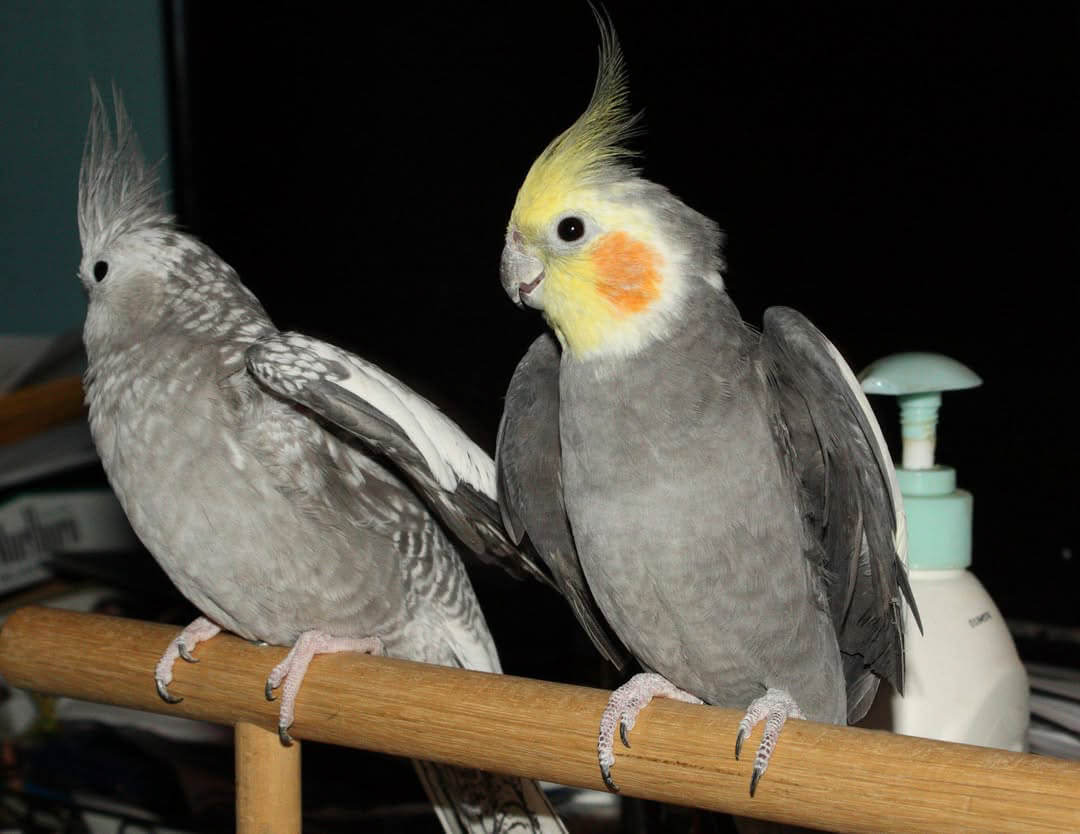
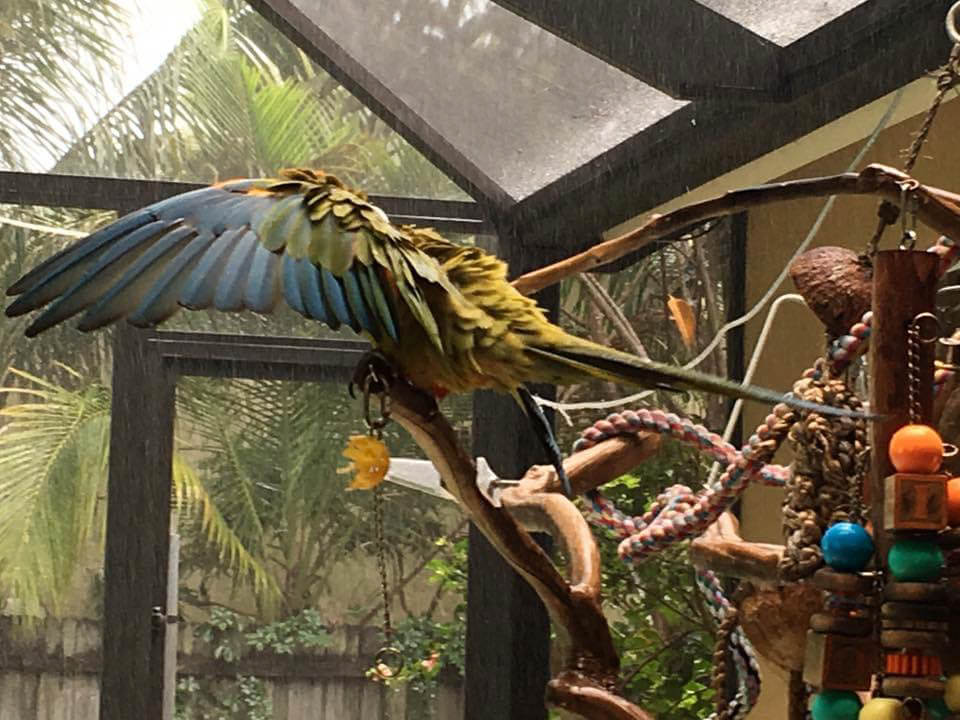
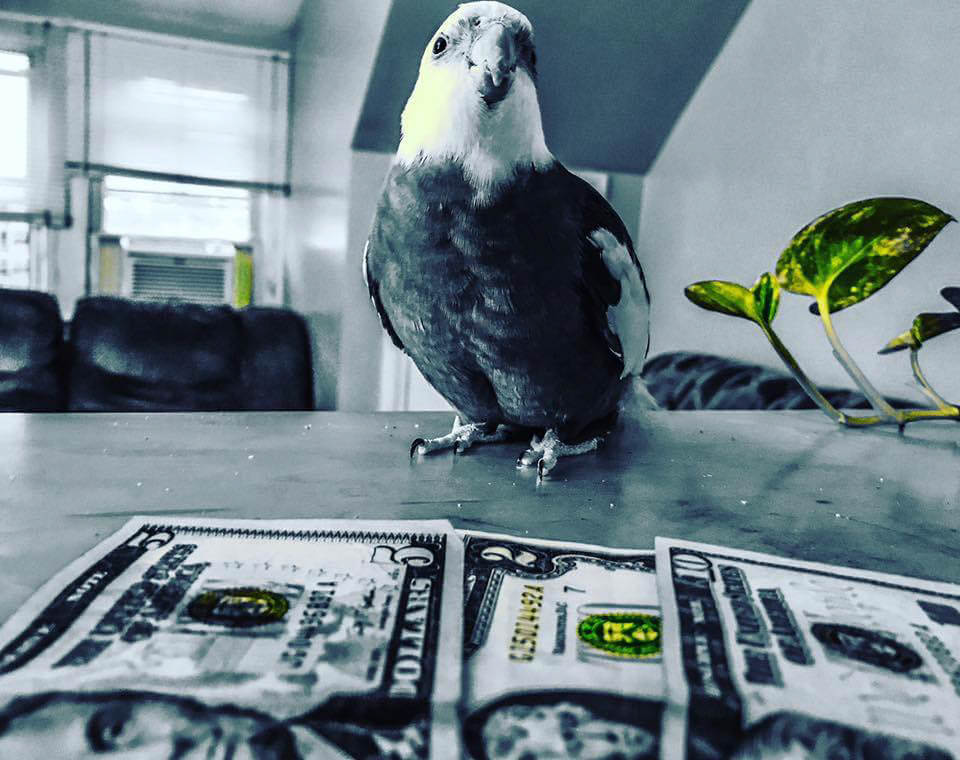
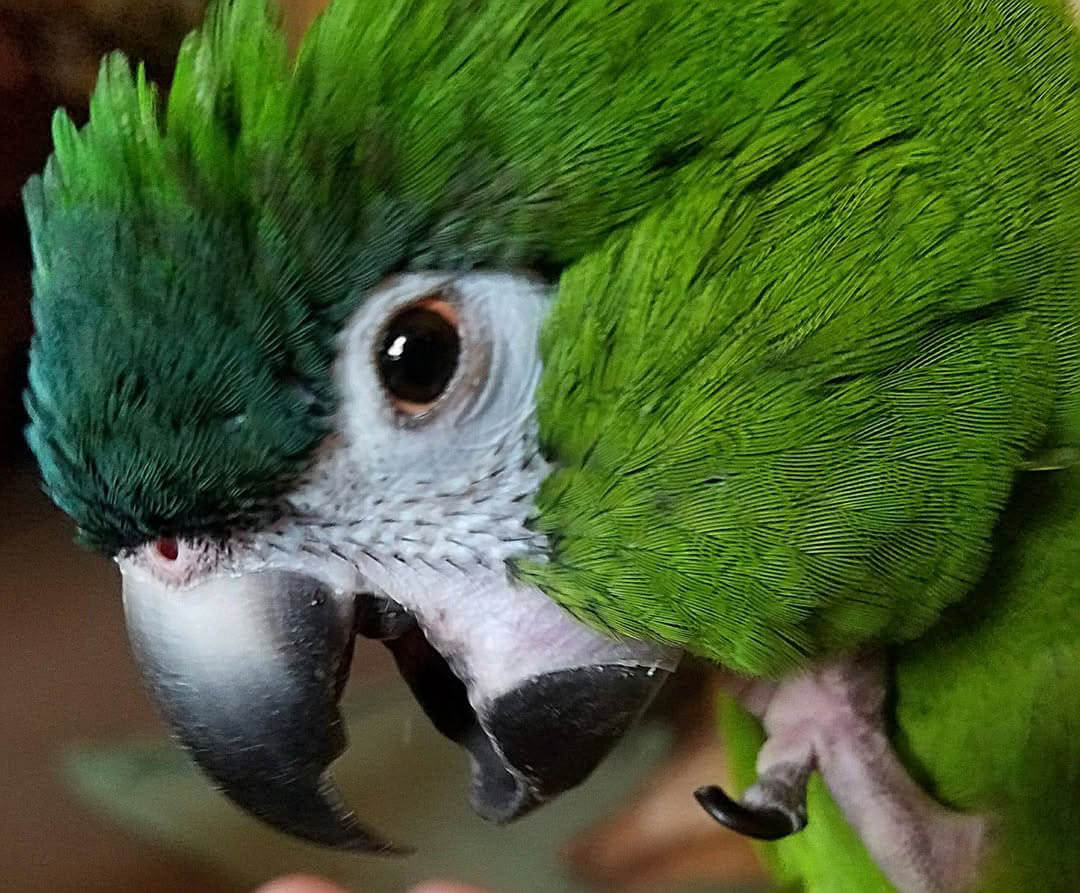
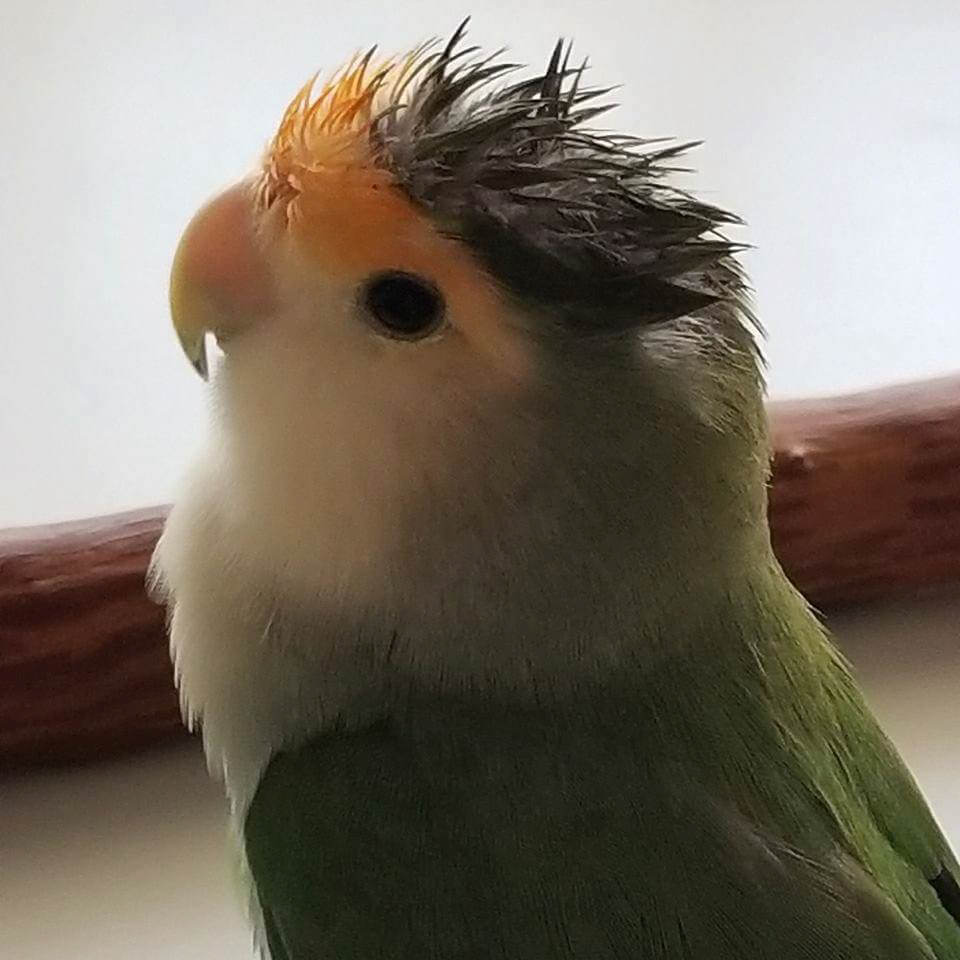
Captain Jack Black Beard.
Bat Girl.
Princess Penelope.
Rotten.
I am fairly certain naming birds was already one of the community’s stronger talents.
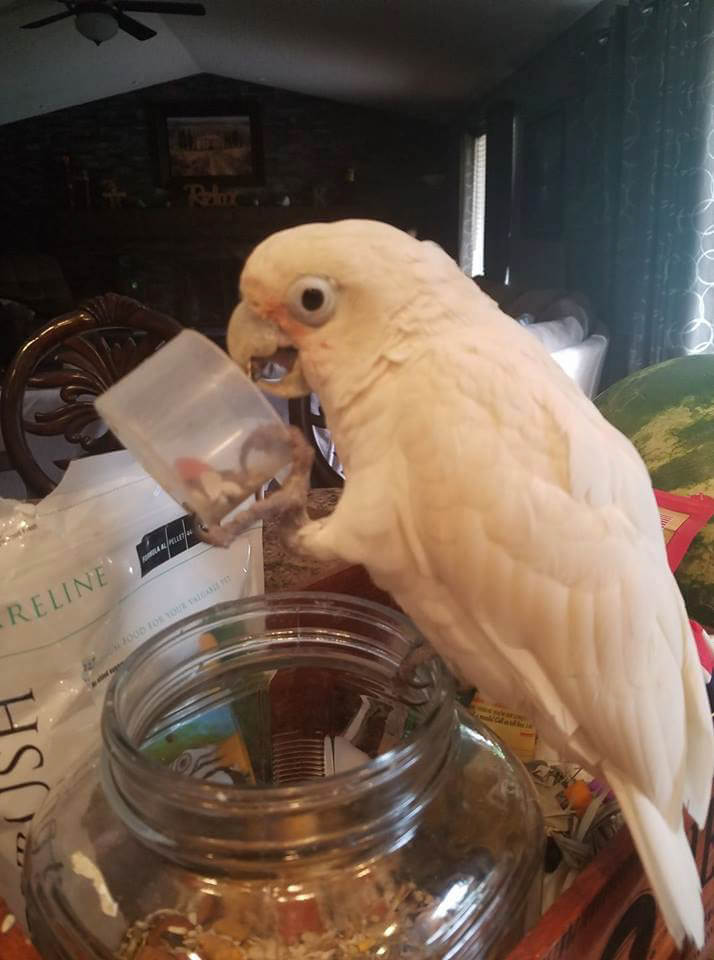
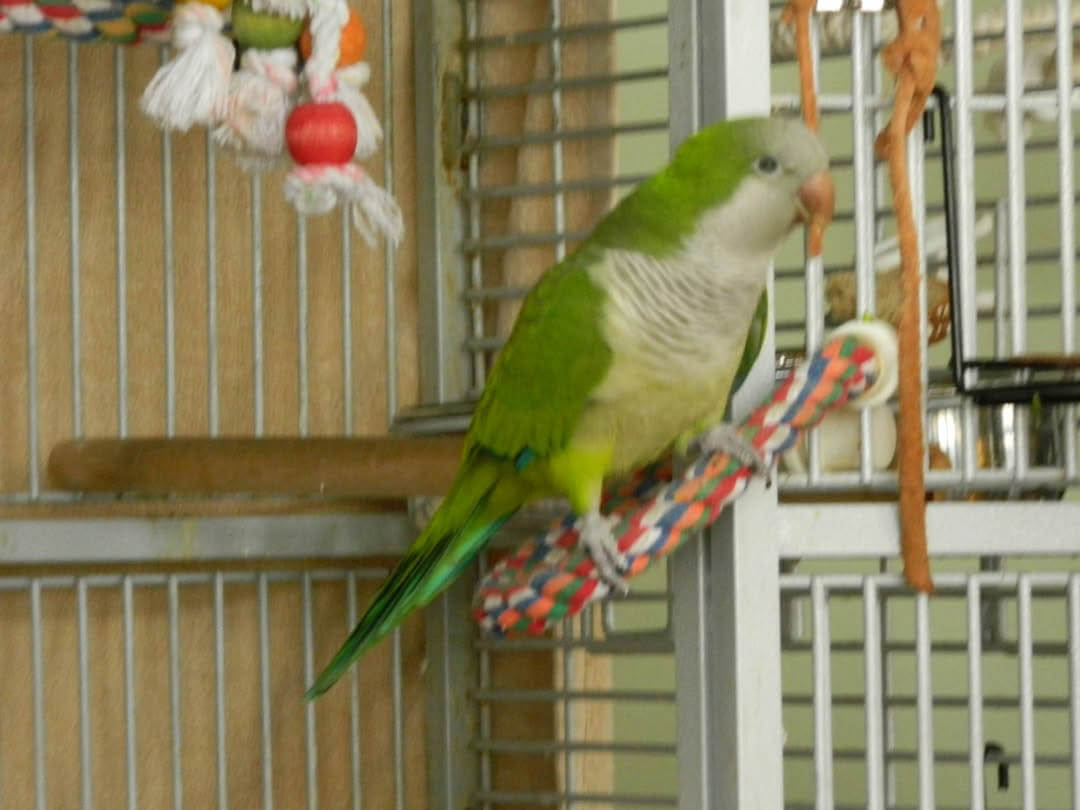
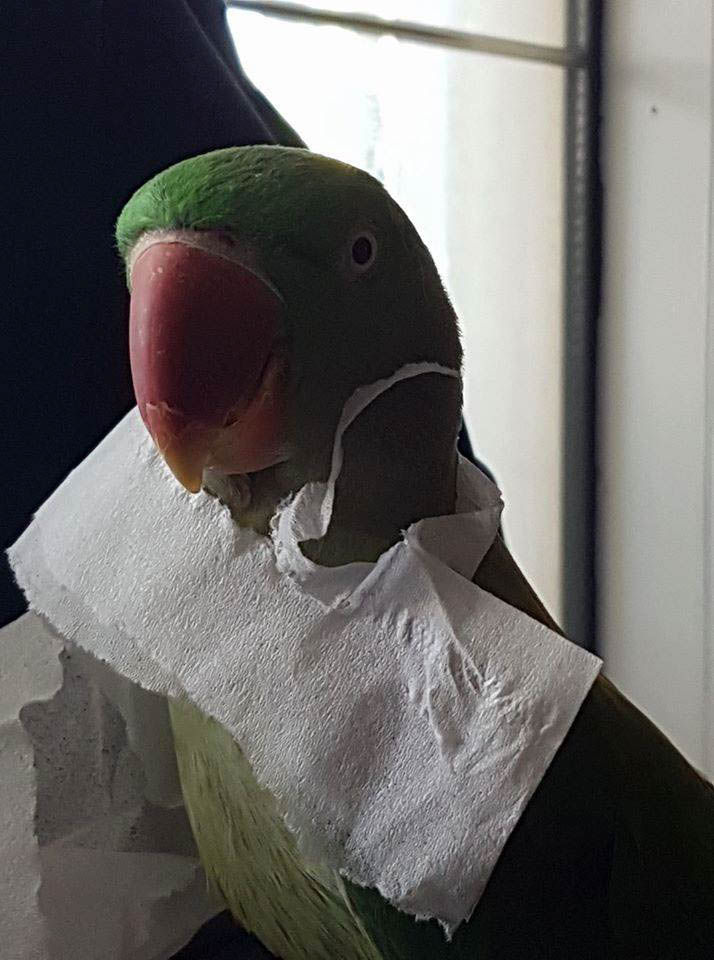
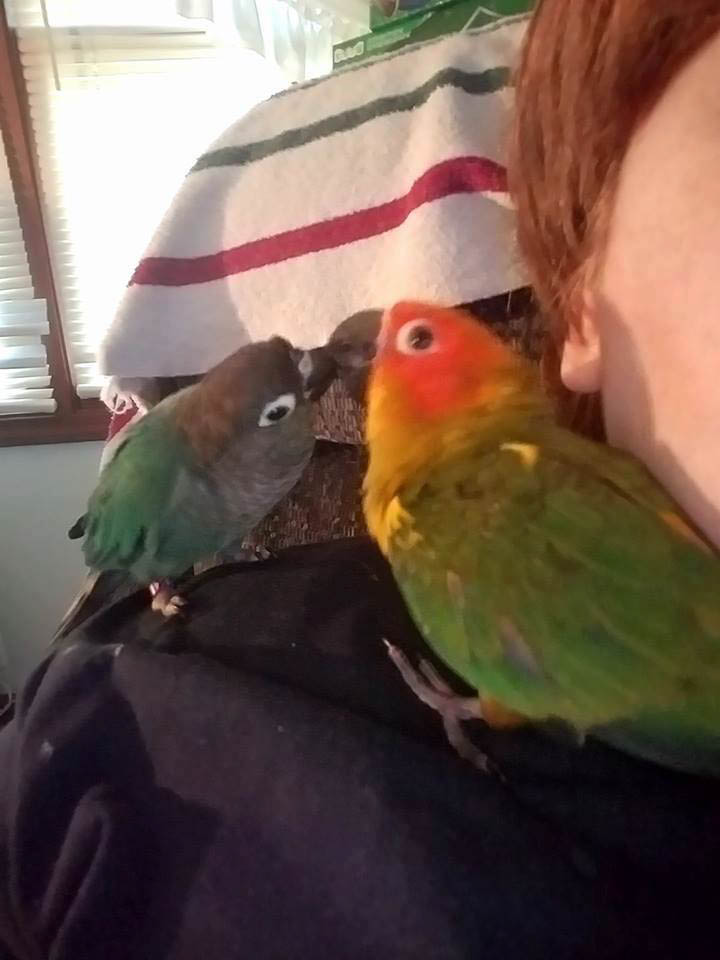
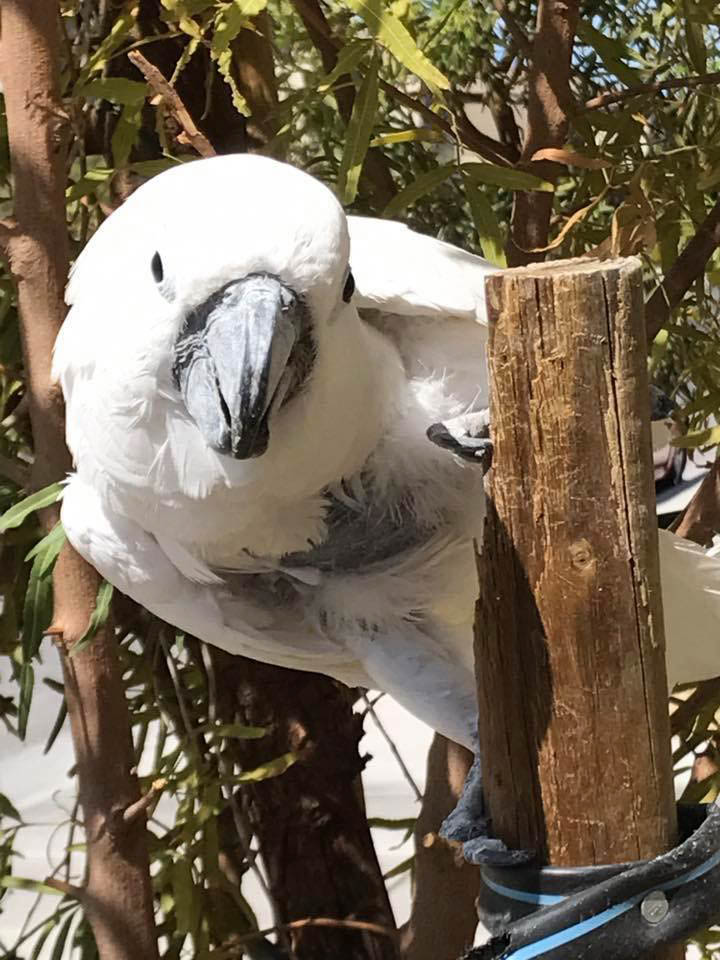
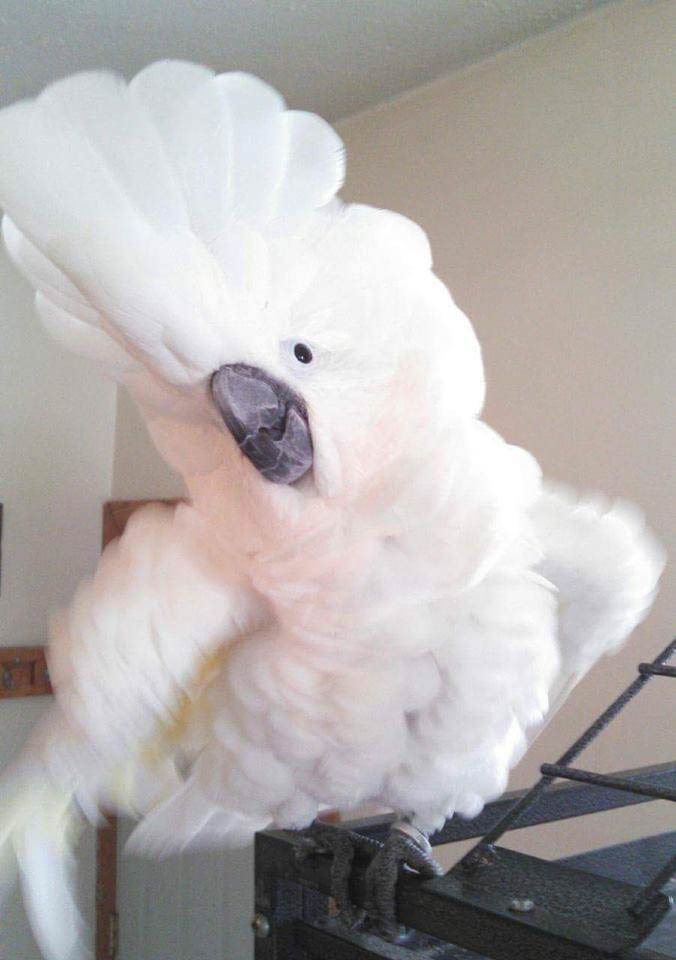
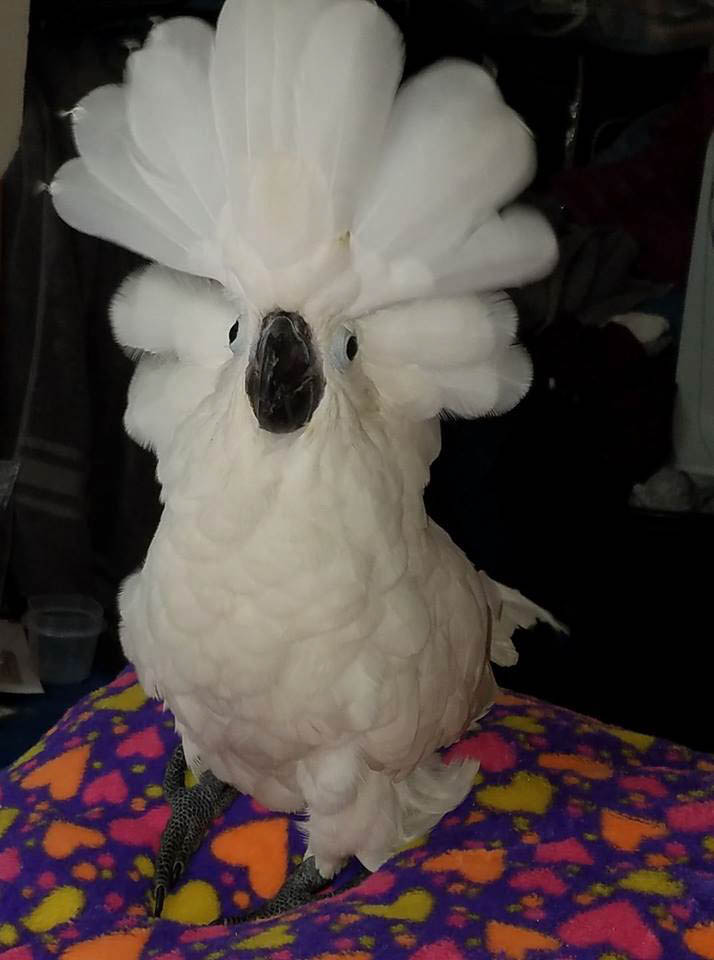
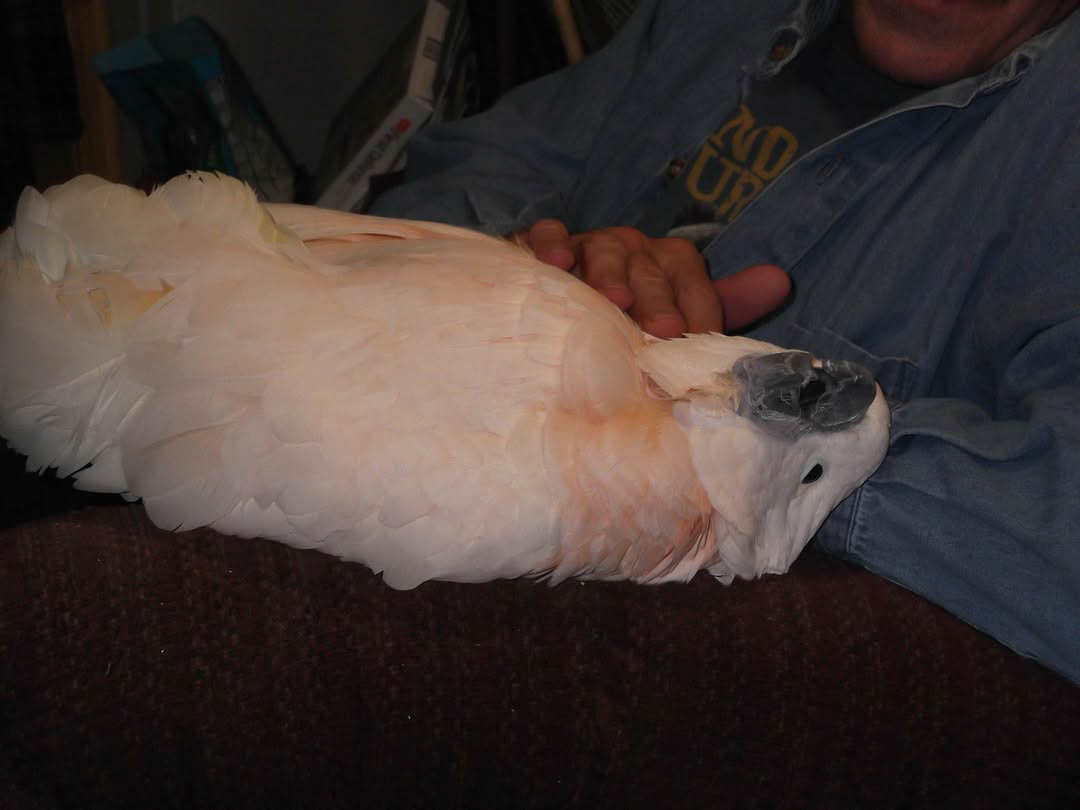
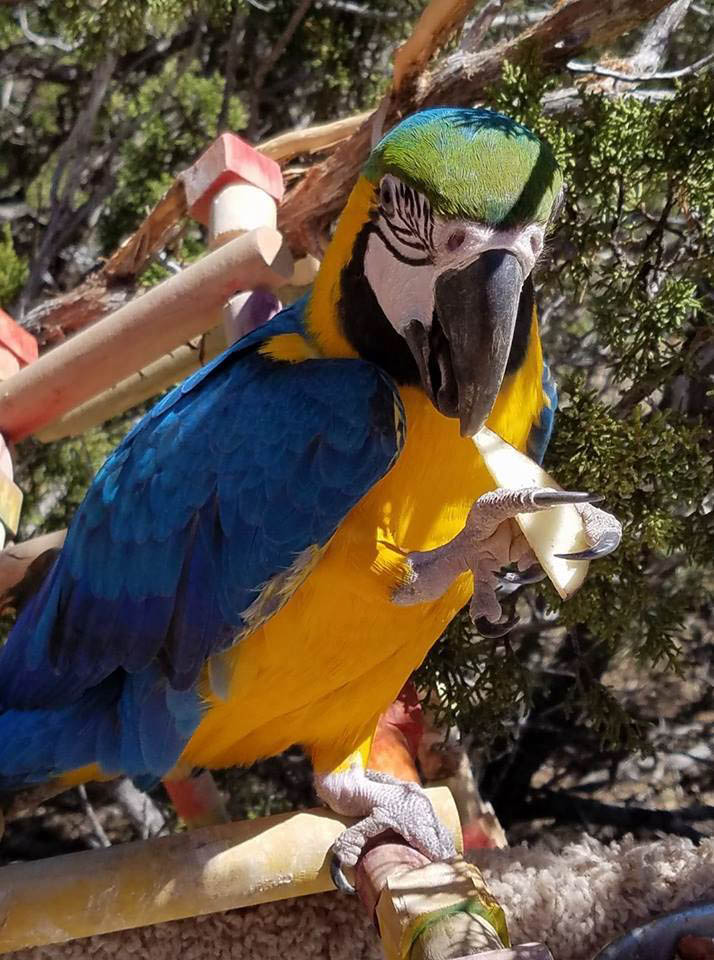
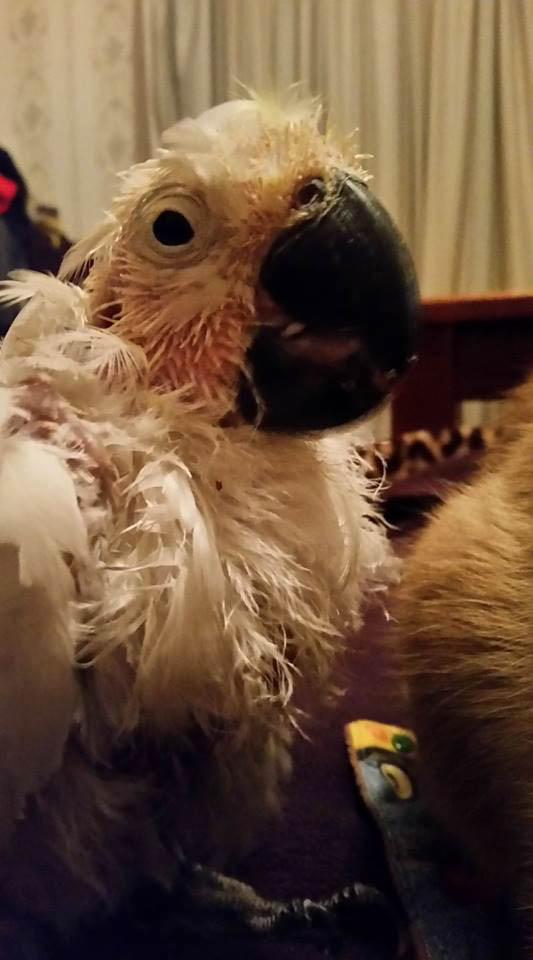
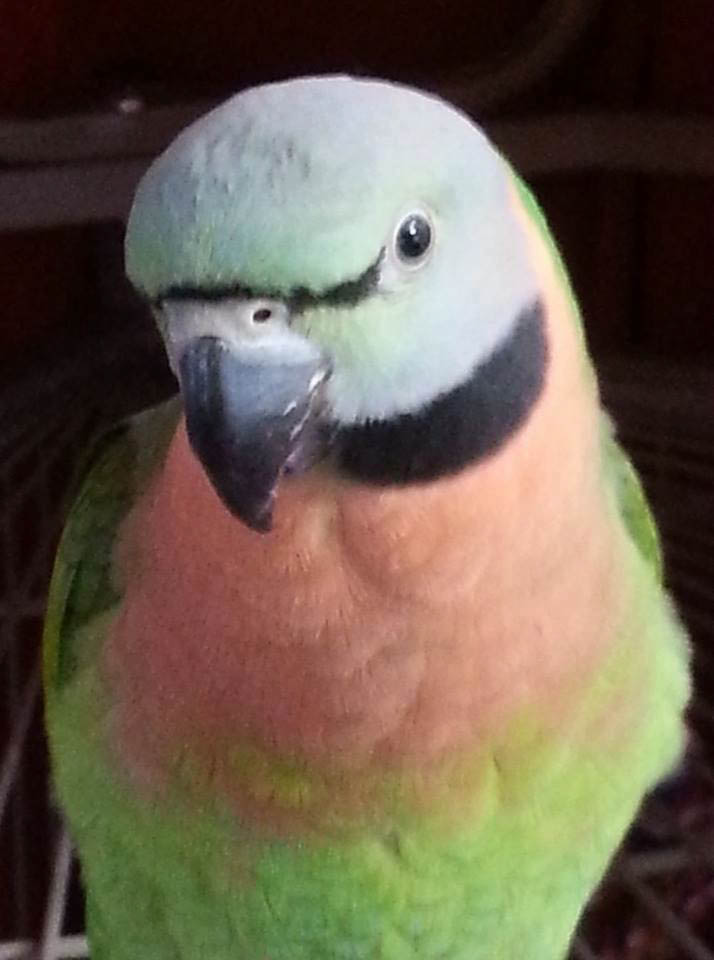
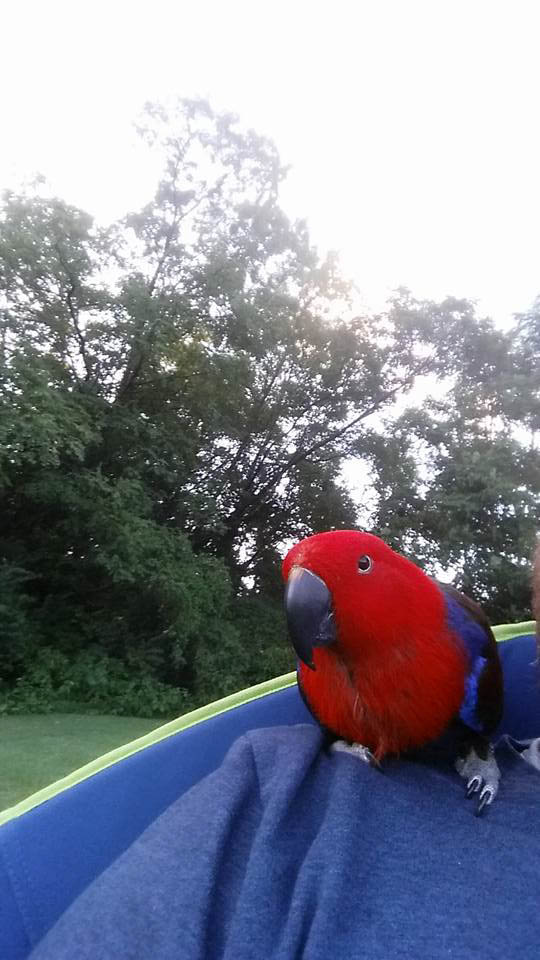
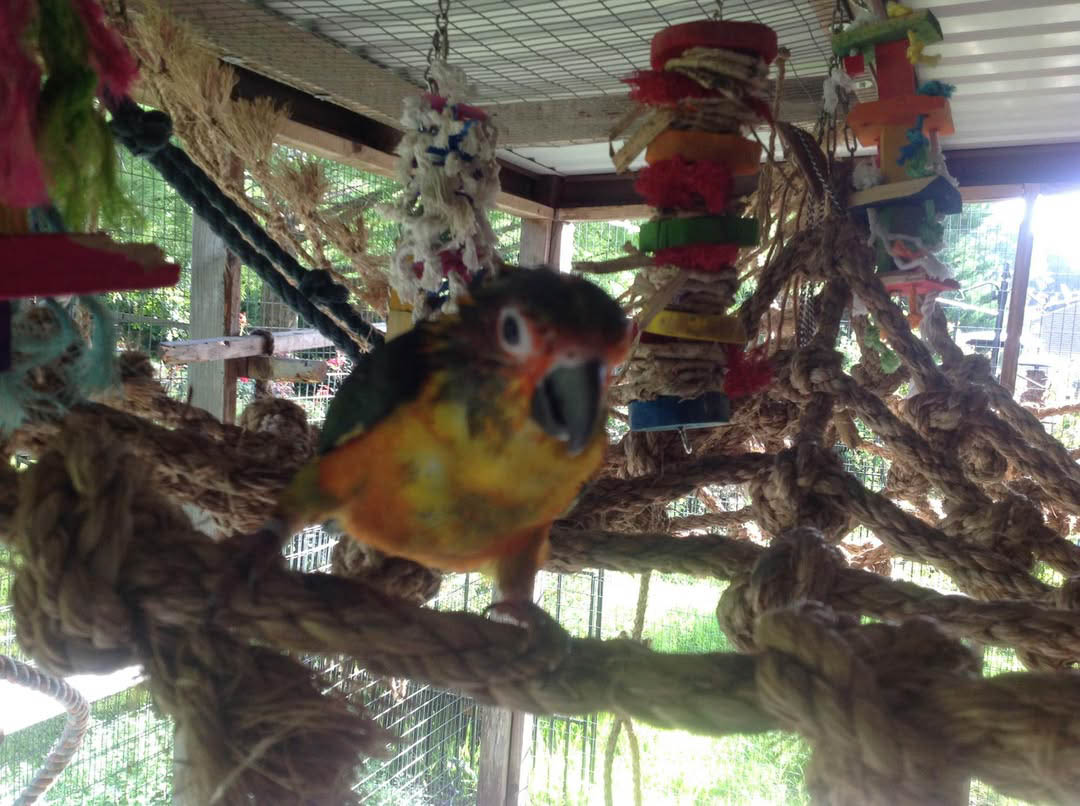
It meant people wanted to be part of what we were doing.
Animal Rescue Memories: More Than a Winning Picture
At the time, the goal was simple.
Pick a cover photo.
Have some fun.
Give everybody a chance to show off their birds.
Looking back, the contest preserved something else.
It preserved participation.
People were not only watching what RFPS was doing.
They were bringing their own birds into the conversation.
They were voting for each other.
Commenting.
Sharing.
Laughing.
Coming back to see who was ahead.
A rescue organization needs people long before the moment it asks them for help.
Sometimes community begins with something as simple as:
“Look at my bird.”
Community Roll Call
Quetzal, Missy aka Bat Girl, Miracle, Moby, Cheeko, Shadow, Adrian Beaky, Monty, Penny and Pilgrim, Ralphy, Money Mac, Rufus, Gizmo, Nelly, Joey, Daphne, Killian and Pepe, Presley, Sydney, Diamond, Miss Casper, Captain Jack Black Beard, Deedeeburd, Princess Penelope, Rotten, and the other birds whose September 7 entries survive in the archive.
Somewhere along the way, this had become more than a page about our birds.
Other people were bringing theirs through the door too.
Even if, for the moment, it was only through a photograph.
Chapter Four · 2018
RFPS Chronicles September 7: Teaching Between the Rescue Calls
By 2018, the September 7 posts had developed a rhythm I recognize immediately.
Here is a bird you may never have seen before.
Here is something interesting about it.
Here is Chloe supervising everybody.
Here is Chase.
Here is a joke about salad.
That was pretty much the educational strategy.
The Eurasian Hobby
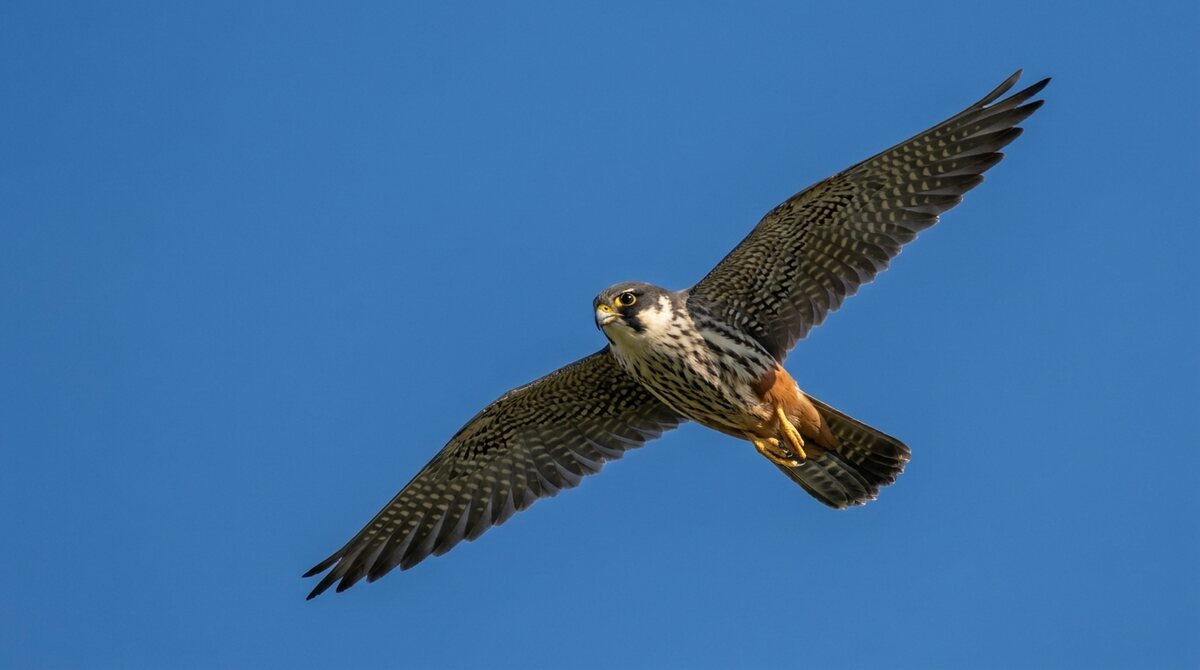
One September 7 post introduced the Eurasian Hobby, a fast little falcon with long, pointed wings and a talent for catching prey in the air.
The point was not to turn anybody into an ornithologist.
It was simply:
Look at this thing.
Isn’t it incredible?
Meanwhile, Chloe Was on Patrol
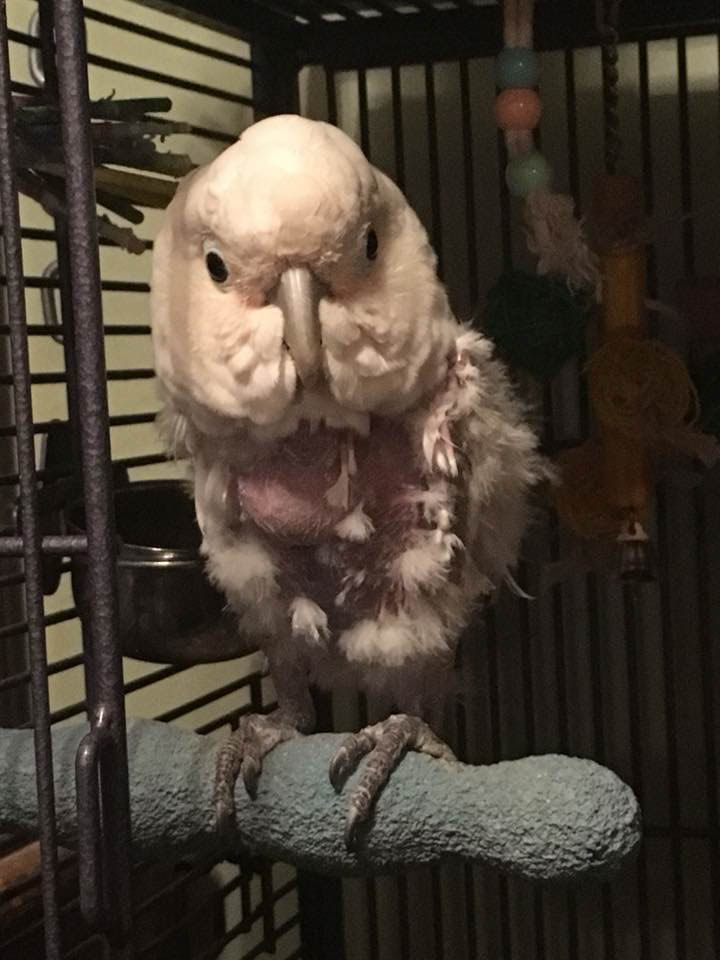
Chloe had no interest in cuddling.
She preferred sitting above everybody and monitoring the room.
Tara called her “a little sheriff.”
Honestly, that sounds accurate.
Some Birds Pick Their Person
Chase was happy.
Tara noted that Chase and George were about the only birds who always wanted to be around her.
Everyone else apparently had other appointments.
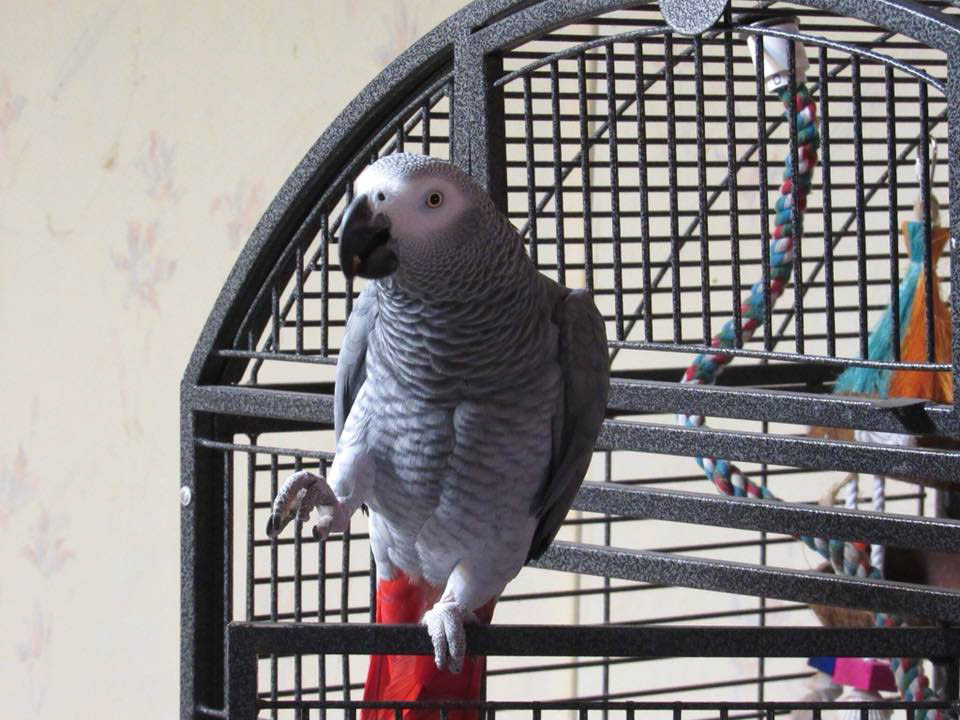
Plain Old House Salad
And then there was the “plain old house salad” post.
Educational excellence has many forms.
Education can sneak up on people.
It was a day of learning.
Watching.
Laughing.
And noticing.
Sometimes that is enough.
Chapter Five · 2019
RFPS Chronicles September 7: The Owl Before Monday
Surgery was Monday.
September 7 was Saturday.
I knew I could be down for a while afterward, so I said I had better make my last capture count and go out with a bang.
Apparently that meant a Great Horned Owl.
There are easier ways to take it easy before surgery.
I have never been especially good at choosing them.
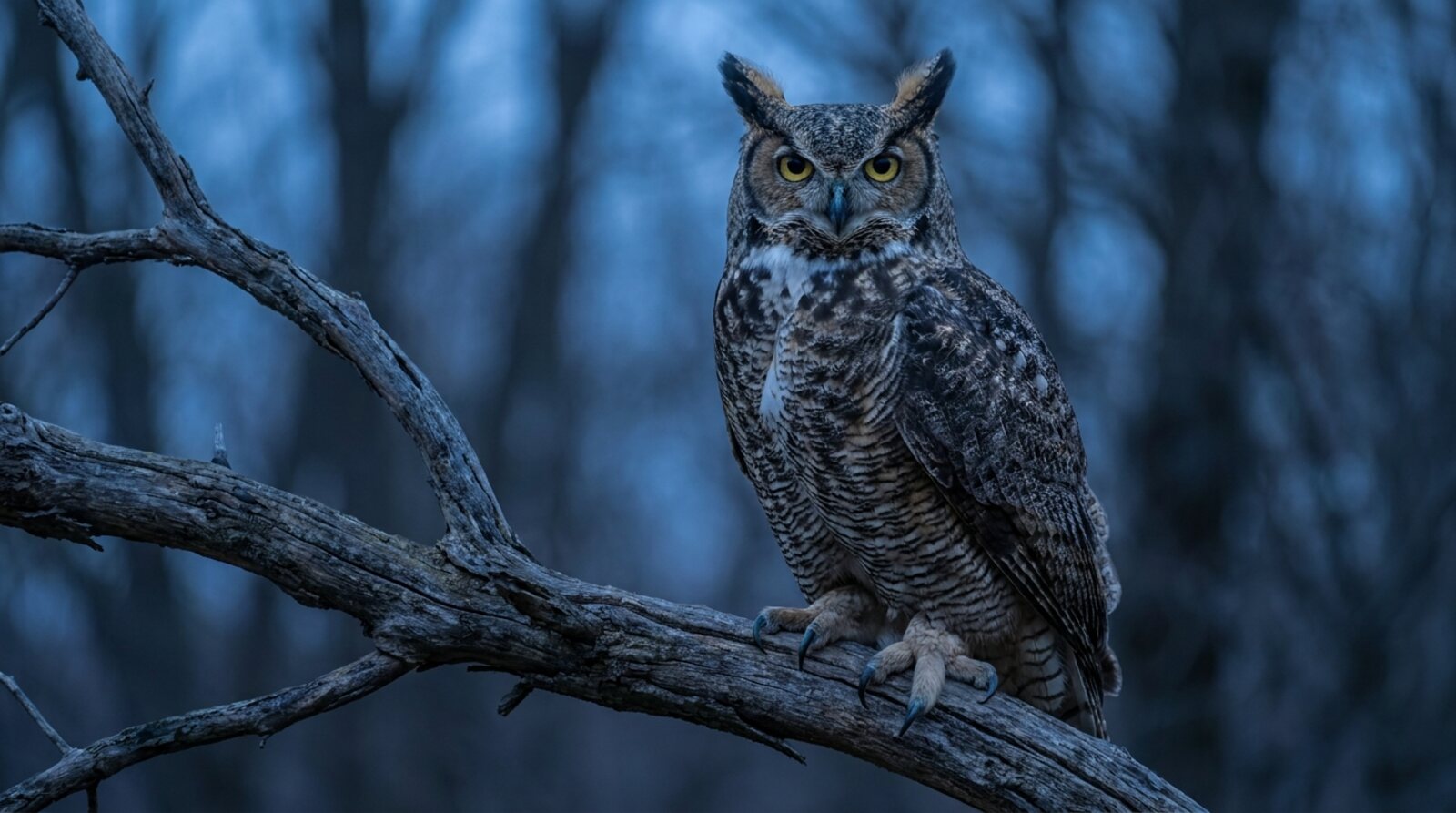
RFPS Chronicles September 7: The Job Was Not to Win
Great Horned Owls do not need much help looking intimidating.
The size, the eyes, the feet, the talons. Everything about them reminds you that this is not a bird you casually reach for.
The job was not to conquer anything.
It was to get the owl contained safely, keep stress as low as possible, and get it where it needed to go next.
Surgery Monday. The owl needed help Saturday.
What Most People Saw
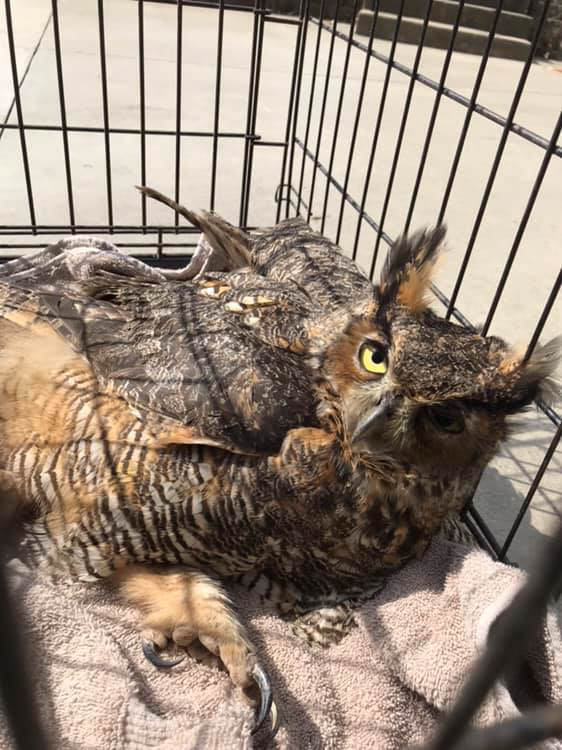
A Great Horned Owl in a transport cage.
What We Saw
- A wild raptor with dangerous feet
- A stressed animal that needed space
- Secure containment
- A safe transport plan
- The next rehabilitation step
Ruffled Feathers September 7 History: The Next Morning
Another September 7 post says a Great Horned Owl captured that day would be taken to Broadbent Wildlife Sanctuary the following morning.
It may have been the same owl.
The surviving record does not give us enough to say that for certain.
So we will not.
Wildlife Rescue Stories: Rescue Was Never One Person Doing Everything
Broadbent was where a lot of our wildlife stories changed hands.
We might do the capture, the overnight care, or the transport.
Then the animal moved into the hands of people whose job was rehabilitation.
That handoff mattered.
Rescue is not one person doing everything.
It never was.
Personal Reflection
My Sunday Morning Church
I wrote that every Sunday morning at Broadbent felt like church to me.
I have never been much for organized religion.
Put me outside around wildlife, though, and I understand the feeling people are talking about.
There is something about being surrounded by animals that do not care what you own, what you do for a living, or what anybody thinks of you.
They are just there.
So are you.
Sometimes that is enough to make the world feel a little bigger than whatever problem you walked in carrying.
Sometimes the archive gives you the whole story.
Sometimes it gives you one night.
This one gave us the owl before Monday.
Chapter Six · 2019
From “Killer” to Family
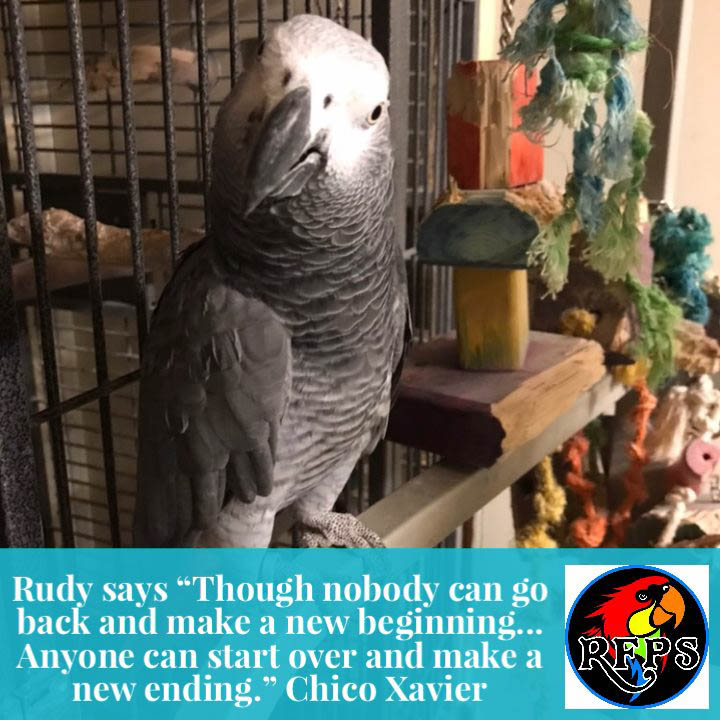
Rudy looked like a whole different bird.
In the original post, I joked that he had gone from a “viscous killer” to part of the family.
That was the kind of language we used in quick Facebook posts back then.
What I was really describing was a bird who had stopped responding to us the same way.
He was settling in.
He was learning the routine.
We were learning him.
Fear had less control over the conversation than it used to.
Louie’s Progress Was Quieter
Louie’s update was quieter.
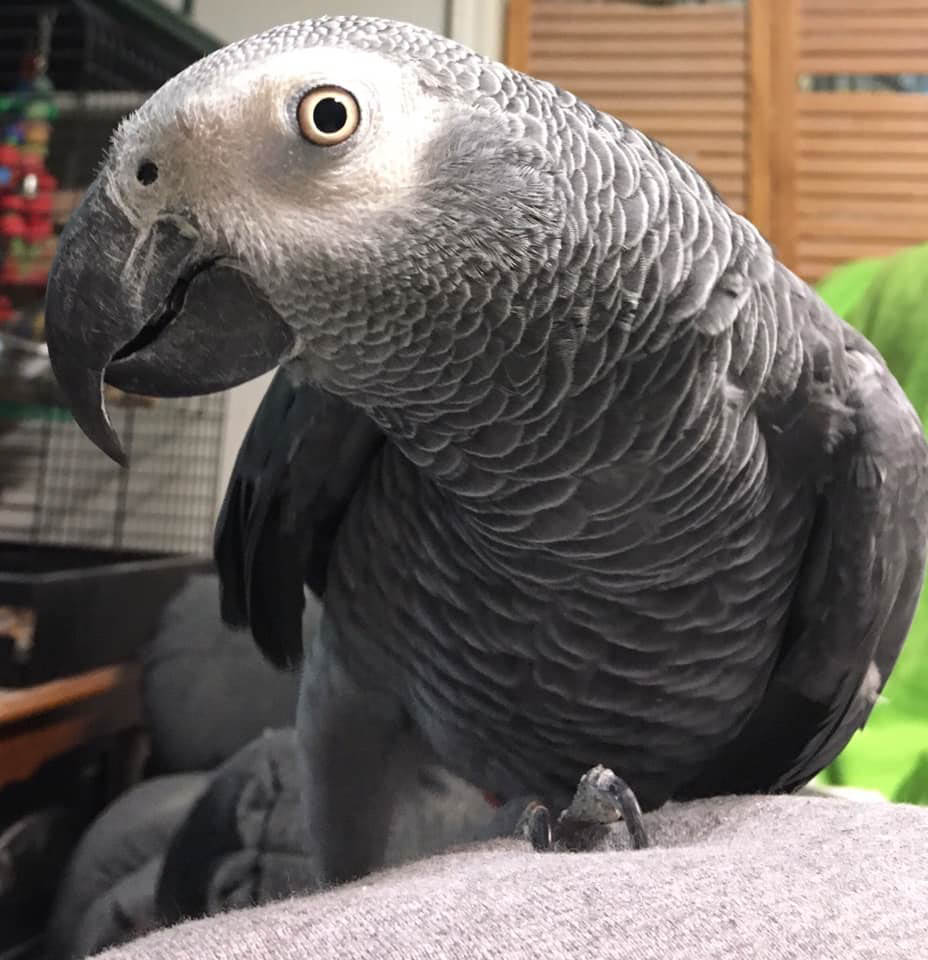
He had been spending time downstairs with the other greys and opening up more.
Then came the part that mattered:
He was stepping up without biting.
Tara called him a good boy.
To somebody scrolling past, that probably looked like a very ordinary sentence.
When you work with parrots, it is not ordinary at all.
Trust is invisible until the animal does something it could not do before.
What Most People Saw
A parrot stepped onto a hand.
What We Saw
A bird that had another option and chose the hand anyway.
What a Bite Can Be Saying
Parrots do not have many ways to tell us we have pushed too far.
A bite can come from fear, stress, territorial behavior, overstimulation, confusion, or a warning we failed to notice earlier.
That does not mean every bite has some deep hidden meaning.
It does mean “bad bird” is usually not a very useful place to stop thinking.
They had stopped seeing every approach as something they had to survive.
And somewhere along the way, we stopped seeing them only for what they did when they were afraid.
Chapter Seven · 2020
Ruffled Feathers September 7 History: The Quiet Work of Growing
By 2020, RFPS was starting to look a little more like an organization and a little less like a collection of rescue posts held together by caffeine.
Tara had made a shirt.
There were more projects coming.
She was already looking for a new vendor for the 2021 calendars.
None of that sounds particularly historic.
That is exactly why I like finding it now.
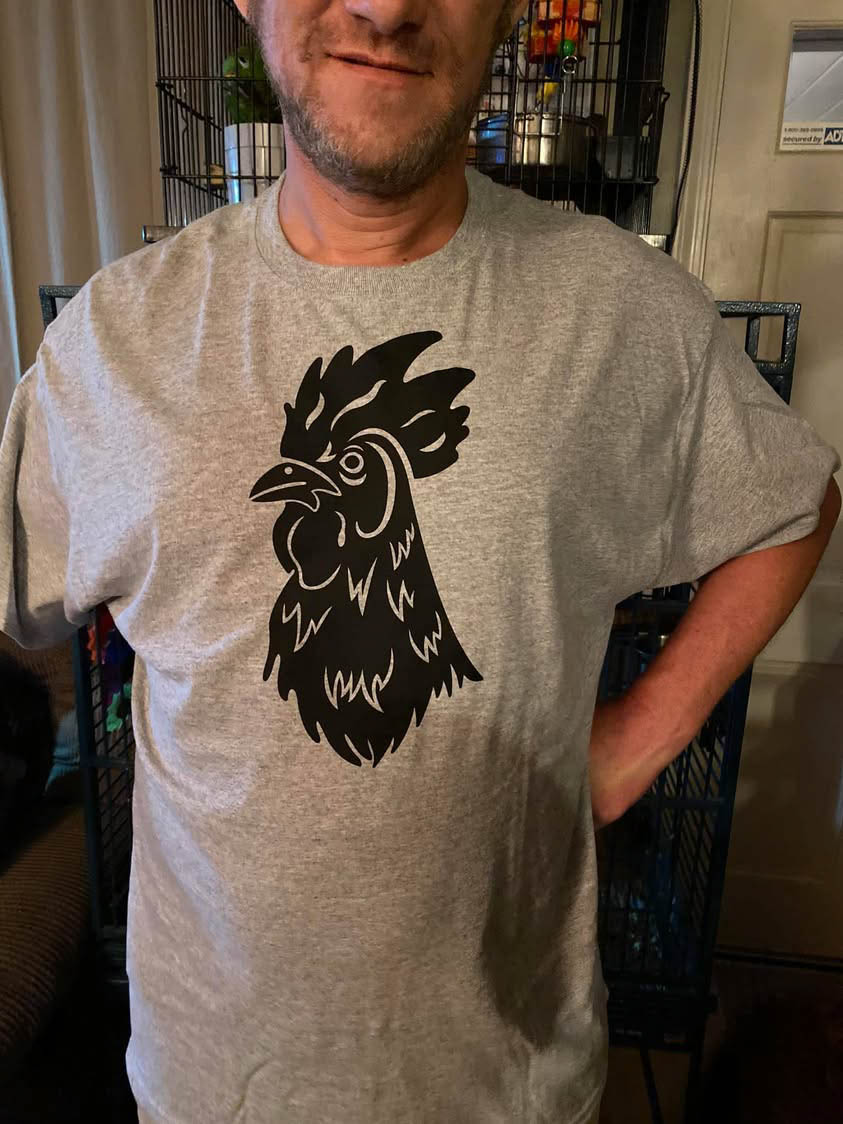
Ruffled Feathers September 7 History: Small Signs We Were Growing
- A shirt with our name on it
- Calendars people expected each year
- People recognizing the birds
- People recognizing us
A shirt here. A calendar there. A name people start remembering.
History is not only built from rescues.
Sometimes it is built from somebody sitting down and saying:I made a shirt.
Chapter Eight · 2024
RFPS Chronicles September 7: The Work Was Still Waiting
Jump ahead four years and September 7 handed us something a little unusual.
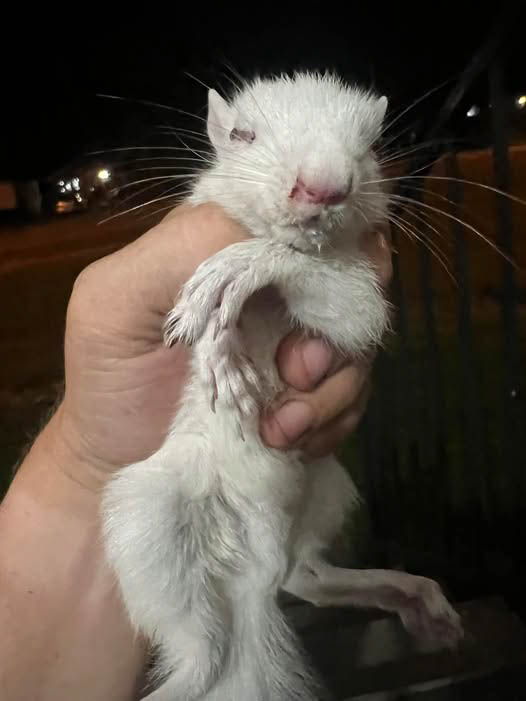
An albino squirrel.
I knew exactly what it was.
Everybody following the page did not necessarily get that luxury.
Back then I used to play a little game called “What the Heck Is That?” I would put up a picture of some animal we had encountered and let everybody take their best guess before giving away the answer.
This little white creature made a pretty good contestant.
I wrote that I thought we had escaped with only a slight eye injury and how amazing it was to be blessed enough to see a creature like this, let alone hold and feed it.
Years into wildlife rescue, animals could still stop me in my tracks.
This one certainly did.
Experience Does Not Mean Always Knowing
By then, years of wildlife calls had taught us something the early posts could not have.
Experience does not mean always knowing the answer.
It means getting more comfortable saying:
I need somebody else to look at this.
This needs a veterinarian.
This needs a rehabber.
This animal needs transport.
Or sometimes:
This animal does not need us at all.
What the Photo Shows
An albino squirrel being handled and fed.
What the Record Tells Us
- there was concern about an eye injury
- Brad believed the injury appeared relatively slight
- the encounter made an impression on him
What Changed
More years.
More experience.
More people to call.
Better judgment about when we needed help.
What Didn’t
One animal still needed one good decision.
The organization changed. The responsibility did not.
September 7 had changed across the years.
So had we.
But the work was still waiting.
Quiet Heroes
RFPS Chronicles September 7: The People Between the Posts
Rescue stories tend to remember the person holding the animal.
Real rescue work is usually much messier than that.
Somebody noticed something was wrong.
Somebody sent a message.
Somebody answered.
Somebody drove.
Somebody helped with the bird room.
Somebody took the animal at the next stop.
Somebody made the shirt.
Somebody entered the photo contest.
Somebody kept showing up.
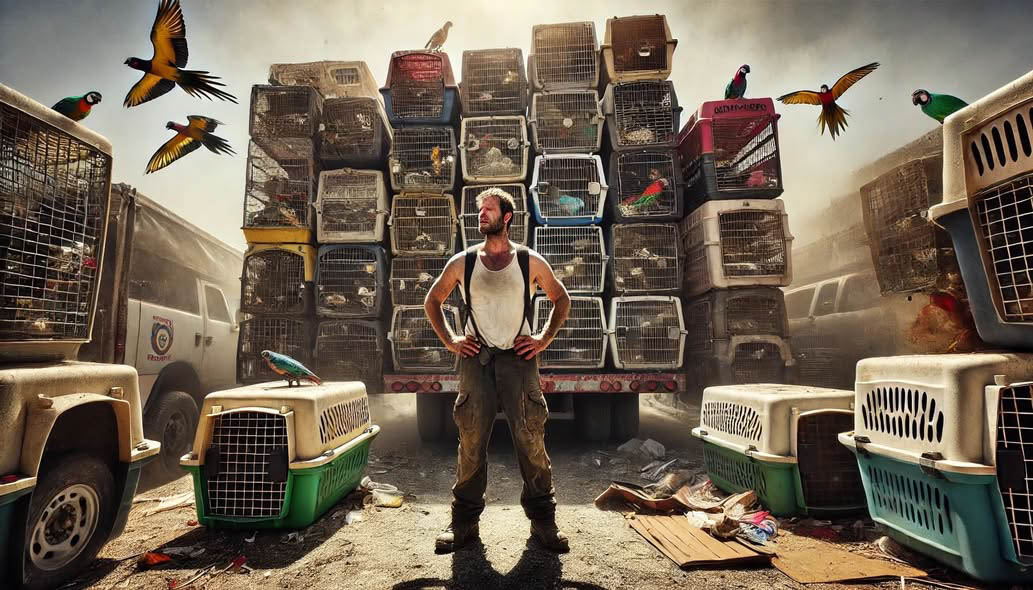
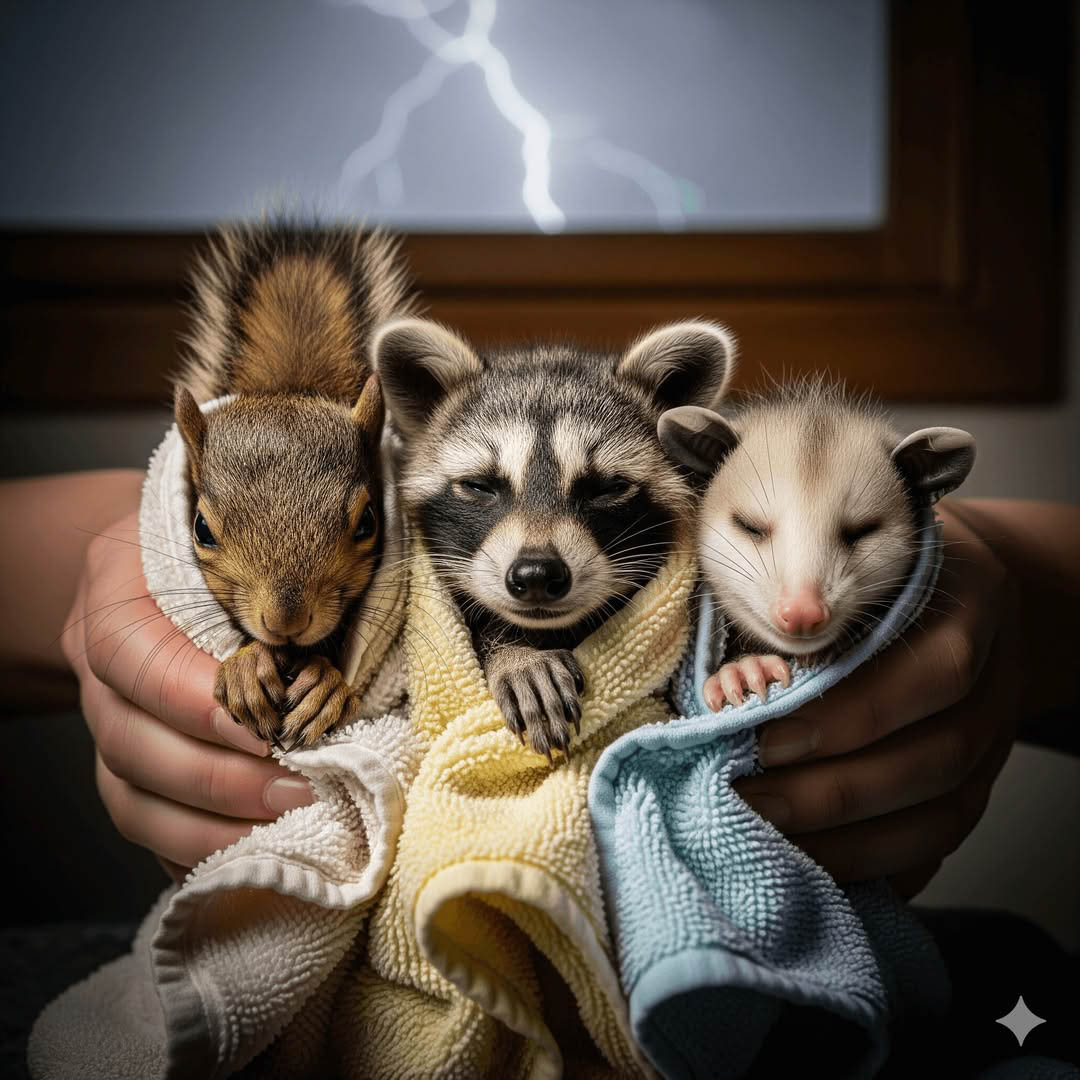
Images: Ruffled Feathers Parrot Sanctuary Inc. These panels illustrate the work each person did. They are not portraits of the people named.
Tara
Tara appears throughout the September 7 archive in quiet ways.
She noticed behavior.
She documented Louie opening up.
She described Chloe as a little sheriff.
She knew Chase and George were the birds who always wanted to be around her.
She made an RFPS shirt.
She thought ahead to the next calendar.
None of those things looks like a dramatic rescue.
All of them helped make the place what it was.
Margaret and Bethany
Margaret and Bethany appear in smaller pieces of the archive, but that is part of the point.
Not everybody who matters gets a chapter.
Sometimes somebody is there in a photograph, a joke, a moment with a bird, or one little post that helps preserve what daily life actually looked like.
Broadbent Wildlife Sanctuary
Broadbent was one of those places where our part of a wildlife story often ended and the next part began.
We might handle the call, the capture, the overnight care, or the transport.
Rehabilitation required another set of hands.
That handoff mattered just as much as the capture.
Parrot Rescue History: The People Behind the Bird Pictures
The 2017 photo contest preserved something that is easy to miss when you only count rescues.
People wanted to participate.
They submitted their birds.
They voted.
They commented.
They shared.
They came back.
Community is not only the people who arrive during a crisis.
It is also the people who were already there before the crisis happened.
Animals get helped because somebody notices. Somebody calls. Somebody answers. Somebody drives.
The September 7 archive remembers plenty of animals.
It also remembers something just as important.
None of us were doing this alone.
Around the World
RFPS Chronicles September 7 Beyond the Sanctuary
September 7 was never only about the animals physically inside RFPS.
Some of the old posts wandered much farther.
A falcon over Europe.
A puffin in a burrow.
A toucan reaching through the forest.
A penguin moving through the water.
Those little educational posts connected the sanctuary to a much bigger world.
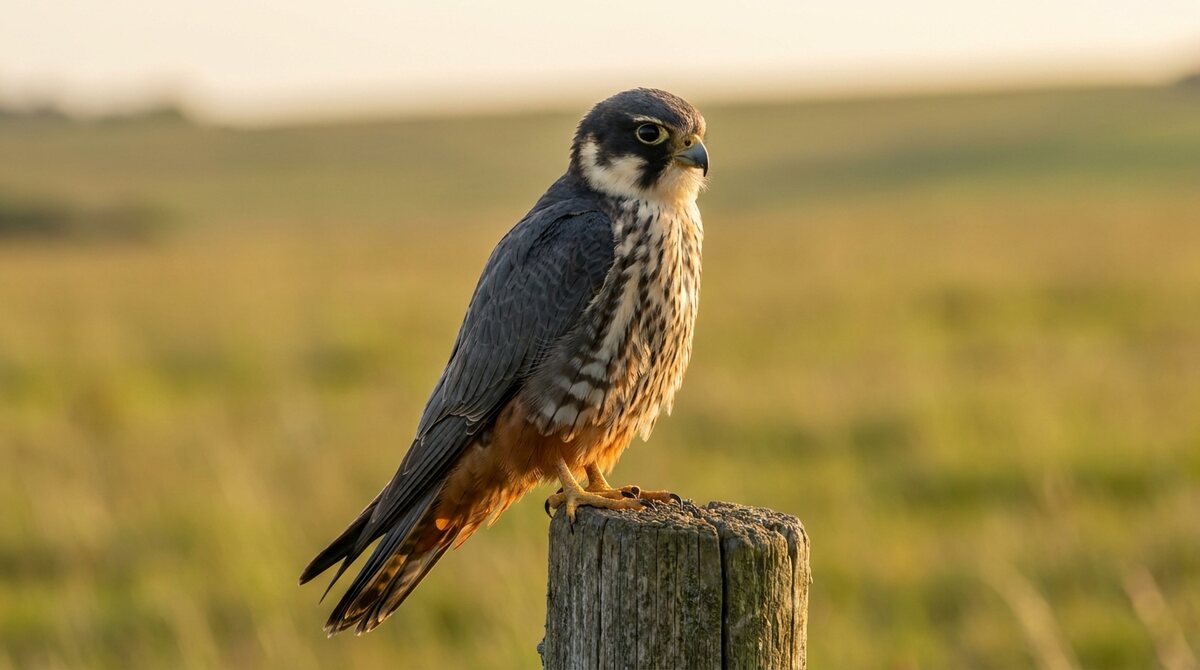
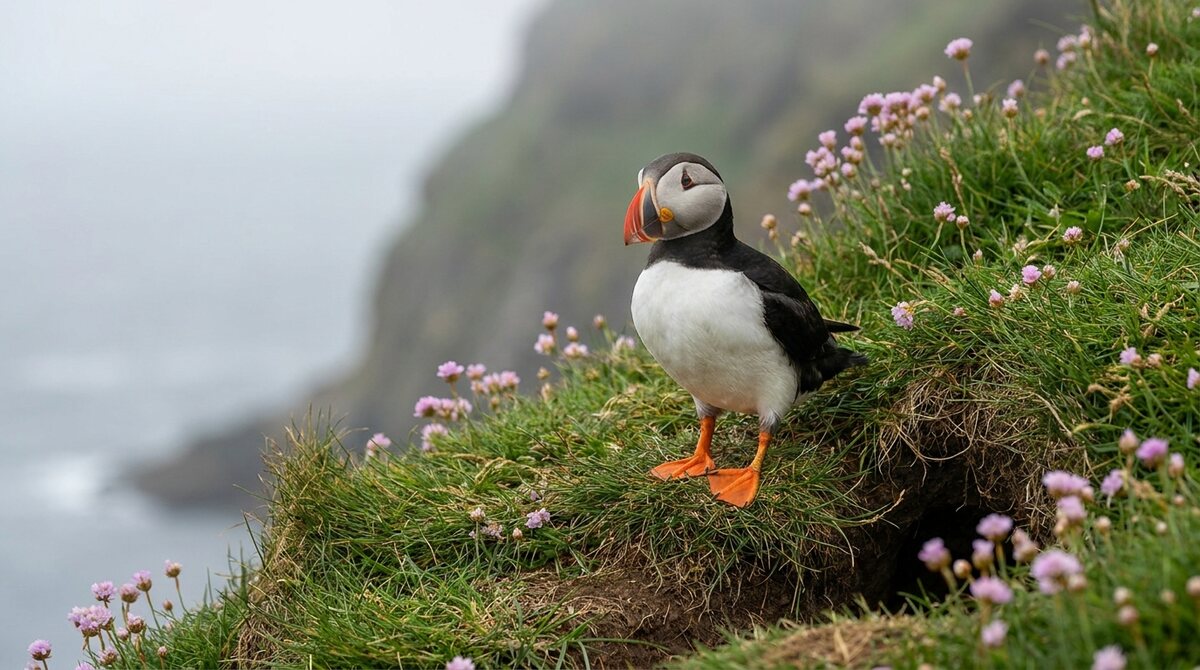
Puffin
Puffins often nest in burrows or sheltered coastal cavities.
Illustration: AI-generated for Ruffled Feathers Parrot Sanctuary Inc.
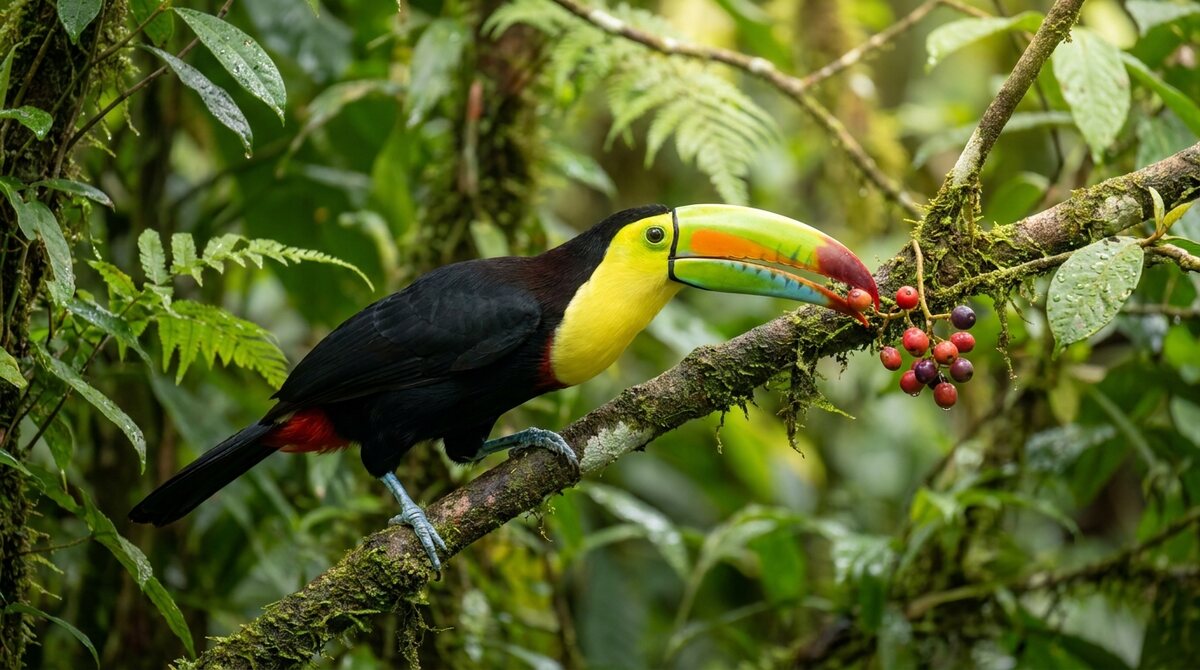
Toucan
The toucan’s oversized bill is surprisingly light for its size and helps the bird reach food in places its body cannot safely go.
Illustration: AI-generated for Ruffled Feathers Parrot Sanctuary Inc.
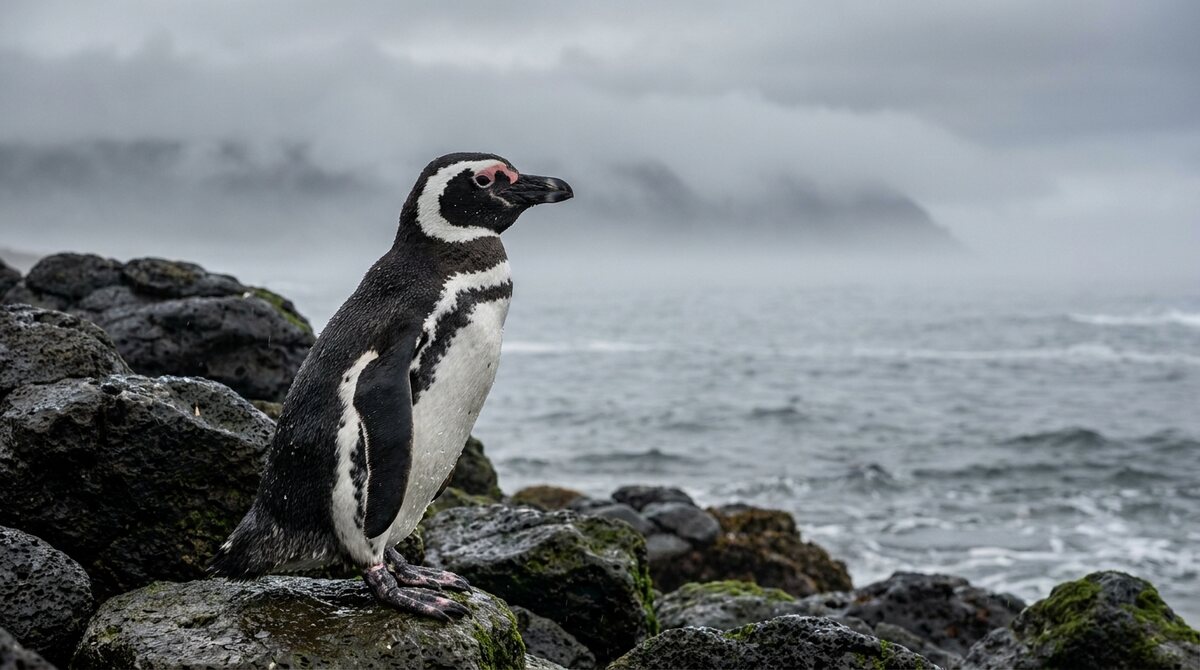
Penguin
Penguin wings function like powerful underwater propellers, moving the bird through water in a way that resembles flight.
Illustration: AI-generated for Ruffled Feathers Parrot Sanctuary Inc.
Birds connect places.
RFPS Chronicles September 7: Curiosity Was Part of the Work Too
Not every RFPS post needed to be about an intake, a surrender, or an emergency.
Sometimes the post was simply:
Here is an incredible bird.
Here is something interesting about it.
Maybe you will remember it later.
Curiosity has always mattered because respect often starts with noticing.
A falcon over Europe.
A puffin in a burrow.
A toucan in the forest.
A penguin moving through the water.Sometimes curiosity is where respect starts.
Looking Back
What RFPS Chronicles September 7 Preserved
Facebook was never supposed to become our historical archive.
We were posting updates.
Bird pictures.
Wildlife facts.
Bad jokes.
A photo contest.
Whatever happened to be going on that day.
Then enough years passed.
Suddenly all of it became evidence.
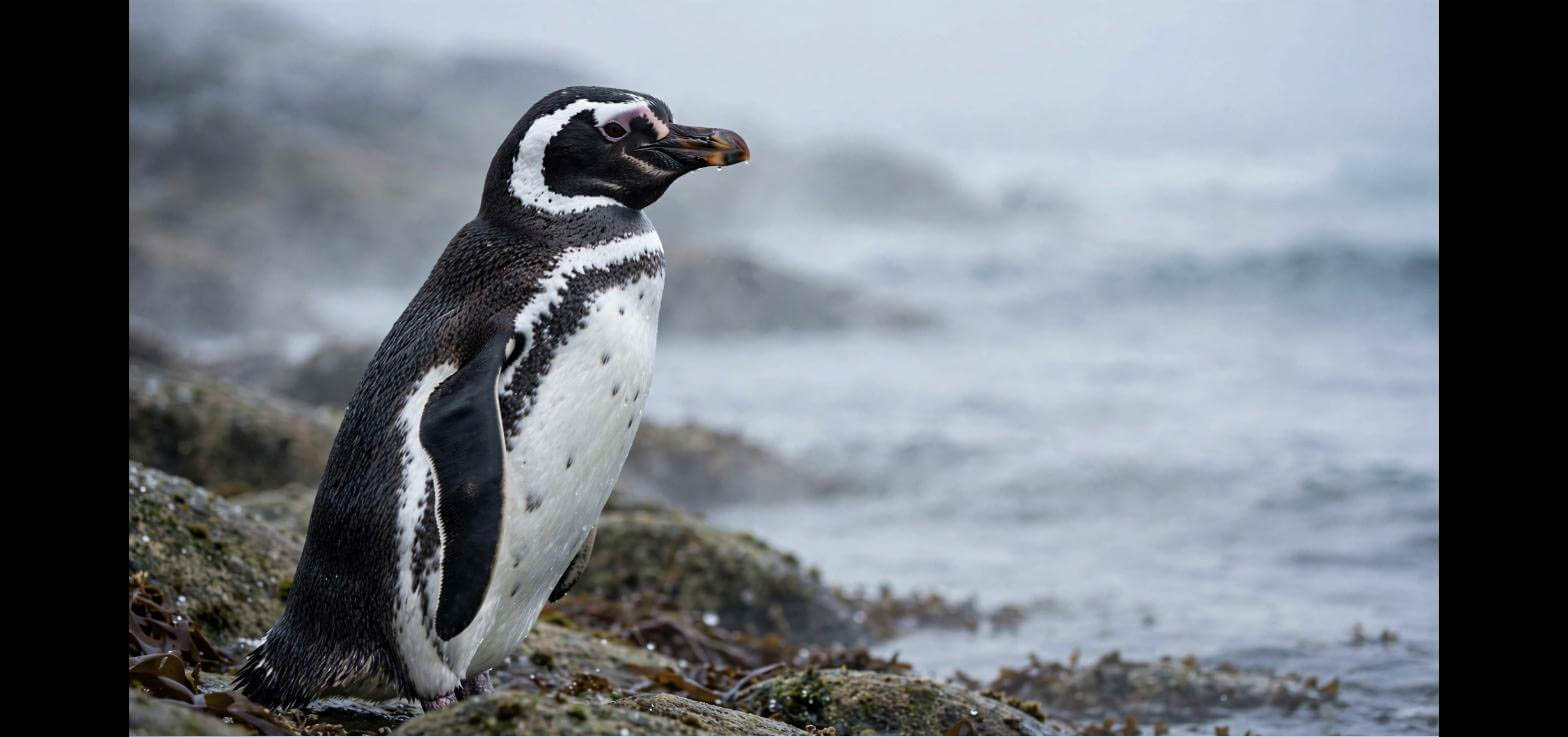
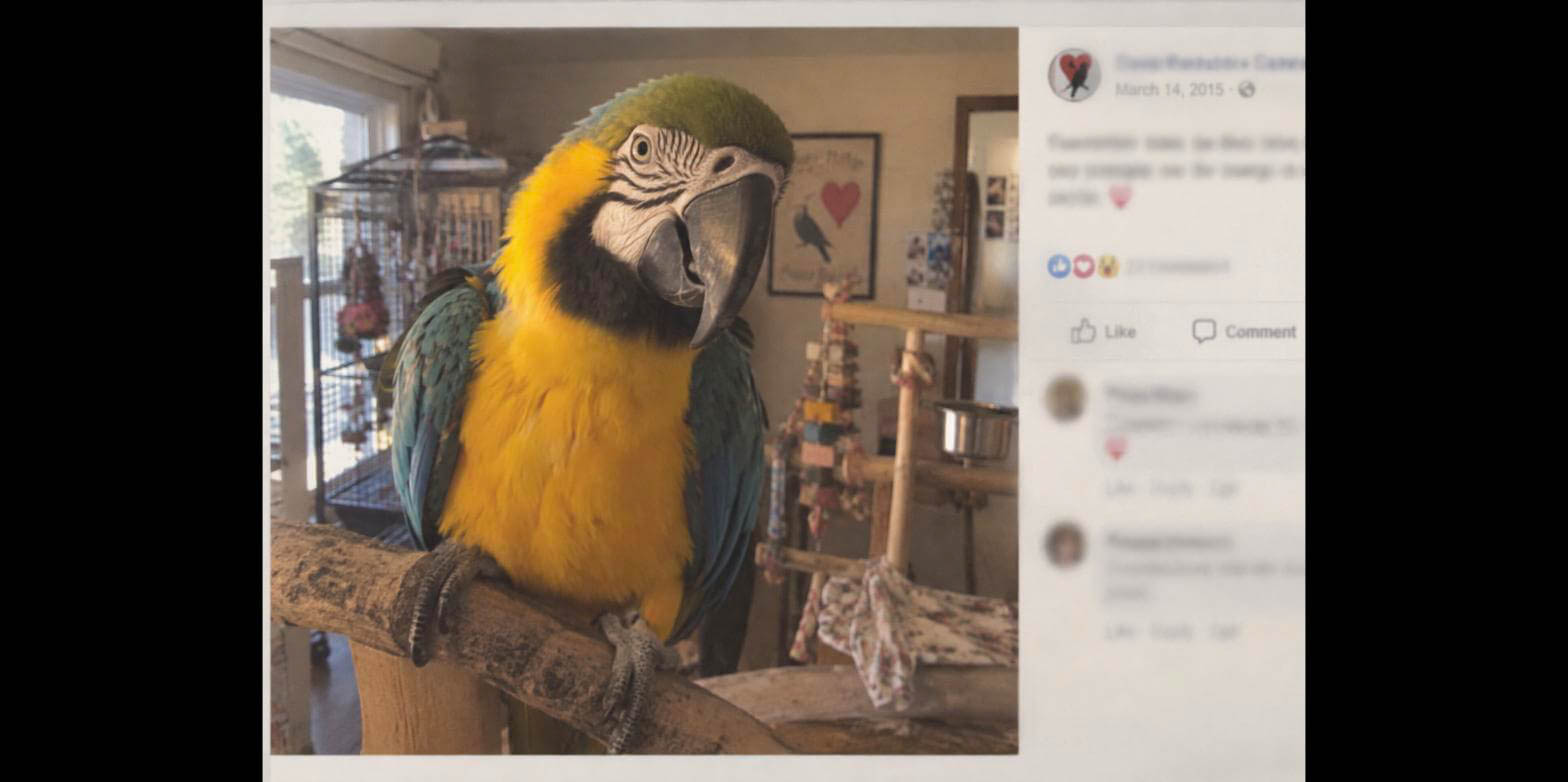
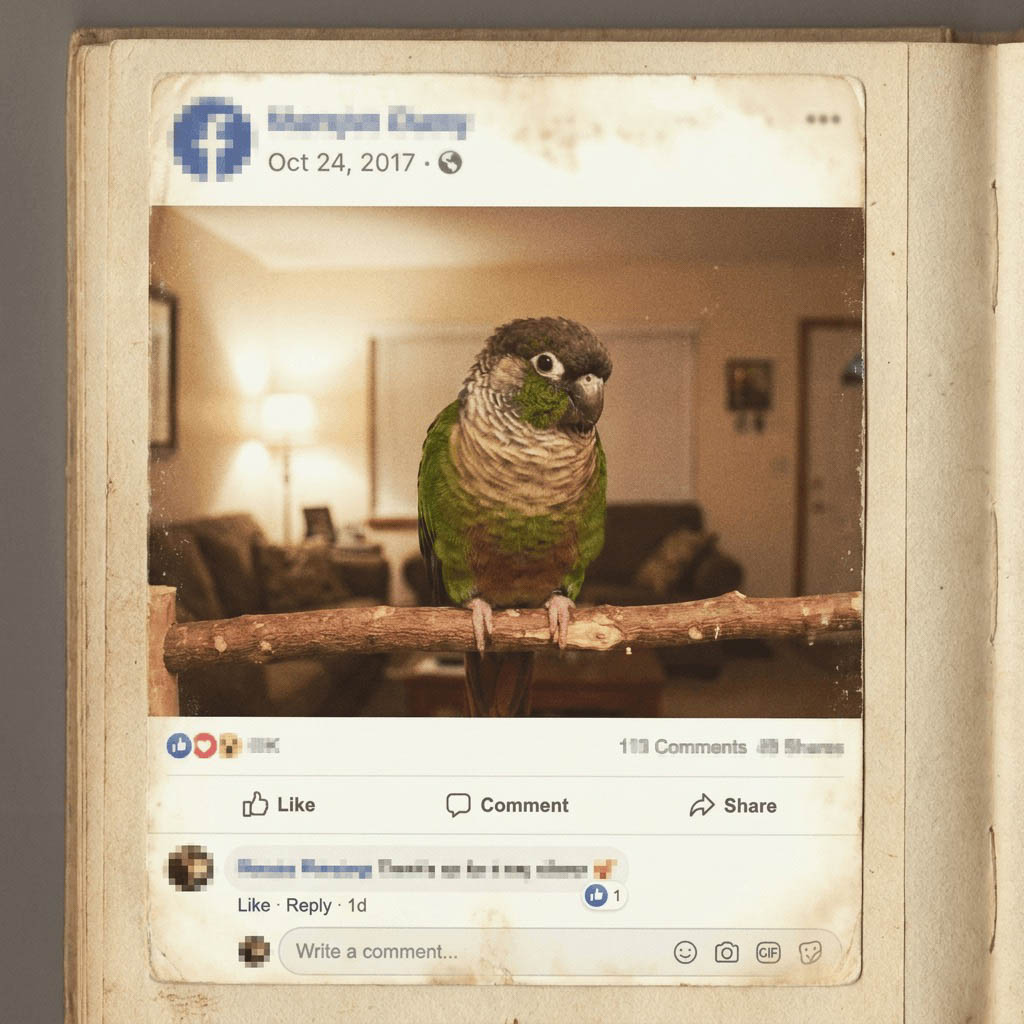
September 7, 2016
Jojo is growing his feathers back in and his little pantalooms have
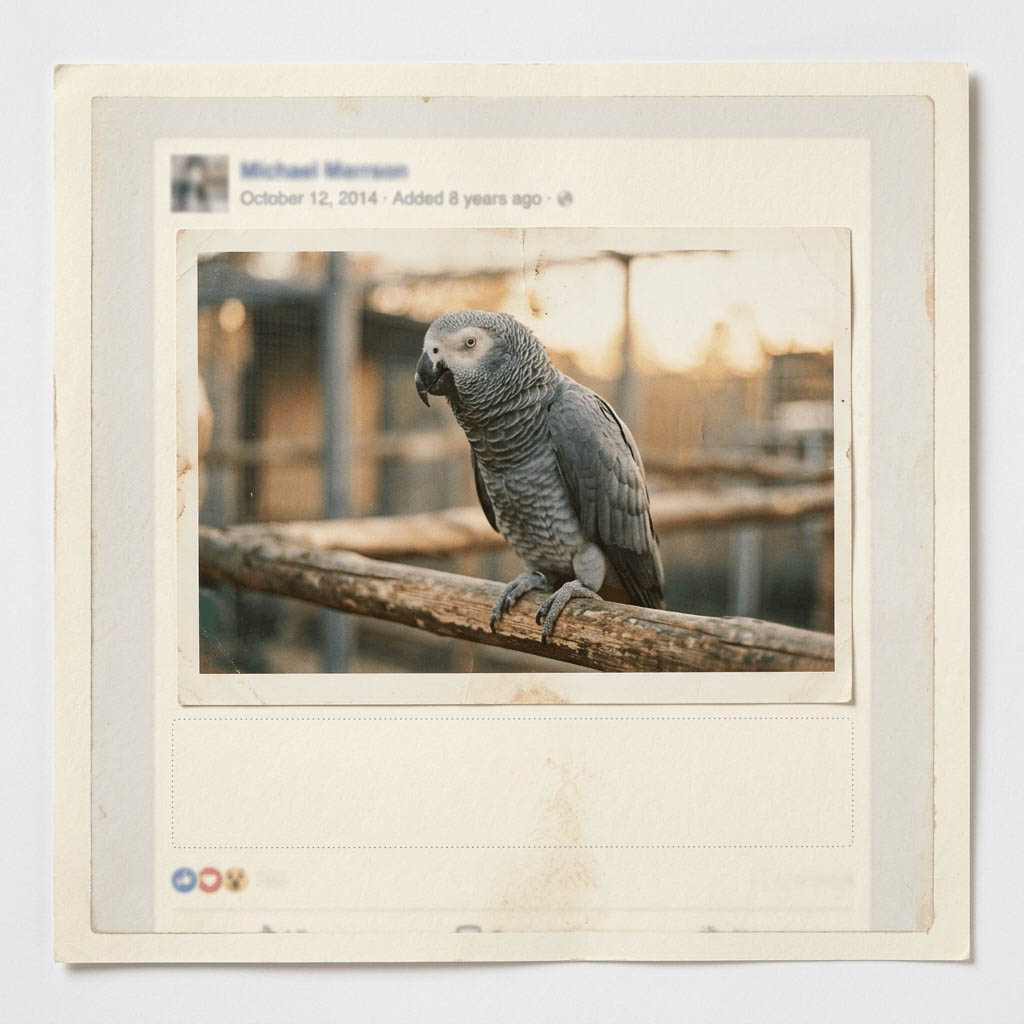
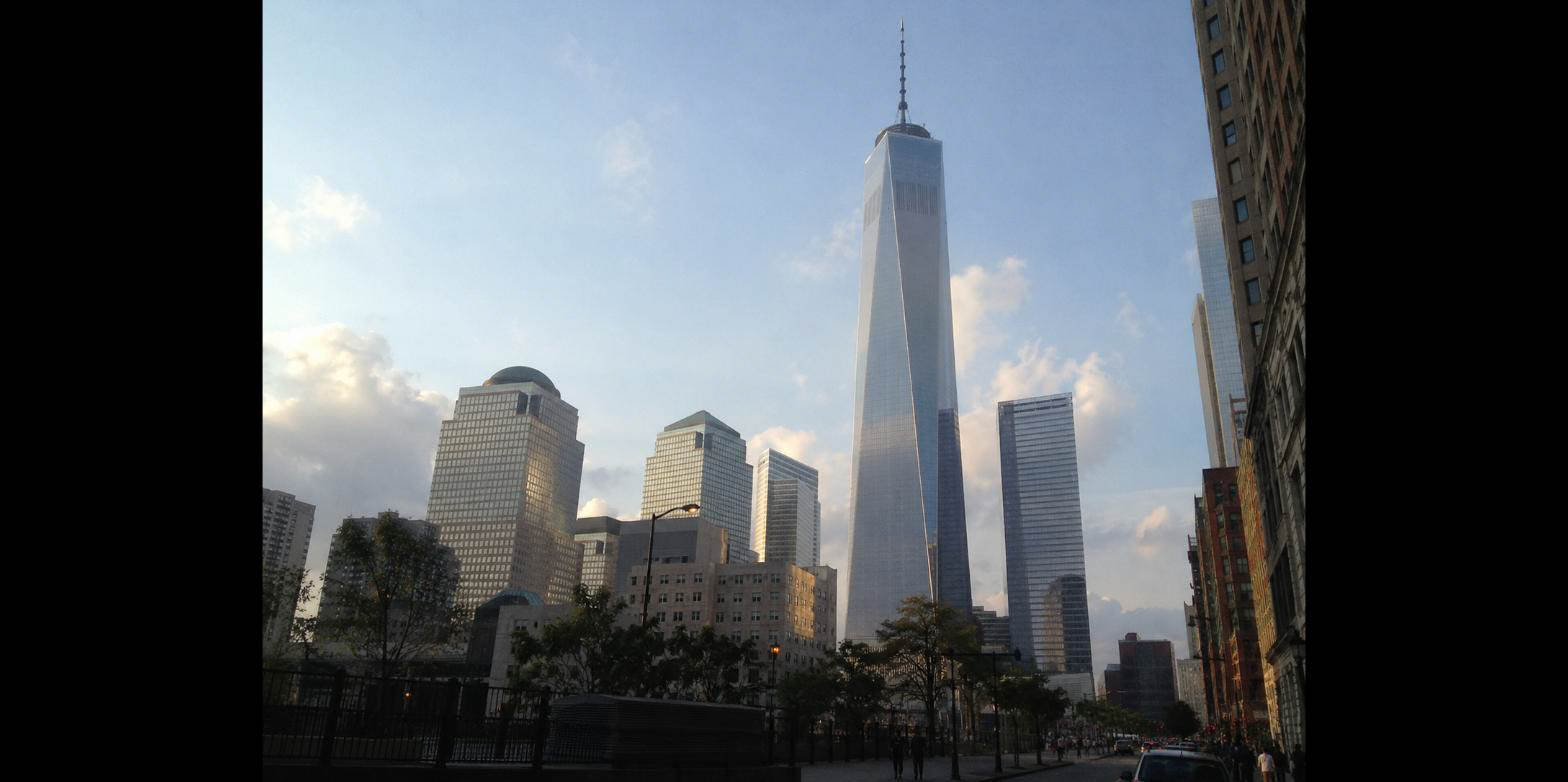
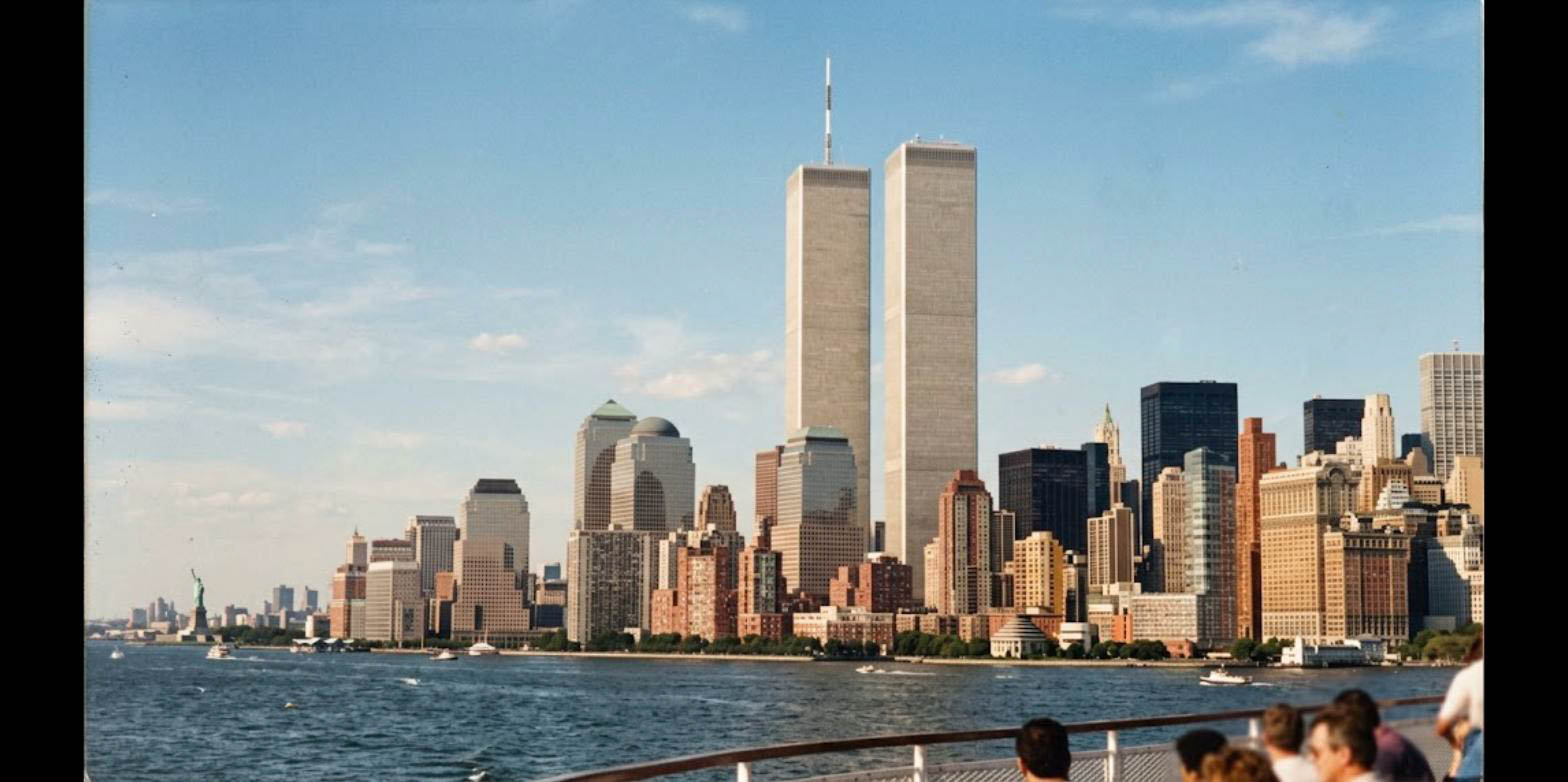
September 7, 2014
Caption missing
September 7, 2019
Surgery Monday. Better make the last capture count and go out with a bang
Great Horned Owl
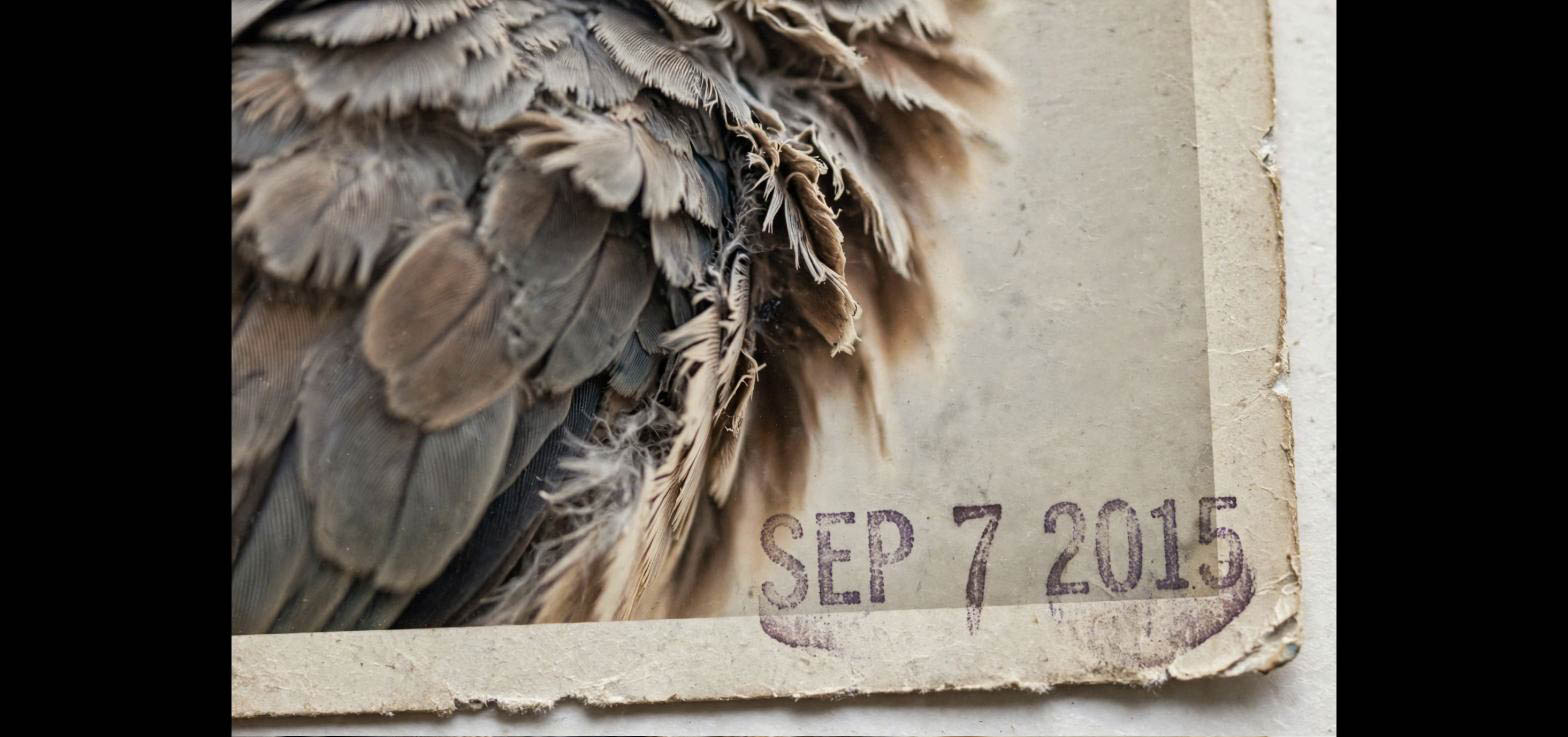
Archival reconstruction based on recovered material. The dates and the surviving caption fragments come from the original RFPS posts. The panels themselves are archival-style reconstructions inspired by those posts and images, not the original screenshots. Illustration: AI-generated for Ruffled Feathers Parrot Sanctuary Inc.
When the Words Disappear
Sometimes the photograph survives and the words do not.
That happened with the September 7, 2014 posts.
We have the images.
We do not have the original captions.
The temptation is to fill the silence.
We are not going to.
The Little Things That Bring Them Back
Formal records are useful.
They tell us dates, names, arrivals, treatments, transfers, and outcomes.
But they rarely tell us that Chloe was a little sheriff.
That Pauley was ready to play or bite.
That Raylin was apparently Dad’s favorite.
That Stormy Grey was ready for the camera.
Those little lines are not less valuable because they are informal.
Sometimes they are the details that make the animal recognizable again.
The goal of the Chronicle is not to make the past look cleaner than it was.
That Does Not Make It Useless
The archive has typos.
Missing names.
Unidentified animals.
Half-finished thoughts.
Old jokes that made more sense eleven years ago.
That does not make it useless.
It makes it real.
Social Media Shares Moments
Social media is good at now.
It shows you what happened today.
Then tomorrow arrives.
Then another post.
Then another.
Eventually the story is still there, but buried under everything that came after it.
The RFPS Chronicles September 7 edition gives us a chance to pull those moments back out, put them in order, and remember what they meant.
Social media shared these moments.
The Chronicle gives them somewhere to stay.
September 7 gave us plenty.We almost lost them to the scroll.
Why We Started The RFPS Chronicles
Why RFPS Chronicles September 7 Matters
There are animals I was certain I would never forget.
Then somebody mentioned one years later and I realized I remembered the feeling better than the details.
I remembered loving them.
I remembered worrying about them.
I remembered whether they made me laugh.
But dates disappeared.
Names got harder.
Little moments blurred together.
Memory kept the shape of the story and started dropping the paperwork.
Memory is not a filing system.
I Do Not Want Them to Become “One of the Birds”
I do not want Raylin to become “one of the cockatoos.”
I do not want Pauley to become “one of the birds we had years ago.”
I do not want the owl to become “some wildlife call before surgery.”
I do not want Tara’s shirt, the photo contest, Jojo’s feathers, or Louie stepping up to disappear because newer stories pushed them farther down the page.
The animals deserve better than that.
The people do too.
More Than Intakes and Outcomes
Rescue history is not only made from intake forms, vet visits, releases, adoptions, and losses.
It is also made from Tara making a shirt.
Margaret standing there with Riafiki.
Bethany making a joke.
People entering a bird-photo contest.
Broadbent taking over where our part of a wildlife story ended.
Educational posts.
Bad jokes.
A bird eating lunch.
Those things mattered because they were part of the life surrounding the rescue work.
What We Knew Then
The words, photographs, names, and details preserved in the original post.
What We Know Now
Later context, years of experience, and what happened after the original moment, when that information can be verified.
The important part is keeping those two things separate.
We can add context without rewriting the past.
Ruffled Feathers History: The Chronicle Is Not a Repost
The RFPS Chronicles is not a collection of old Facebook posts with nicer formatting.
The old post is where the RFPS Chronicles September 7 story starts.
Then we add what we know now, clearly separate it from what we knew then, and preserve the difference.
That context is what turns a scattered collection of posts into a record somebody can actually understand years later.
RFPS Chronicles September 7: Built for Later
Social media is built for now.
The Chronicle is built for later.
I want somebody years from now to be able to find one of these editions and understand more than what happened.
I want them to understand who was there.
What the place felt like.
What we knew.
What we did not know.
What made us laugh.
What worried us.
And why any of it mattered.
Social media is built for now.
The Chronicle is built for later.And I do not want everything we have lived through here to disappear simply because we got busy living through what came next.
Until the Next Call
RFPS Chronicles September 7 Ends. The Work Does Not.
Eventually you have to close the old posts.
There are birds to feed.
Messages waiting.
Cages that need cleaning.
Somebody will need advice.
Something wild will get itself into trouble.
The phone will ring again.
The Next Animal Does Not Know the History
It does not know how many animals came before it.
It does not care how many years we have done this.
It only knows whatever is happening to it right now.
That brings everything back down to one animal, one decision, and whatever the next right step happens to be.
The archive stops. The work does not.
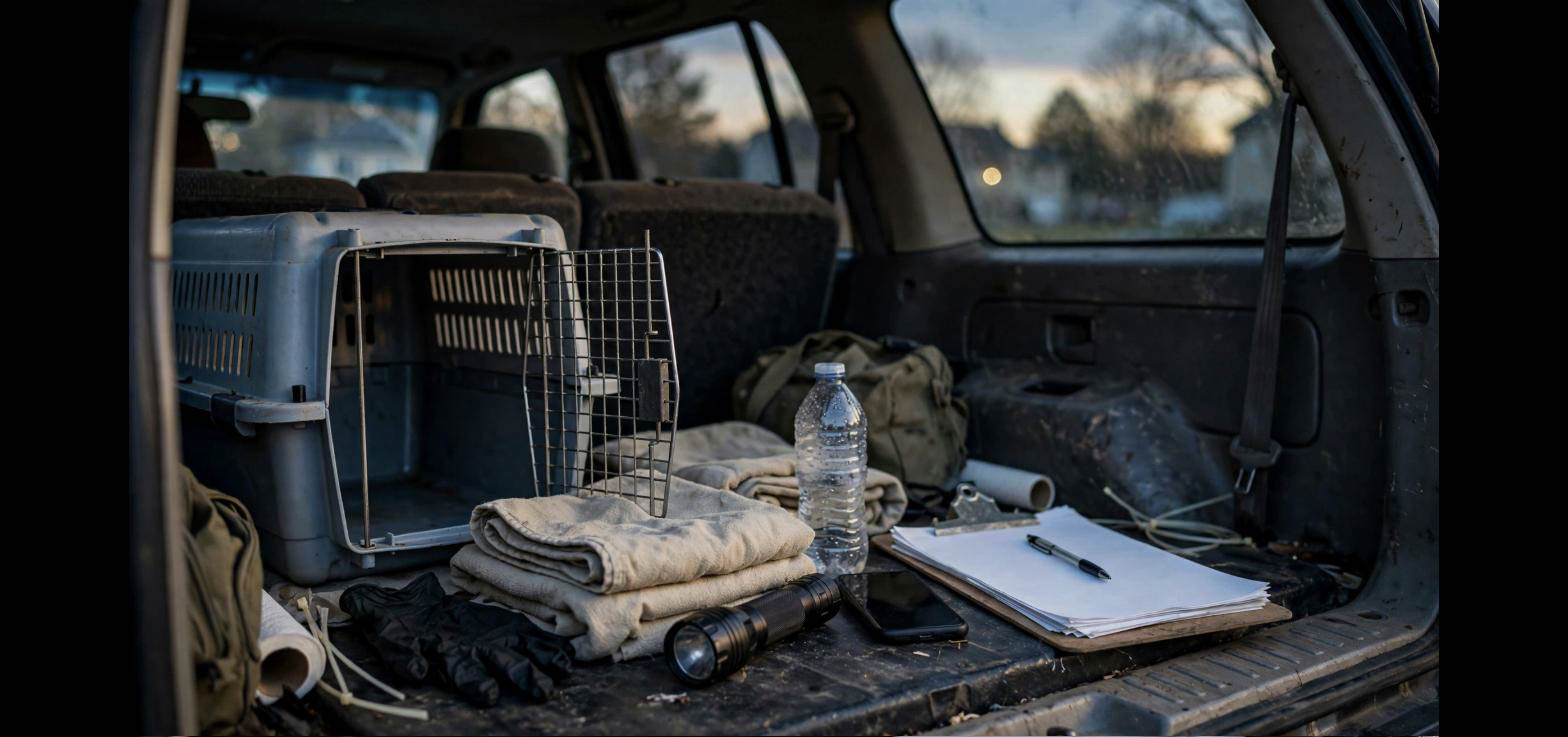
Because somewhere outside the pages of the RFPS Chronicles September 7 edition, the next story has probably already started.We just do not know its name yet.
This Day in World History
RFPS Chronicles September 7 Beyond RFPS
September 7 has carried plenty of history outside the sanctuary too.
Here are four moments from the wider world that share the same date.
1813
Uncle Sam Enters American Lore
According to the best-known and Congressionally recognized account, September 7, 1813 became associated with the nickname “Uncle Sam,” linked to Samuel Wilson of Troy, New York. Earlier uses of the phrase existed, so it is better treated as the traditional origin story than as a perfectly settled first use.
1822
Brazil Declares Independence
On September 7, 1822, Prince Pedro declared Brazil’s separation from Portugal near the Ipiranga, a defining moment in the country’s independence process.
1977
Panama Canal Treaties Signed
President Jimmy Carter and Panamanian leader Omar Torrijos signed the Panama Canal Treaty and Neutrality Treaty on September 7, 1977. The agreements set the course for the eventual transfer of canal authority to Panama at the end of 1999.
1988
National Zoo Veterinary Hospital Opens
On September 7, 1988, a new veterinary hospital opened at the National Zoological Park, providing medical and surgical care for the zoo’s animals and housing its animal-health and pathology departments.
Source: Smithsonian Institution Archives: Veterinary Hospital Opens at NZP
History comes in all sizes.
Treaties. Independence. National symbols. Veterinary hospitals.And, somewhere in Louisville, a parrot deciding whether your finger deserves mercy.
Some of our related content and beyond:
Where Hope Takes Flight
Arctic Loon: Birds of the World - North America
Ruffled Feathers Parrot Sanctuary Inc.
Where Hope Takes Flight
Birds of the World · North America
Arctic Loon
Gavia arctica · also called the Black-throated Loon
Updated 23 August 2026 · Photographs are labelled ID confirmed where the bird pictured is Gavia arctica and Representative where a related loon stands in.
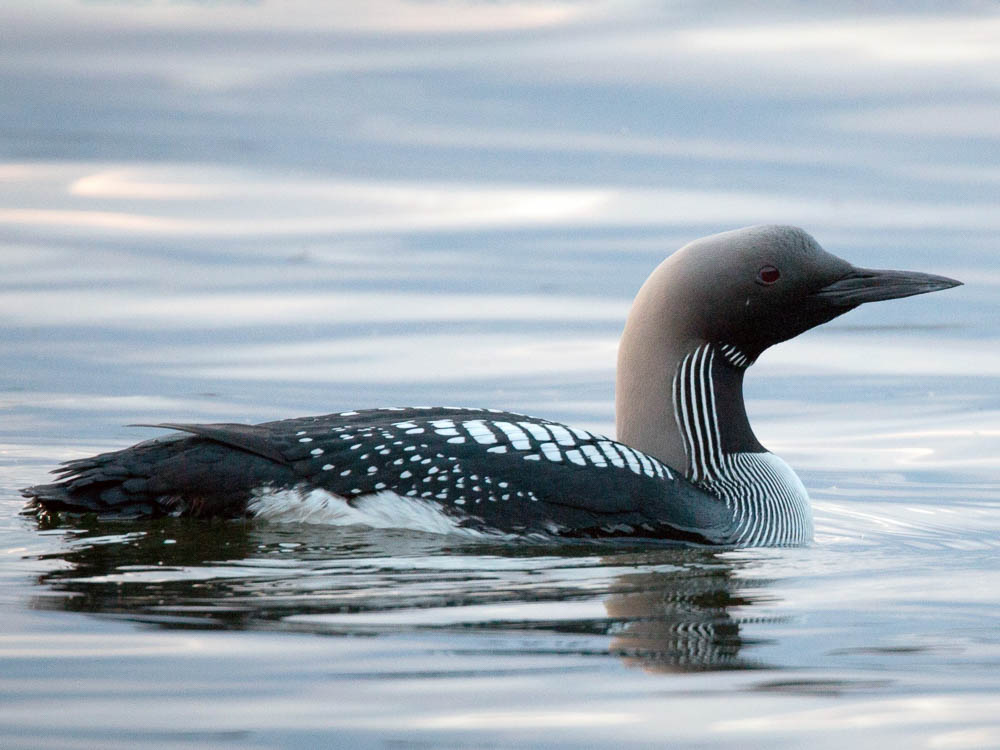
Somewhere on a lake in far western Alaska, an Arctic Loon is about to make a sound that will ruin the silence in the best possible way. This sleek diving bird has striking breeding plumage, serious underwater skills, and one of those haunting calls that can make an otherwise quiet northern lake sound like the opening scene of a mystery movie.
It is much more common across Eurasia than it is here. In North America the Arctic Loon is a rare and very local bird, which makes it one of those species that technically belongs in a Birds of North America series while simultaneously making most North American birdwatchers work ridiculously hard to see one.
So grab the binoculars. We’re going north. Way north.
Field Notes
- Range
- Northern Eurasia; in North America primarily far western AlaskaTaiga and tundra lakes; in Alaska, brackish lakes, bays and lagoons
- Size
- Length 68–72 cmLarger than a Red-throated Loon, smaller than a Common Loon
- Diet
- Mostly fishAquatic invertebrates also appear on the menu
- Voice
- Eerie, far-carrying wails and croaksLoudest and most frequent on the breeding grounds
- Nesting
- On lakeshores, right at the water’s edgeBoth parents raise the chicks
- Status
- Least Concern (IUCN)Least Concern is not the same as no concern
What Is an Arctic Loon?
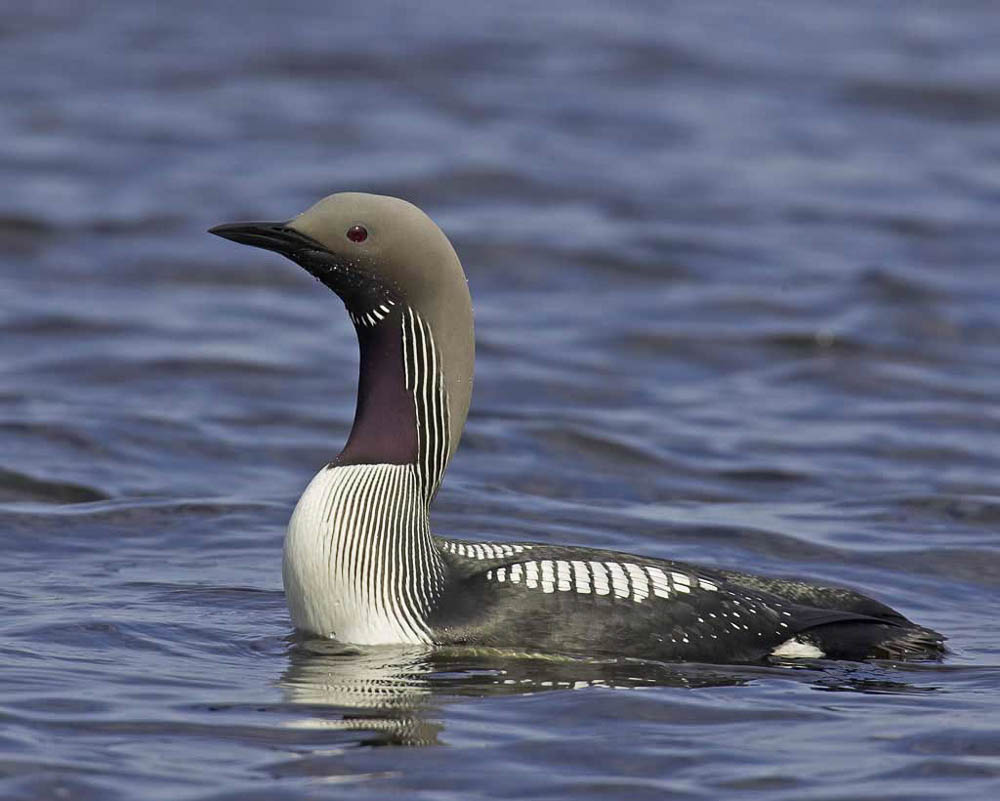
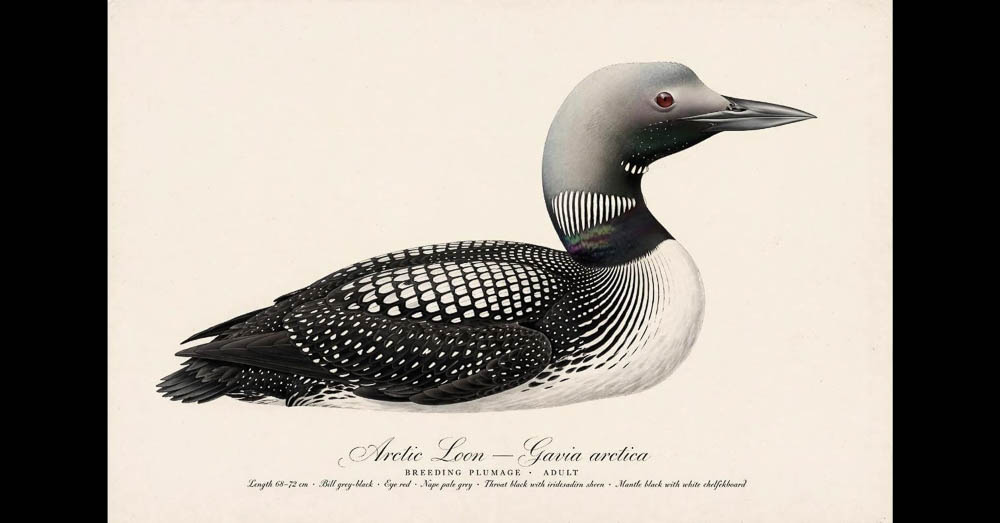
The Arctic Loon is one of only five loon species in the world. During breeding season, adults are pretty hard to criticize in the wardrobe department. They have a soft gray head, a beautifully patterned black-and-white back, bold striping along the neck, and a dark throat that can show a greenish or purplish sheen.
They are medium-sized as loons go — larger than a Red-throated Loon, smaller than a Common Loon. And then there is their closest look-alike, the Pacific Loon. The two look so similar that they were once considered the same species. They were eventually split, leaving birdwatchers everywhere with another opportunity to stare through binoculars and mutter, no, wait… look at the flank.
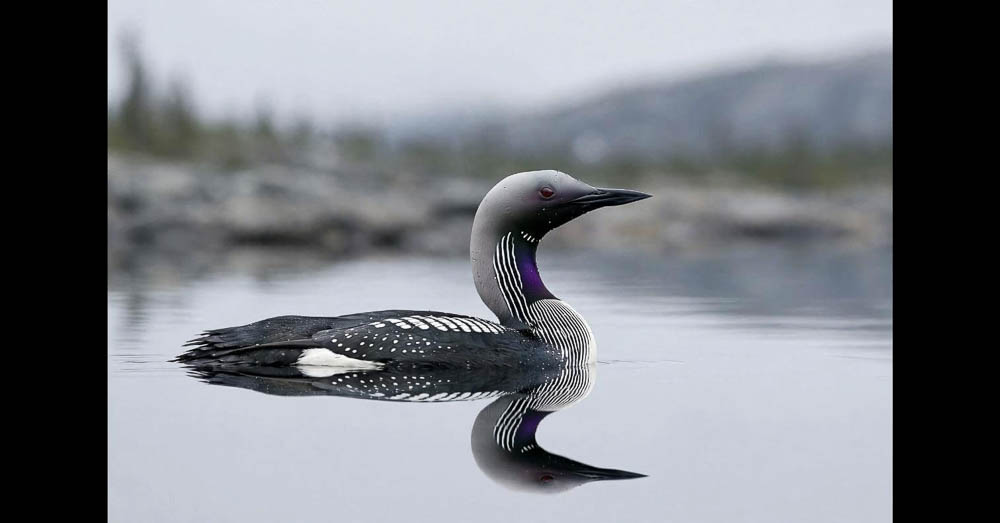
Arctic Loon Habitat: Life in the Far North
The Black-throated Loon breeds on freshwater lakes across the northern taiga and tundra. Most of its global range lies across Europe and Asia. In North America, things get much more exclusive: Arctic Loons occur primarily in far western Alaska.
And the North American birds do not use quite the same water. Across Eurasia this is a bird of large, deep freshwater lakes. In western Alaska it turns up instead on brackish lakes, tidal bays and lagoons — close enough to the coast that the tidy “freshwater taiga lake” description we use for the rest of the range does not really fit the handful nesting here.
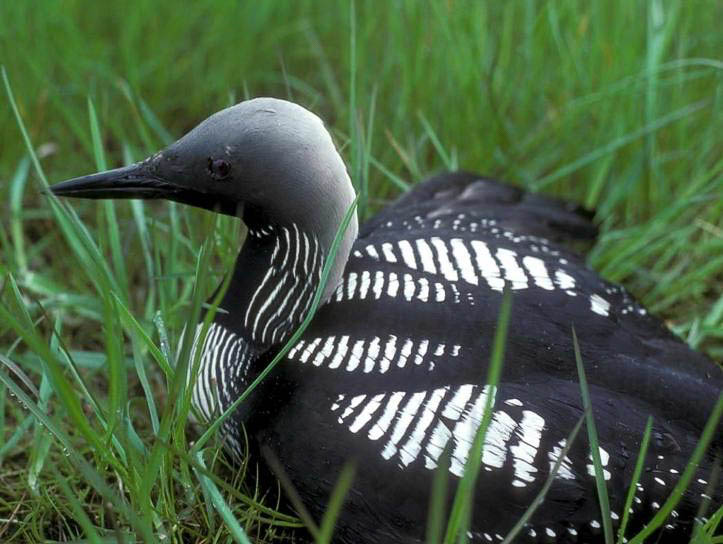
They spend much of their lives around water, and there is a very good reason for that. Loons are built for it. Their legs sit far toward the rear of their bodies. That is fantastic engineering for swimming and diving, but not particularly useful if your goal is to stroll gracefully across the beach.
Basically, Mother Nature built a submarine and then remembered at the last minute that it needed legs.
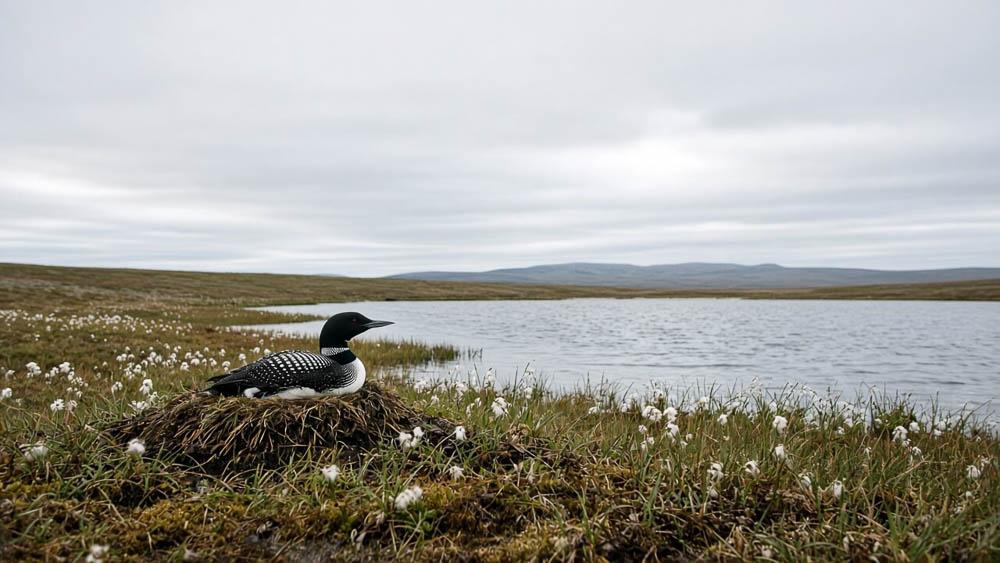
Arctic Loon Migration: Where Do They Actually Go?
Arctic Loons do migrate, but we should not pretend scientists have every part of their North American movements figured out. The species is considered a short- to medium-distance migrant. Outside North America, Arctic Loons generally move from inland breeding lakes toward coastal waters for the nonbreeding season.
The movements of the relatively small number breeding in Alaska are less well understood. Some may winter in waters around the Aleutian Islands, and Arctic Loons are observed moving through parts of the Bering Sea. So no, we are not giving them a frequent-flyer itinerary from Alaska to Baja anymore.
Correction to an earlier version
An earlier version of this article gave the Arctic Loon a tidy Alaska-to-Baja migration route and claimed its calls carry five miles. Both have been retired. Apparently somebody handed our old Arctic Loon the Common or Pacific Loon’s boarding pass, and we are not slapping an exact mileage on a bird’s voice without evidence to back it up.
The Arctic Loon: A Feathered Submarine
If you want to understand a loon, watch one underwater. Arctic Loons dive from the surface and pursue fish beneath the water using their powerful feet for propulsion. Their streamlined bodies and rear-positioned legs make them remarkably efficient hunters.
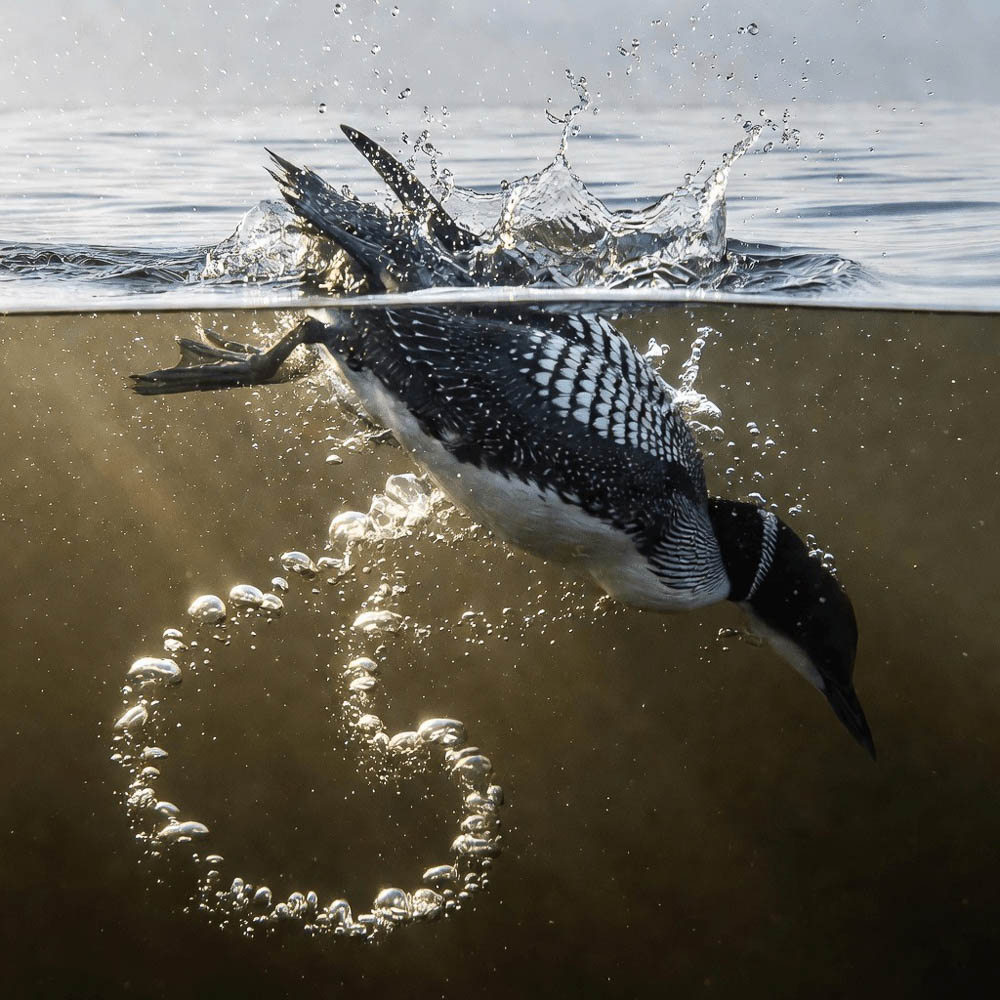
Arctic and Pacific Loons even have their own characteristic diving technique. They extend the neck forward and make a slight leap as they disappear beneath the surface. One second they are there. The next second you are staring at ripples wondering where your bird went.
Why a Loon Needs a Runway
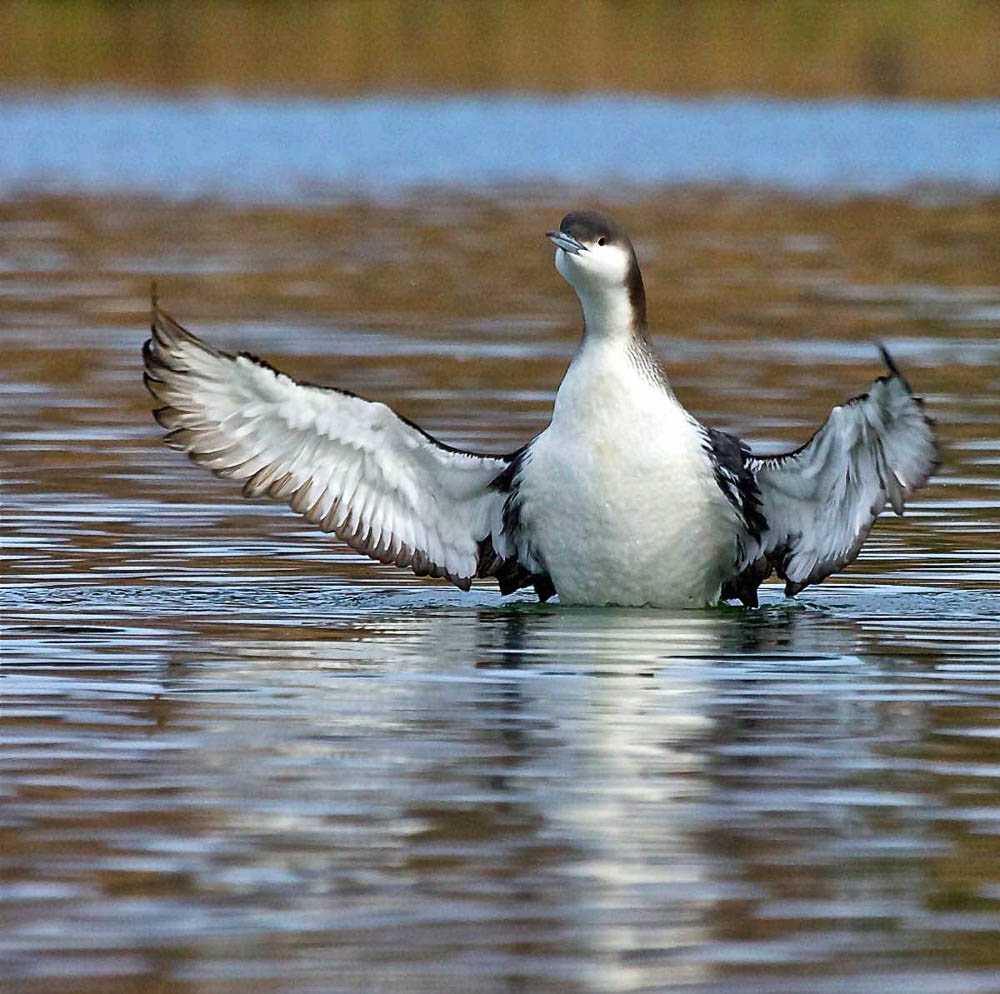
Loons are excellent swimmers and powerful fliers. The awkward bit is getting from one to the other. Unlike a songbird that can spring off a branch and go, many loons need open water to build up speed. They flap while pattering across the surface until they finally become airborne.
Think airplane runway. Except the airplane has feathers, catches fish, and is probably yelling while it takes off.
That dependence on open water is also one reason loons are so poorly suited to life on land — which matters more than it sounds, and we will come back to it.
Black-throated Loon Family Life
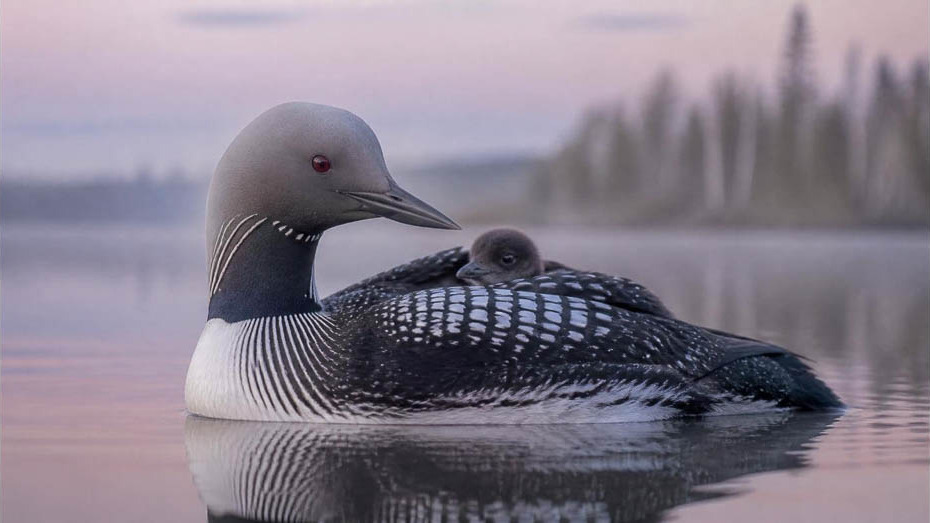
When breeding season arrives, Arctic Loons return to northern lakes — freshwater across most of the range, brackish coastal water in Alaska. Like other loons, they place their nests very close to the water. That makes perfect sense when you are an excellent swimmer equipped with legs that make walking look like an unfortunate design flaw.
The young hatch covered in down and leave the nest very early. Both parents care for the chicks, bringing them food as the youngsters develop the swimming, diving and eventually flying skills they will need. It is an intensive parenting job. No daycare. No babysitter. Just fish, chicks, and the constant possibility that something nearby would also like to eat your children.
Nature is beautiful. Nature is also stressful.
Listen For
A long, rising wail that carries a very long way across open water, plus a range of croaks, barks and growls near the nest. (We are saying wail rather than yodel on purpose — “yodel” is a specific territorial call most associated with Common Loon, and it is not the sound this bird is best known for.) It is the sound people mean when they say a lake feels lonely. Their calls are loudest and most frequent on the breeding grounds, where sound travels over long stretches of water and tundra.
Arctic Loon or Pacific Loon?
Now the fun part. Or the maddening part, depending on how long you have been holding those binoculars. The Arctic Loon and Pacific Loon are extremely similar — in fact they were considered a single species until the 1980s. Arctic Loons tend to be slightly larger and heavier-billed, and in breeding plumage they can show a darker gray nape and stronger white neck striping.
That white flank patch is the mark everyone reaches for first, and it is the one that will let you down. How much white shows depends on posture — a relaxed bird floats high and shows plenty, a bird about to dive compresses its feathers and shows almost none — and a Pacific Loon riding high can show white flanks too. Use it as a starting point, then confirm with the marks that hold still:
- Chinstrap.Arctic Loon shows a thin white line along the top edge of the black throat patch. On Pacific Loon it is extremely hard to detect.
- Nape colour.Arctic Loon is a uniform dark gray behind the head. Pacific Loon is a pale, silvery gray.
- Neck striping.Arctic Loon carries bolder, higher-contrast black-and-white striping on the sides of the neck — visible at surprising distance.
- Shape.Arctic Loon looks longer-necked and flatter-headed, closer to a Common Loon. Pacific Loon looks puffy and round-headed.
Get two or three of those to agree and you have something. Get only the flank patch and you have a hunch. And remember that Pacific Loons are far more widespread in North America — they breed across Arctic and subarctic Alaska and Canada and migrate in impressive numbers along the Pacific Coast. So if you are staring at a loon on the West Coast thinking you have discovered an Arctic Loon, do not buy yourself a celebratory cake quite yet. Check the Pacific Loon first.
Where to Actually Look for One
Saying “far western Alaska” four times is not directions, so here is the practical version.
The reliable North American window is the breeding season on the Seward Peninsula, with Nome as the usual base — it has an airport, rental vehicles and three long gravel roads running out of town past exactly the kind of coastal water this bird wants. Look on brackish lakes, tidal bays and lagoons near the coast rather than the deep inland freshwater lakes you would search in Eurasia. June and early July is the window worth planning around: the birds are on territory, they are in full breeding plumage, and every field mark in the section above is actually visible.
Before you go, set up an eBird rare bird alert for the Nome census area — it will tell you what has been seen and where, which is considerably more current than any article, this one included. And check recent checklists rather than trusting the range map alone. There are not many of these birds, and they do not distribute themselves evenly for anyone’s convenience.
One more time, because it is the mistake almost everyone makes: if you are not in western Alaska, start from the assumption that your bird is a Pacific Loon. Pacific Loons breed across Arctic and subarctic Alaska and Canada and stream down the Pacific Coast in enormous numbers. Arctic Loon records away from western Alaska are genuinely rare and are reviewed carefully by state records committees. That is not a reason not to look. It is a reason to photograph the flanks, the nape and the throat before you tell anyone.
Are Arctic Loons Endangered?
Globally, the Arctic Loon is currently considered a species of relatively low conservation concern and is classified as Least Concern. That does not mean loons are immune to the problems affecting aquatic birds. Healthy lakes, wetlands and coastal ecosystems matter enormously to species that depend on clean water and abundant aquatic prey.
It is also worth reading the label closely. The species qualifies as Least Concern because the global population is very large and spread over an enormous range — but BirdLife’s assessment records the overall population trend as decreasing. Least Concern describes the size of the cushion, not the direction of travel.
Pollution, fishing activity, shoreline disturbance and habitat change can all create problems for waterbirds. Least Concern should never mean no concern. It means we still have an opportunity to keep common wildlife common.
RFPS Educational Note — When a Loon Is on Land
We do not expect Arctic Loons to start lining up outside Ruffled Feathers Parrot Sanctuary anytime soon. If one does, we are going to have several questions. But there is a lesson here that applies to loons in general.
A loon found stranded on land may need help. Their bodies are specialized for swimming, diving and taking flight from water. Rear-positioned legs make movement on land extremely difficult, and many loons need a substantial stretch of open water to become airborne. That also means you should not simply toss a grounded loon into the nearest little pond and assume you have solved the problem. Species, injuries, weather, the size of the water body and the reason the bird became grounded all matter.
When wildlife gets into trouble, the safest approach is usually to contact an experienced wildlife rehabilitator or rescue organization before trying to fix the situation yourself. Sometimes helping wildlife means picking it up. Sometimes helping means leaving it alone. Knowing the difference is one of the most important things we can teach.
Quick Facts
- Scientific nameGavia arctica
- Also calledBlack-throated Loon
- FamilyGaviidae
- N. American rangePrimarily far western Alaska
- Real estateNorthern lakes — brackish and coastal in Alaska
- Where to lookSeward Peninsula near Nome, June–early July
- Favorite foodFish, plus other aquatic prey
- Special talentPowerful underwater pursuit diving
- Walking abilityLet’s be charitable and call it limited
- Closest look-alikePacific Loon
- Conservation statusLeast Concern
More From the Lake
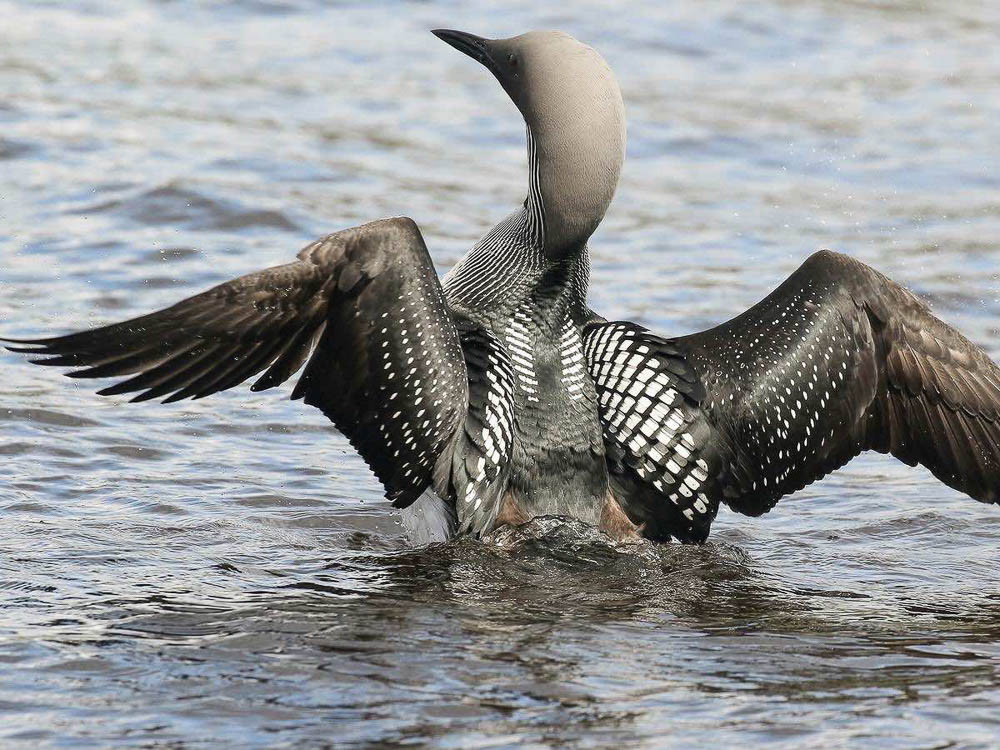
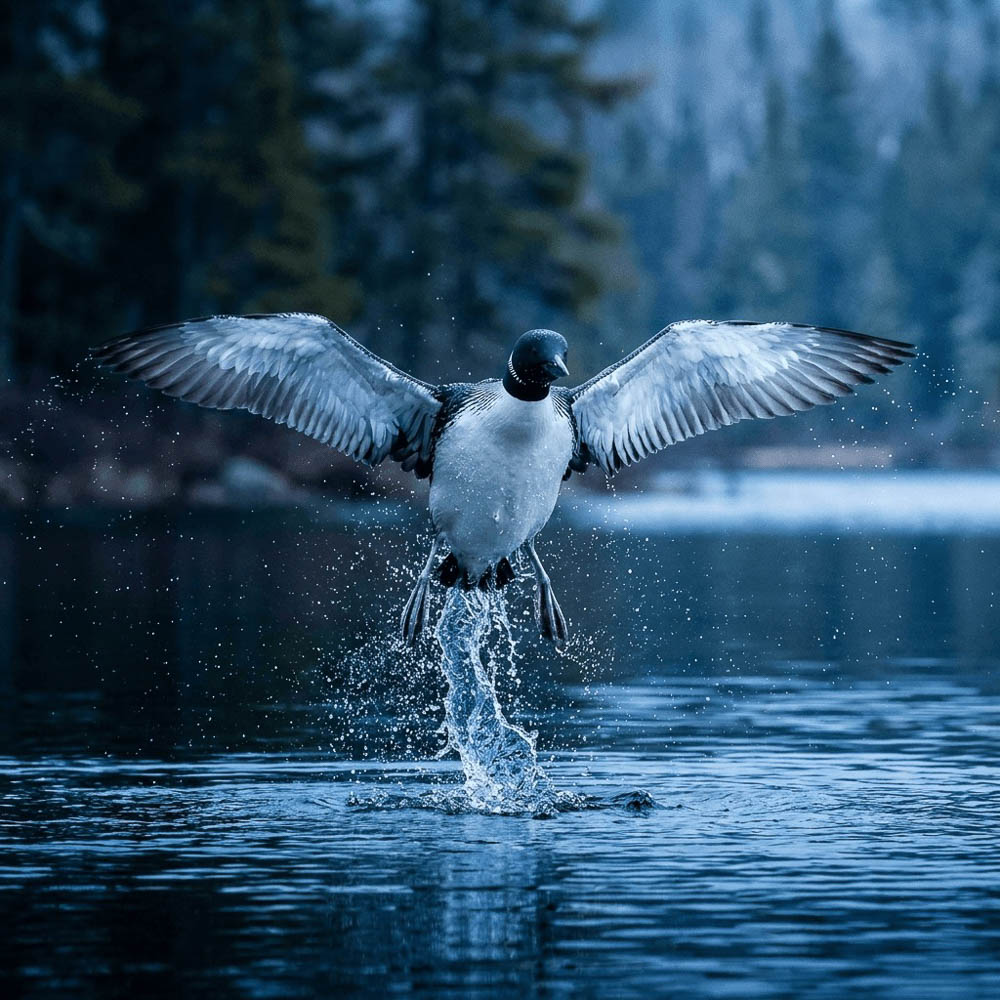
Your Turn
Have you ever seen an Arctic Loon, or heard a loon calling across a lake? Which member of the loon family is your favorite — Arctic, Pacific, Common, Red-throated or Yellow-billed?
And for the serious birders: have you ever confidently identified a loon, only to look at your pictures later and realize the bird had other plans? We have all been there. That is half the fun of birdwatching — that, and spending several thousand dollars on camera equipment to photograph a bird that immediately turns around and shows you its butt.
Learn More
- Cornell Lab of Ornithology - All About BirdsPhotographs, identification notes, range maps and sound recordings.
- All About Birds - Arctic Loon life historyHabitat, food and nesting, including the brackish-water detail for the Alaskan birds.
- eBird - Arctic Loon species pageLive sightings map, recent checklists and the place to set up a rare bird alert.
- BirdLife DataZone - Gavia arctica factsheetThe IUCN Red List assessment itself: category, population estimate and trend.
- ABA - Notes on Identifying Arctic and Pacific Loons in Alternate Plumage (PDF)The source for the chinstrap, nape and neck-striping marks used above.
- National Audubon Society Field GuideIdentification, behavior, habitat and migration.
We will keep doing our part here at Ruffled Feathers Parrot Sanctuary by adding the questionable jokes. Because apparently that is our contribution to ornithology.
Stay With Us
Free field guides keep coming, and the birds here keep eating. You can help with either one.
Birds of the World — a species series from Ruffled Feathers Parrot Sanctuary Inc.
Photographs are labeled ID confirmed where the bird pictured is Gavia arctica, and Representative where a related loon stands in for atmosphere. We would rather tell you than let you assume.
Where Hope Takes Flight
Living Like It’s September 12, 2001
Ruffled Feathers Parrot Sanctuary Inc.
Where Hope Takes Flight
Ruffled Feathers Parrot Sanctuary • September 12, 2026
Living Like It’s September 12, 2001
Twenty five years later, this is the part of September 2001 I still live in. And the question I keep coming back to: why can’t we do it because it’s Tuesday?
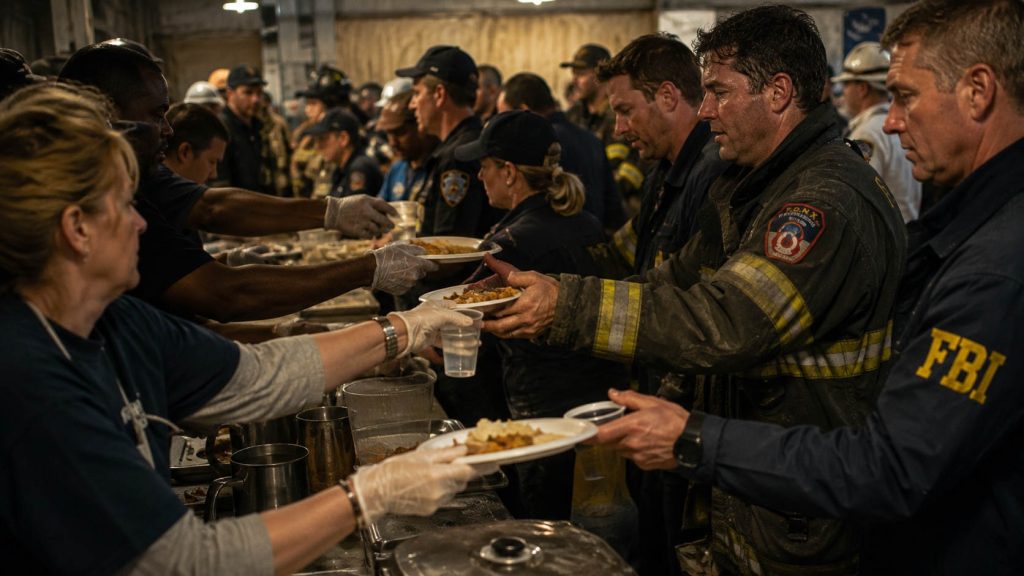
This is the second half of a story. The first half, what happened to me at Ground Zero and how I got there, is A Simple American Story. That one is about what happened to me. This one is about what I did with it.
Living like September 12 2001 has become a way of life for me, not just something I think about once a year. My health hasn’t been great for a long time, and most days I feel like I have the problems of somebody twice my age. I try not to let that get me down too much, although sometimes it absolutely does. I’m human.
The difference is, I try not to stay there very long.
I do my best not to carry that darkness into a room with me. I would rather be the person who lifts somebody else up, encourages them, makes them laugh, or reminds them they are capable of more than they think they are. Even on the days when I have trouble believing the same things about myself.
That is a big part of what living like it’s September 12, 2001 means to me.
I help people.
I help animals.
And whenever I can, I try to leave things a little better than I found them.
What Living Like September 12 2001 Means to Me
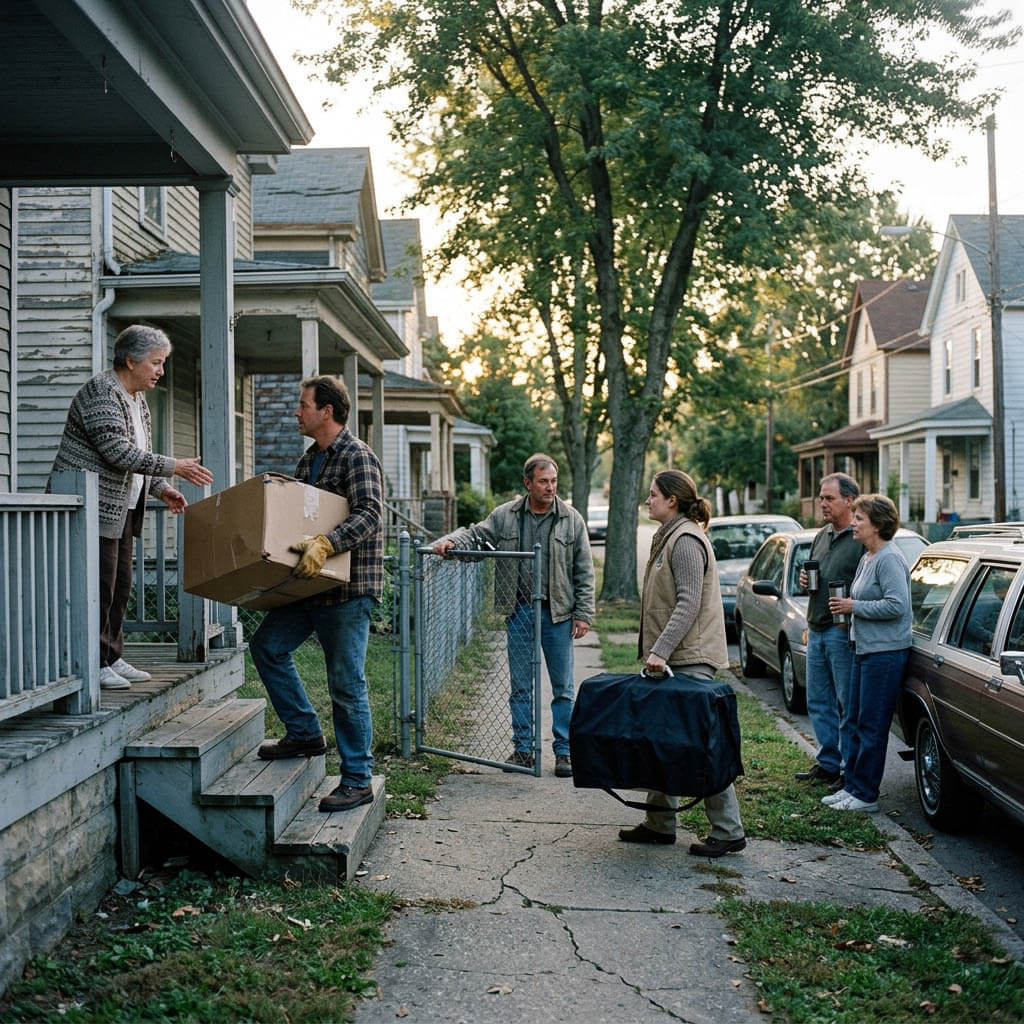
For anyone who remembers September 12, 2001, you probably already understand what I mean.
For a little while, people looked at each other differently.
Strangers helped strangers. Neighbors checked on neighbors. People stopped worrying quite so much about what divided them and started paying attention to the person standing beside them.
That is what living like September 12 2001 means to me, and I have tried to hold onto it.
These days, most of my life revolves around helping animals and helping the people who are trying to help them. That is where I have to draw the line sometimes because there are only so many hours in a day and only so much of me to go around.
But employees, friends, family, volunteers and complete strangers still find their way through that line from time to time.
I will say no when I absolutely have to.
I just don’t particularly enjoy doing it.
Living Like September 12 2001 When Nobody Is Watching
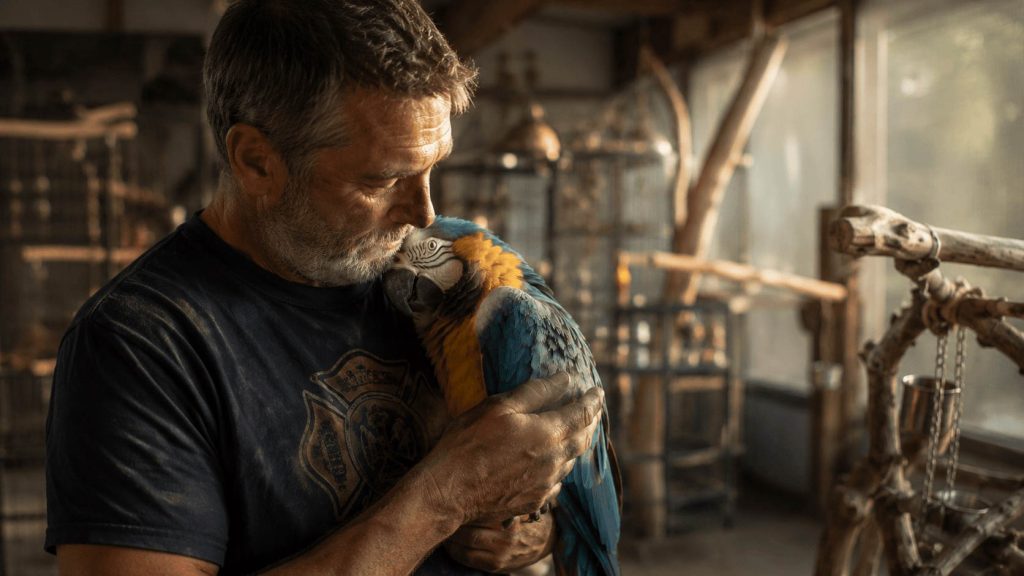
I sacrifice a lot for the animals in my care and for animals throughout this city. By the time everything else is taken care of, there often isn’t much left for me.
That’s usually fine.
What do I really need anyway?
A little food here and there and a Dr Pepper every now and again, and apparently I can keep this circus moving.
More importantly, I try to treat everybody with the same respect I would want someone to give me.
Stranger, friend or family, it doesn’t matter much.
If I see a need that I can fill, and I can actually do something that creates meaningful change for somebody, I usually try.
Sometimes people ask for help.
Sometimes they are too proud to ask.
Sometimes you can just see it.
Those are often the times I quietly step in.
Nobody needs to know it was me. I’m not doing it for attention, and I certainly don’t expect a parade afterward.
Most of the time, I don’t even expect to be paid back.
Even when somebody swears they will.
Kindness Doesn’t Need a Receipt
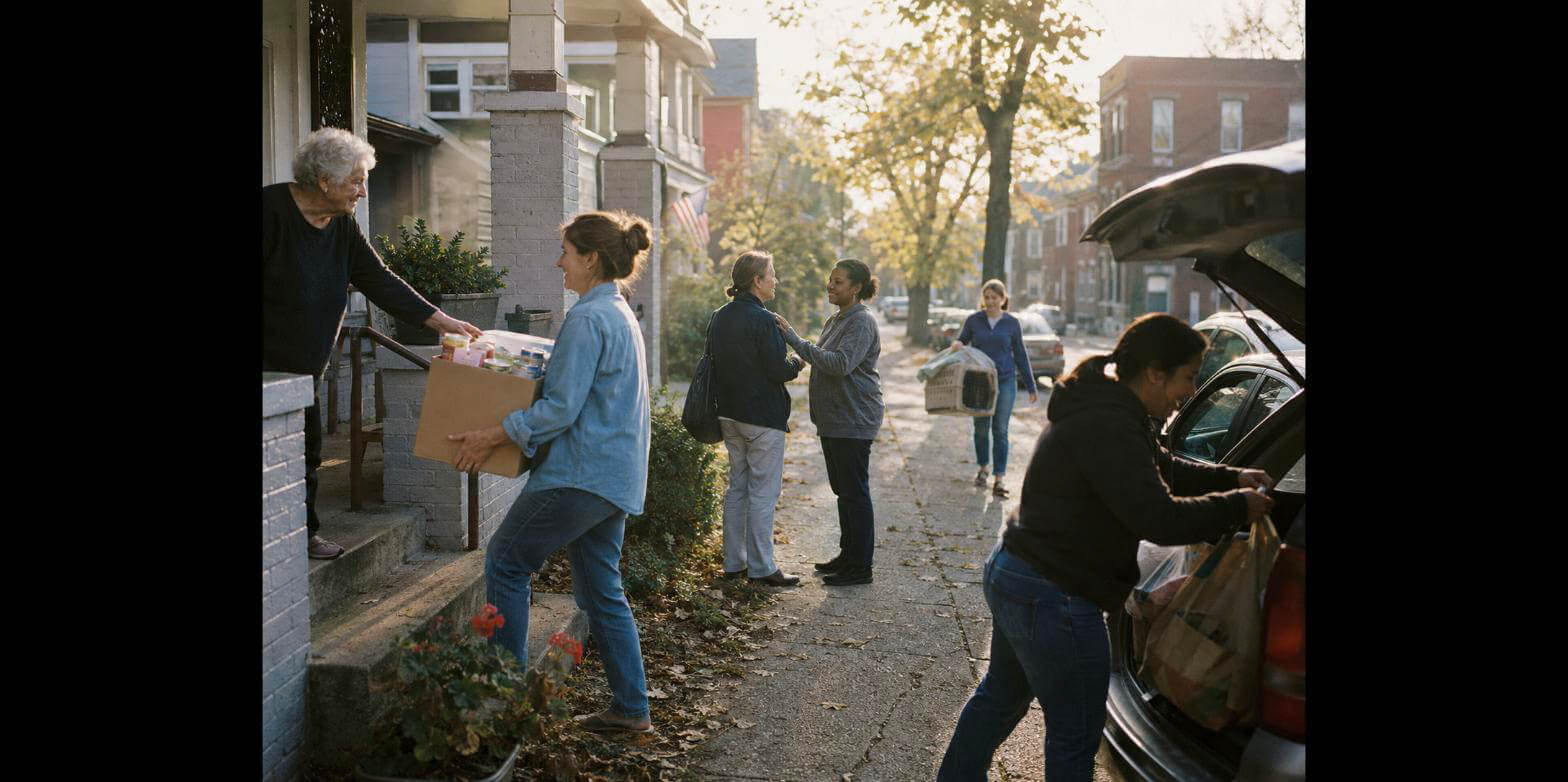
One thing I have learned is that you cannot help people while keeping a scoreboard.
People are not always going to live up to your expectations.
Sometimes they are going to disappoint you.
Sometimes the money doesn’t come back. Sometimes the favor isn’t returned. Sometimes the person you helped disappears completely.
That doesn’t mean the help was wasted.
Maybe paying that bill kept somebody from being evicted.
Maybe helping them get to a doctor made them feel better.
Maybe buying them something to eat got them through one miserable night.
Maybe giving them a ride changed the course of their entire day.
Maybe all you did was sit there and listen.
You may never know what that small act changed.
And maybe, if you are lucky, years later when their life has finally turned around, they will remember that somebody once showed up for them.
Then maybe they will show up for somebody else.
That is enough repayment for me.
Sometimes Showing Up Is the Whole Thing
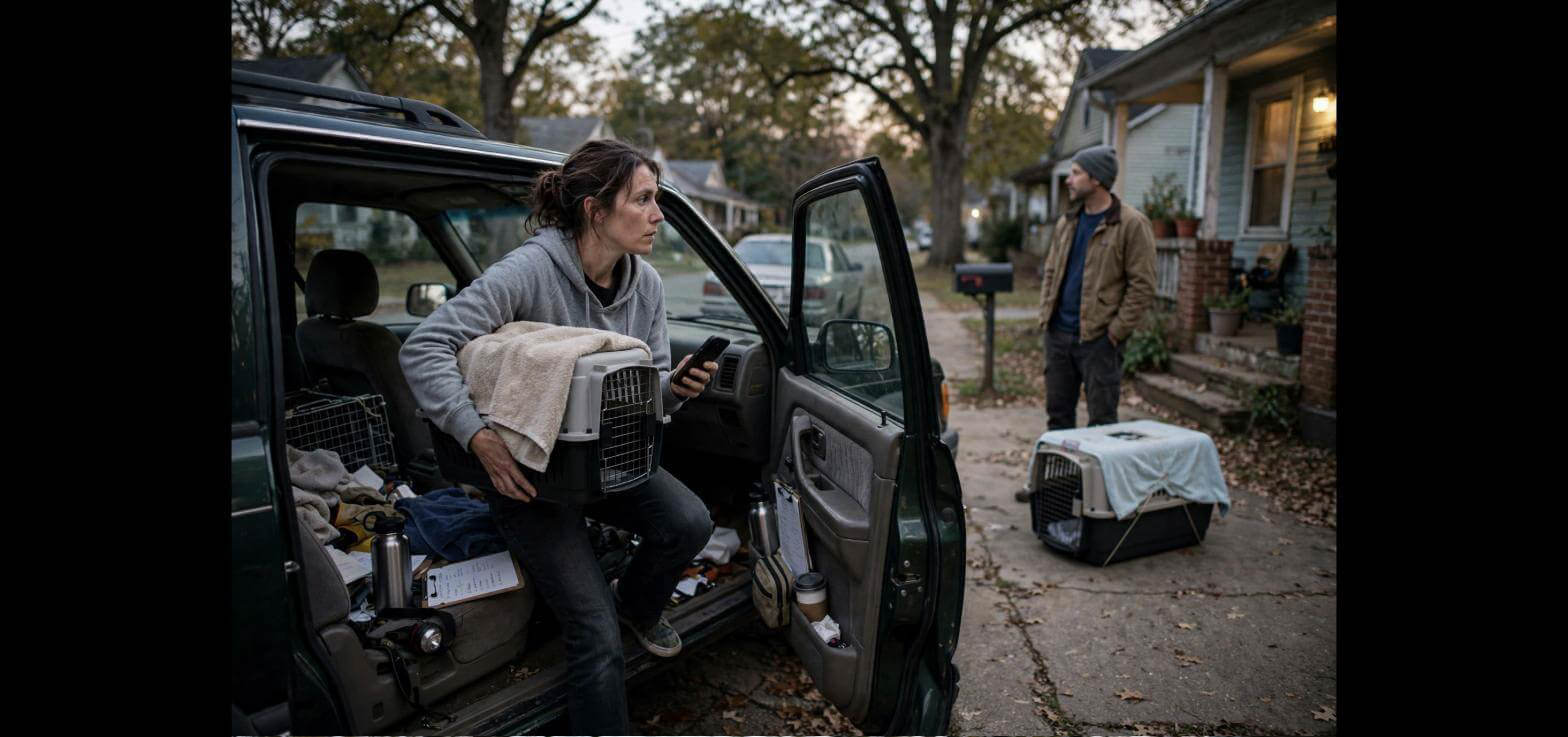
If somebody calls needing a ride, something to eat, or just somebody willing to listen, I often try to make it work.
Not because I have nothing else to do.
Usually I have about 900 things to do.
That is part of why showing up matters.
They know I was busy. They know something else got put on hold. They know that for that moment I decided making sure they were okay was more important.
That may not sound like much, but sometimes simply being a good neighbor or a good friend can make all the difference in somebody’s life.
I know because it makes a difference in mine too.
I remember the people who showed up when I needed somebody.
I remember the people who answered the phone when an animal needed help.
I remember the ones who said, “I’ll come,” and actually came.
Those little acts used to feel more normal.
Today everybody is moving so fast that I think we have forgotten how important they are.
We Have Forgotten How to Slow Down
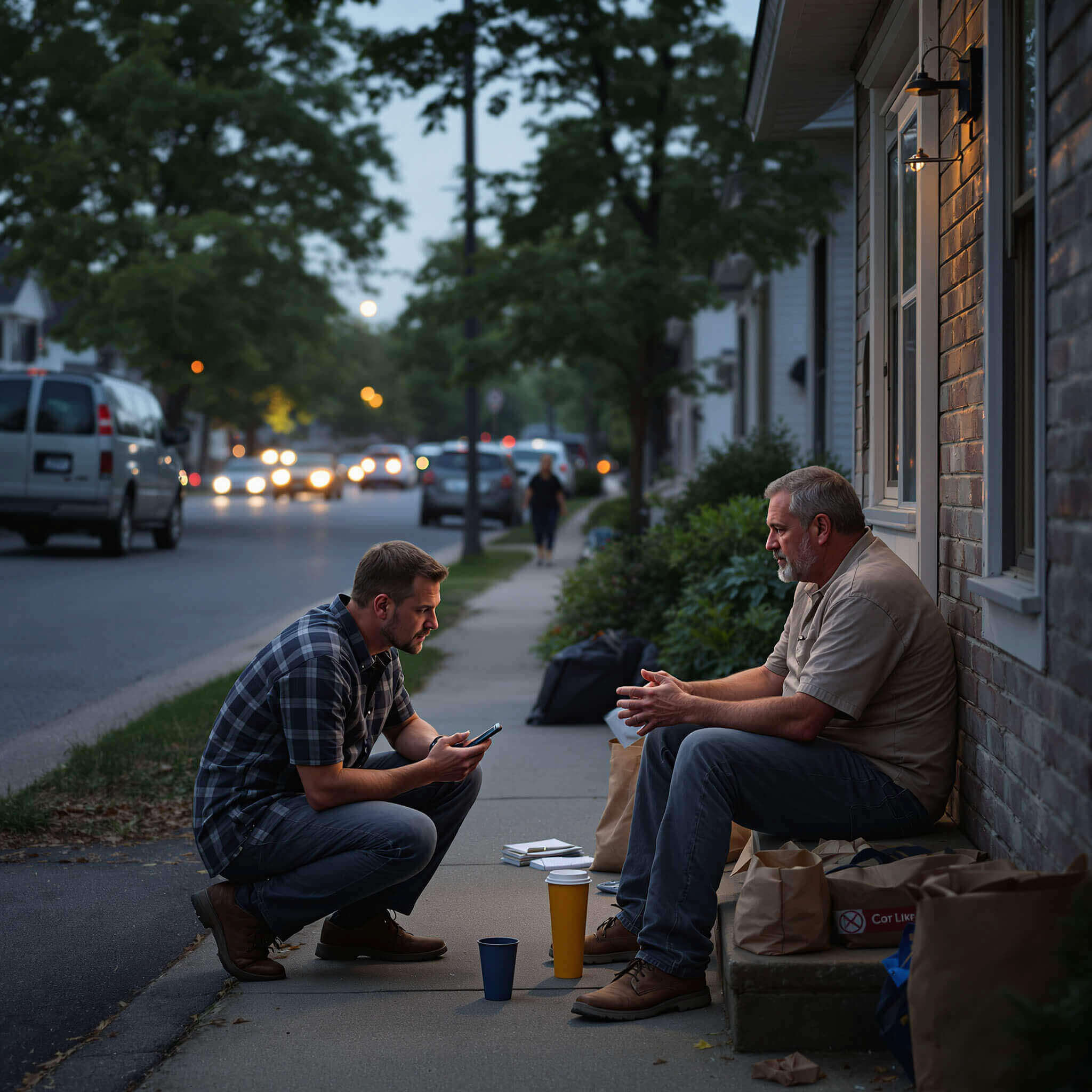
Life has become one giant rush from one obligation to the next.
Work. Phones. Bills. Notifications. Appointments. Problems. More work.
Somewhere in all of that hustle, we stopped slowing down long enough to really listen to the world around us.
I think that is a terrible thing to lose.
Compassion is one of the things that makes us human.
More than that, I think compassion is one of the things that makes humanity worthy of the place we have been given in this world.
If everyone becomes hateful, suspicious, angry and concerned only with themselves, we create a world I don’t particularly want to live in.
And I refuse to believe that is the best we can do.
Why the September 12 Spirit Still Matters
One of the things that has always bothered me about September 11 is what happened afterward.
Not the kindness.
The fact that it took something so horrible to bring that kindness out of us.
Why does somebody have to die before we tell people what they meant to us?
Why does a disaster have to happen before neighbors start checking on each other?
Why does somebody have to lose everything before a community suddenly remembers how to care?
Why can’t we do it because it is Tuesday?
No tragedy.
No disaster.
No terrible phone call.
Just Tuesday.
Call somebody.
Tell them you appreciate them.
Buy somebody lunch.
Check on the neighbor you haven’t seen lately.
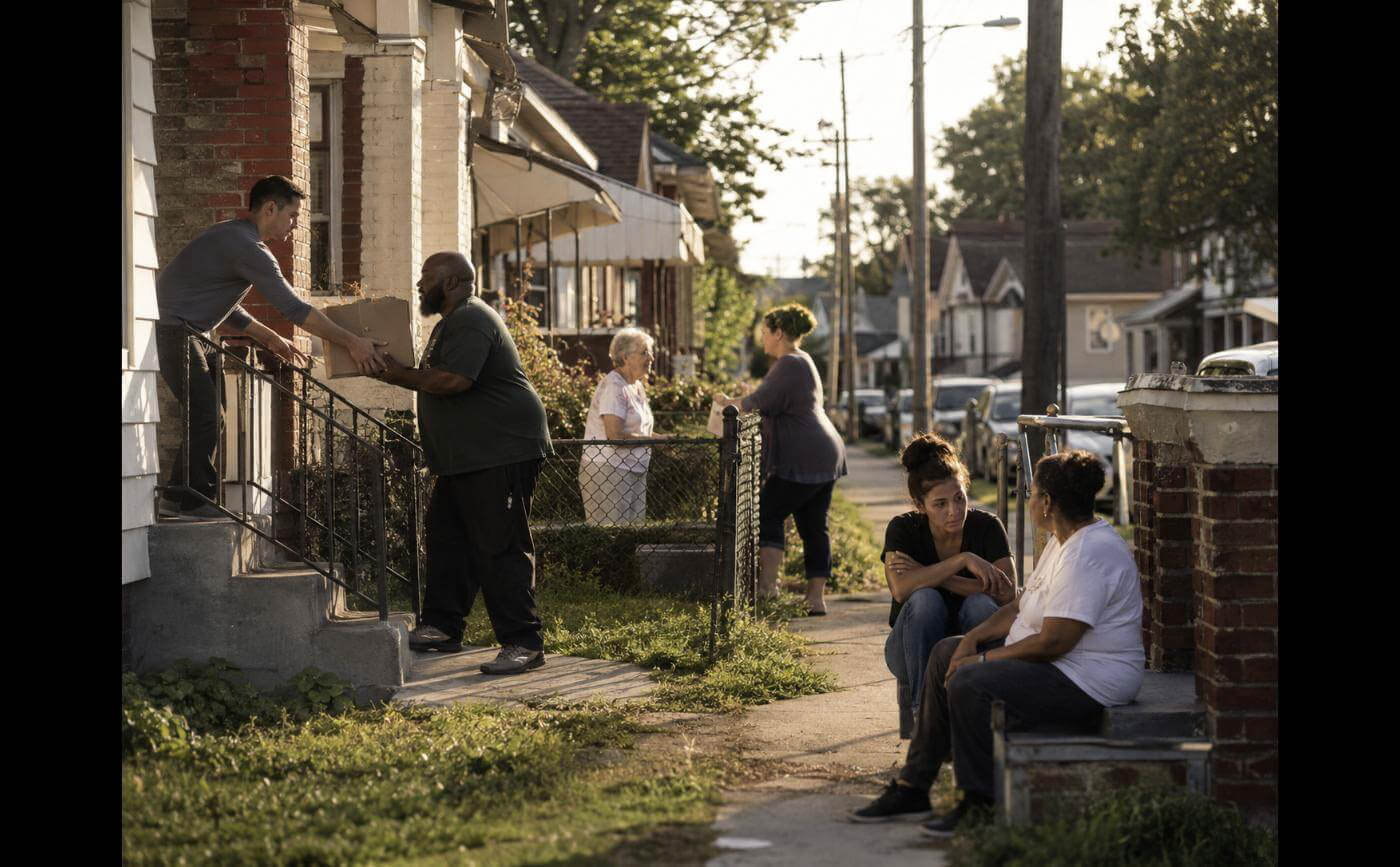
Help somebody carry something.
Sit down and listen when somebody clearly needs to talk.
We absolutely can find that place in ourselves again if we want it badly enough.
I know because I have tried to live there.
The Strange Thing About Helping Others
Something happens when you start helping people regularly.
You want to do it more.
You start noticing opportunities you would have walked right past before.
And every once in a while, something even stranger happens.
You find yourself in exactly the right place, at exactly the right time, with exactly the right attitude or skill needed to make a real difference.
I have experienced that enough times that I have stopped pretending it is always coincidence.
I think there is an invisible hand guiding us sometimes.
Call it God. Call it a higher power. Call it whatever makes sense to you.
I just know that sometimes I get pushed in a direction I never planned on going, only to discover there was a reason I needed to be there.
When that happens, I have learned it is usually better to go along for the ride.
Because strangely enough, what I take away from helping someone is often every bit as powerful as what they received from me.
Maybe Some of Us Are Meant to Carry More
I truly believe we are not given more than we are capable of carrying.
The catch is that whoever is handing out the load apparently believes some of us can carry an awful lot.
Maybe that is the point.
Maybe people who survive difficult things gain tools that somebody else is going to need later.
Maybe pain teaches us how to recognize pain.
Maybe loss teaches us to notice the people who are standing alone.
Maybe fear teaches us why somebody desperately needs to hear, “I’m here.”
I would never choose some of the things that have happened in my life.
But I can choose what I do with them.
Forever Stuck Somewhere Between 9/11 and 9/12
In some ways, I feel like I have been stuck in a time warp ever since September 2001.
Part of me is still caught in September 11.
Fear.
Terror.
Loss.
Helplessness.
Darkness.
But another part of me lives permanently in September 12.
Hope.
Unity.
Compassion.
Determination.
People helping people simply because another human being needed them.
It sometimes feels like I am caught forever between those two days.
And maybe that is why helping others became so important to me.
Because every time I leave something positive behind, I move a little farther away from that black hole that is always trying to pull me back in.
Every animal helped.
Every person encouraged.
Every phone call answered.
Every ride given.
Every meal bought.
Every stranger treated like they matter.
Every small kindness nobody else ever knows about.
Those things are my escape.
Living Like September 12 2001, One Day at a Time
I cannot change what happened on September 11, 2001.
I cannot change everything that came afterward either.
But I can decide what I leave behind today.
So I try to stay positive.
I try to spread positivity.
I try to help when I can.
I try to remind people that kindness is still here, even if sometimes you have to look a little harder to find it.
And when that darkness starts pulling at me again, I keep moving toward the part of September 2001 worth holding onto.
September 12.
The part where people stood together.
The part where strangers mattered.
The part where helping somebody else seemed more important than ourselves.
I cannot live every day perfectly.
Nobody can.
But I can keep trying to live like it is September 12, 2001.
And with the help of people like each of you, maybe we can keep a little bit of that spirit alive through service to our neighbors and communities.
Every bird here eats because somebody decided a stranger was worth showing up for.
If you haven’t read the first half of this story, it is here: A Simple American Story. Twenty five years after September 11th, 2001, a firefighter’s journey from Ground Zero to a sanctuary full of feathers.
Just Tuesday.
From all of us at Ruffled Feathers.
Some of our related content:
Where Hope Takes Flight
A Simple American Story
Ruffled Feathers Parrot Sanctuary Inc.
Where Hope Takes Flight
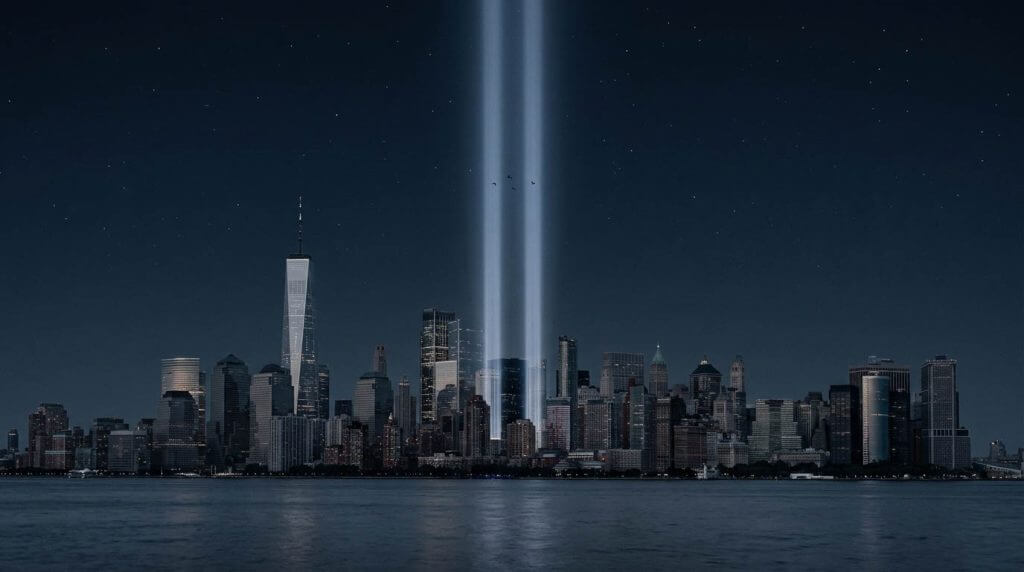
Twenty five years after September 11th, 2001. A firefighter’s journey from Ground Zero to a sanctuary full of feathers, and the one thing I hope you take away from it.
I have told my story before, but as time passes it gets a little easier for me. So last year I promised that I would take the time to write a proper story of my experiences after the morning of September 11th, 2001, and share them with the world. I actually started writing this long before September came around this year, because as it approaches my mind will not stop thinking about that day. So here goes. I hope I can get it all out, and I hope each person who takes the time to learn about me enjoys this and takes away from it what is most important to me.
The month I brace for every year
As September approaches I start to get a little antsy every year. All right, I like to tell the truth, so I will say it is more like a full blown panic attack, throw in some terrible nightmares, lots of crying, shaking at the mere sight of the event, and then toss in some PTSD for good measure, and you basically have my September 11th experience these days. Really it is the whole month of September, because I have to cut myself off from all technology in order to avoid seeing or hearing about that tragic day. My friends and family understand, but for those who do not know me that well, it is something I have to do in order to keep it together.
The morning everything changed
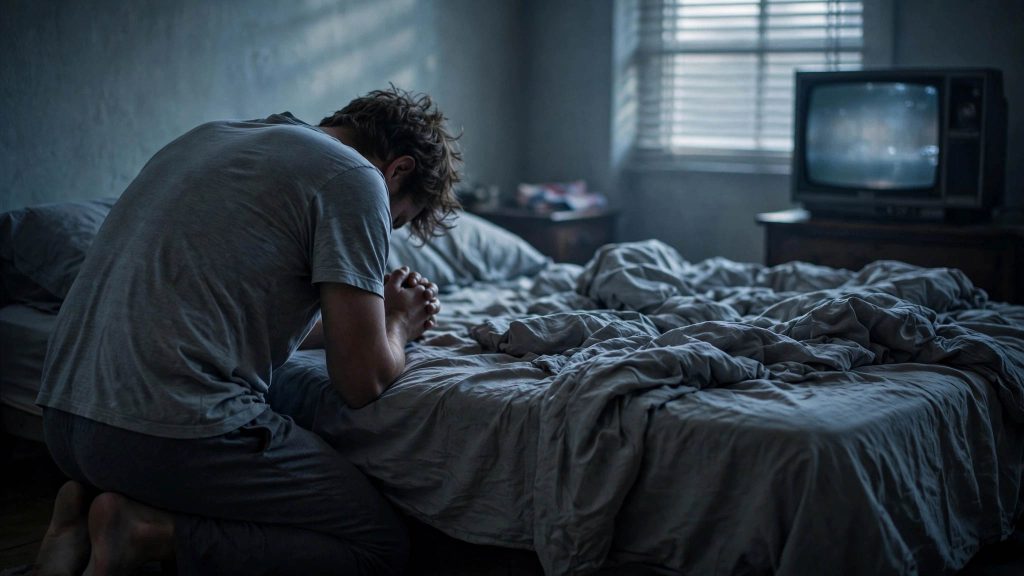
My story starts not that much different than a lot of people’s that fateful morning. My phone rang and I woke to my mom’s voice telling me to get up and turn on the TV. I knew right then it had to be something big, because that is not a normal phone call for us. I did what she said, and what I saw changed my life forever. I hope it changed us all forever.
I watched in horror as the first plane crashed into one of the World Trade Center towers, struggling the whole time to find the volume button and turn on the sound. Once I got it working I realized the crash had happened a couple of minutes ago, and the video of the tower on fire was the live shot. Now, I like to tell people I am not scared of anything, and judging by some of the stupid things I have done a lot of people might say that is true, but it really is not. I was scared in that moment. I did not know if this was a tragic accident, or if, as the news was already speculating, we were under attack. I really did not know what to do.
So I got out of bed and did what I always did on every tragic fire run. I prayed. I did not always drop to one knee. Usually I just bowed my head on the way to a scene, or said a silent prayer for whoever needed help in that moment. I was always afraid of ridicule or discrimination for showing my beliefs, because people have always found it easy to make fun of Christians. But that morning I got out of bed, dropped to one knee, and I prayed my heart out. I prayed for what I was sure were tens of thousands of people in trouble. I prayed for the FDNY, for the whole city of New York, and you can bet I prayed for my country that I love so much.
Most importantly, though, I prayed for guidance. I asked God to point me in the right direction. I do not care whether you are a believer or not, that is for you to work out for yourself, but God answered my prayer for guidance that day, and I never realized it until right now, as I write this down. Sometimes miracles take a while to notice, I think, and this one just brought me to tears, so I am taking a break.
Watching it unfold
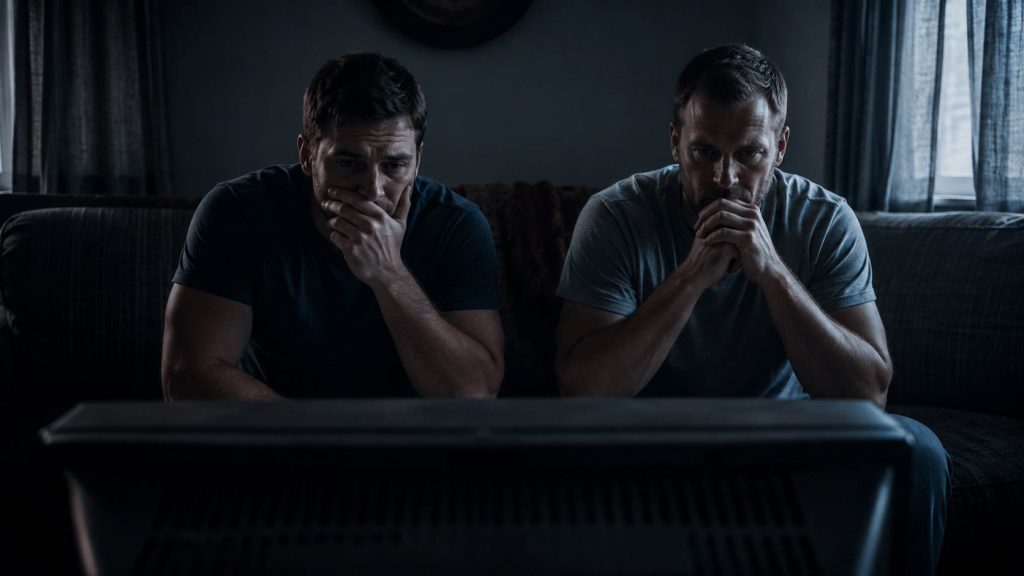
Okay, back to my story. Like I was saying, I had no idea what was in store for me, or what the future was going to bring, as I watched the tragedy unfold on my television screen like so many of us did that morning. I watched on my old tube TV, because this was so long ago that there were no HD TVs yet, and some details were really hard to make out. For instance, I could not tell if it was debris falling or if people were actually jumping to escape the inferno.
My brother lived next door to me at the time, and he always had a better TV, so I called him up to ask if I could come over and watch on a better screen. In all honesty, I really just did not want to be alone. We sat at his house and watched it unfold together. By the time the second plane struck, we all knew that what we were watching was no accident. We sat there mesmerized, for how long I have no idea, but seeing the Pentagon get hit and the first tower start to fall, I knew our whole country was in serious trouble. None of us knew on that day how serious a threat we were facing, or how deep the attack might go. I think that is part of the reason it was so scary for us all.
The decision to go
As time passed, probably around lunchtime, my brother and I had already decided they were going to need help in New York. They had lost more FDNY firefighters than anybody knew at that time, and the ones who were left could not go on forever. It was just too big of a disaster. They were going to need help. That is when we started to come up with a plan for what we could do.
I was a firefighter at the time, so I knew I had the skills that were needed, and my brother was a veteran of the first Gulf War and a pretty big guy, so surely they could put us to work. I had just been laid off from the work I did for the 2000 census, so I had a little time on my hands. I drove to my firehouse to talk with the chief and make sure it was all right to take my gear and represent our department in New York. Everyone there was gathered around the TV, just like everywhere else, watching the day unfold. They could not believe I wanted to pay my own way and drive to New York to help, but once they heard my plan, how could they say no?
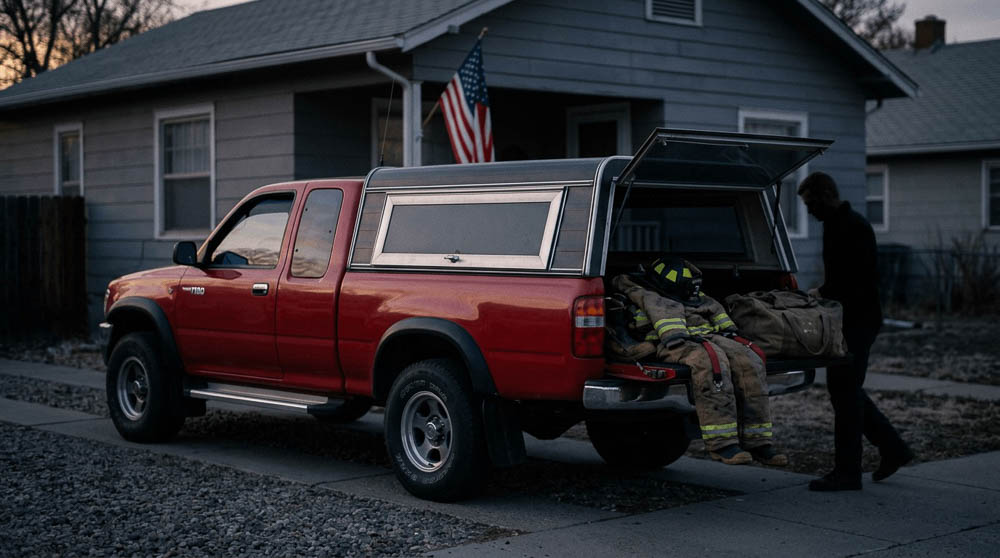
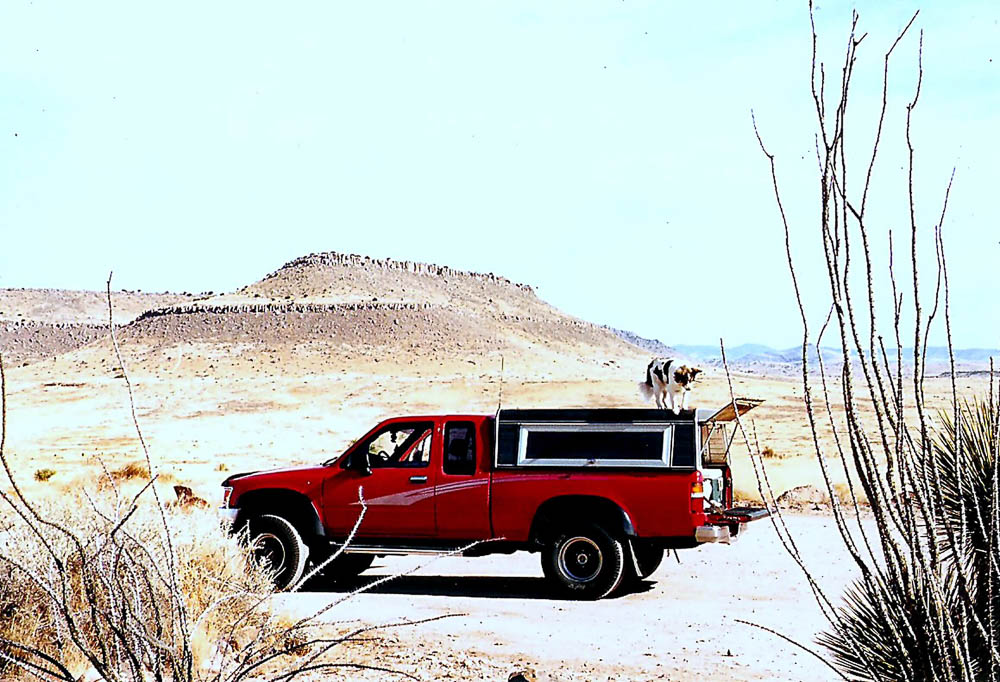
Some people forget that all flights were grounded after the attack, so the only way to get anywhere was to drive. I agreed to act as a point man for our department, because as they thought about it, others wanted to come help too, they just might have to make some arrangements first. I could get there first, get things squared away, and as people got the time and could be spared, they would join me. I packed up everything I might need, in case I had to sleep on the streets, in the back of my old red Toyota four wheel drive with a topper on the back. We had just taken that truck out west to visit my dad, and we did quite a bit of four wheeling in the desert and driving out to Area 51 and such, so we were confident it would make the trip. We got on the road around 4 p.m., and we were off, on our way to New York City.
We stopped at Dan’s pawnshop in Clarksville, Indiana, along the way, and pawned off everything of value we could spare in order to make the trip. I had been around the country a bit by this point, so we knew New York was not going to be cheap, and we were going to need every penny we could get to get by. With that, we started the roughly twelve hour drive from my hometown to New York, listening to the drama unfold the whole way on the radio, talking about what we were going to do and what we were in for.
I thought about my life a lot on that drive. All of my past, and probably my future too, crossed my mind. In all honesty it was because I was heading into a dangerous situation, and I had already resigned myself to the fact that I might not be coming back from this one. Now would probably be a good time to share some of those experiences with the rest of you, since they played a major role in how I ended up on this journey.
Where I come from
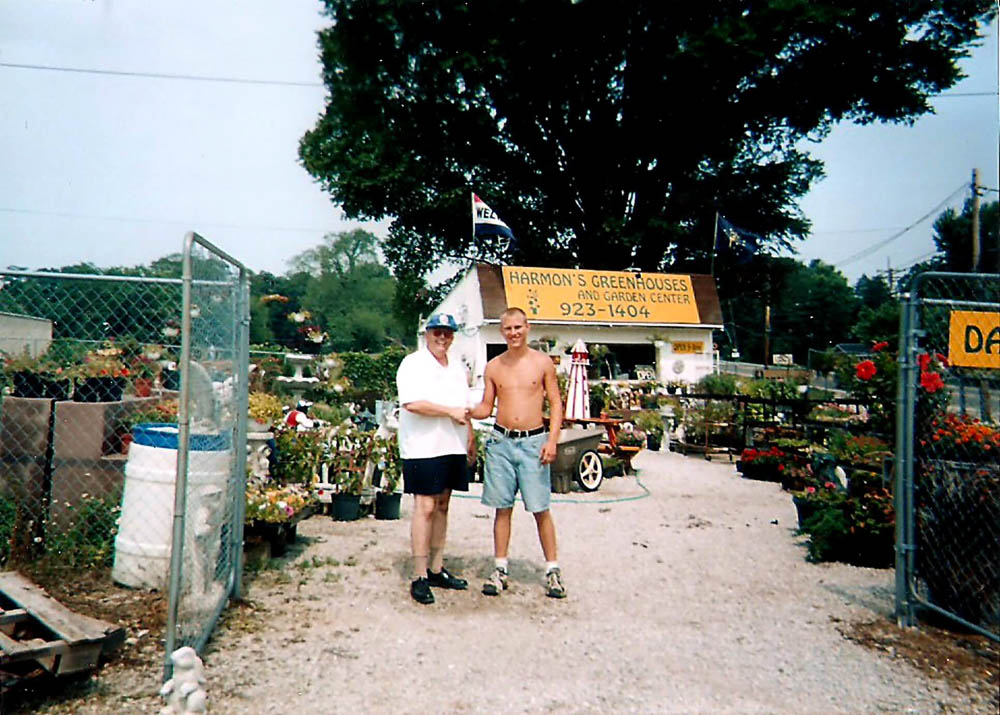
My life did not start that different than a lot of others. I grew up in a small town across the river from Louisville, Kentucky, and went to great schools. I had really great friends all through school who genuinely cared for one another, and most of whom I am still friends with to this day. My Grandma Harmon always made sure I went to church on Sundays. Whether it was hers or someone else’s she did not care, as long as I got my Sunday dose of God she was happy. I thank her for that, because I got to experience all different kinds of religions and was allowed to make my own decision about which one to follow.
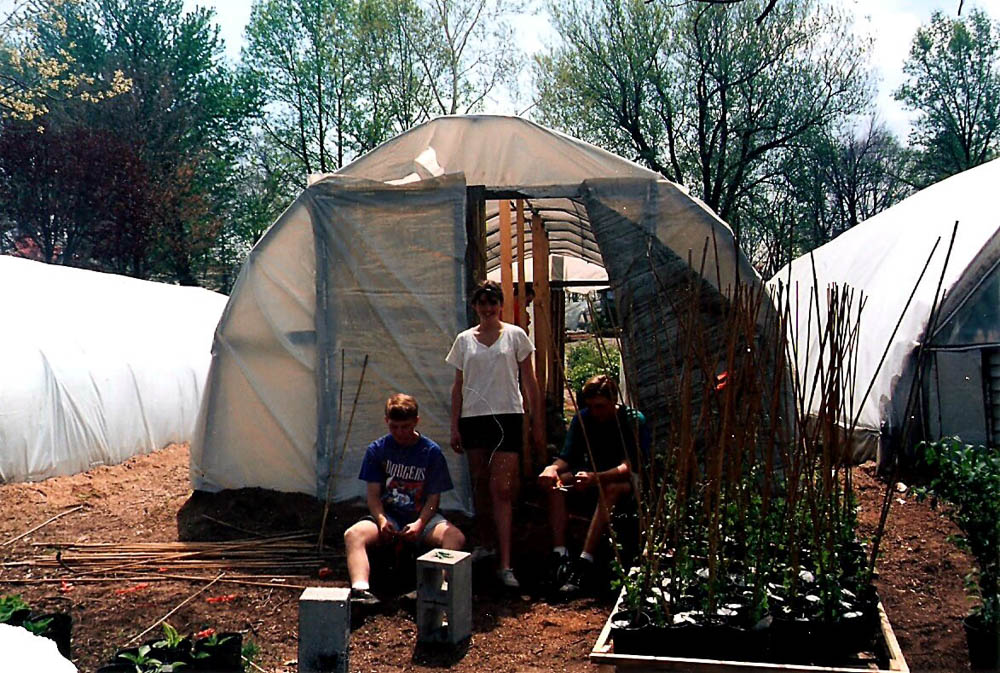
I may have been a little different, because my parents owned a greenhouse business when I was growing up, and I was put to work at a very early age. People do not believe me, but I was working and paying taxes by the time I was four years old. By third grade, some of my friends got to work with me after school too. A lot of people ask me if it bothered me to miss out on my childhood. Well, I did not miss out on a darn thing. I still had plenty of time to play baseball, fish, spend time with friends, and do all the other stuff normal kids do. I just worked hard. And I can bet I did not have to work near as hard as my parents did, so why complain.
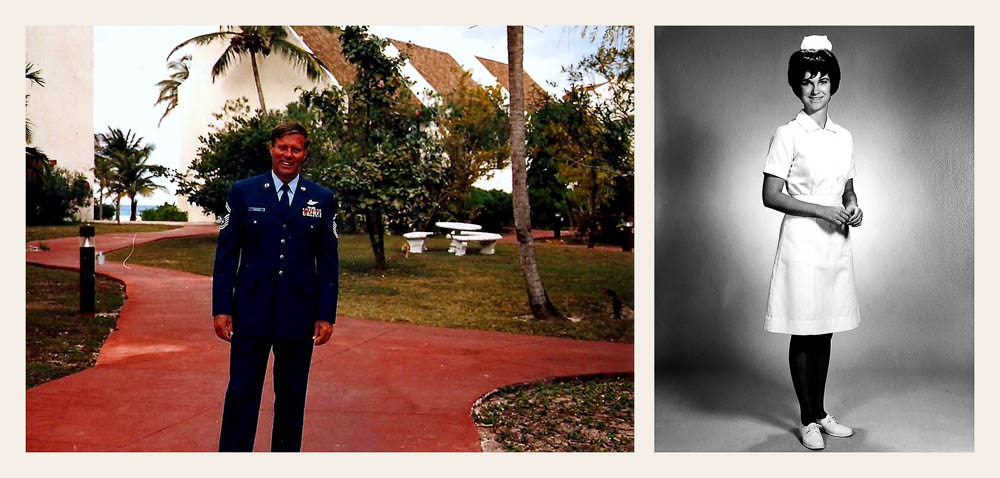
Speaking of my parents, my dad was an officer in the Air Force during the Vietnam War, and he retired after more than thirty years as a colonel and commander of a whole National Guard base. He was overseas keeping us safe when my brother was born, and he did not even get to see his first born son until he was a year old. My mother was a nurse who retired after more than thirty years working for the Veterans Administration. When I was in grade school she went back to school and got her master’s degree in counseling, a job she still loves to do today. I am so proud to have such a strong woman as a mother, and I hope she knows how much I admire her and everything she has accomplished. Well, she probably does now.
I share all this because I feel it is important to know where I came from in order to understand how I ended up in that truck driving to New York on 9/11/2001. I come from a very patriotic family, a loving family, a family that understands mistakes, but above all they taught me to love everyone and to treat each person with respect, because every life is important. All these years I never knew why I made the decision to go, until right now, as I write about it. I was taught to sacrifice anything and everything in order to help another person in need, and this day was the biggest need of all. I was going to do my part. My reason for going is as simple as that.
The Javits Center
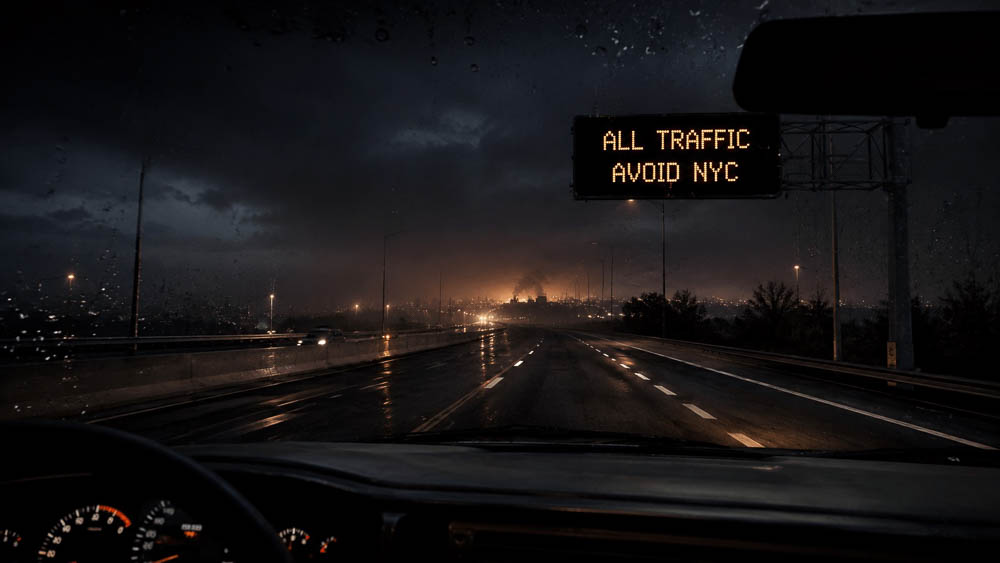
Back to driving. Surprisingly enough, we got off the Jersey Turnpike and were almost into New York City in ten hours. I may have sped a little during the trip, but do not tell anyone. We turned the radio to a local station, and they were directing all volunteers to head to the Javits Center. I had no idea what or where that was, but now we had a plan. Luckily, GPS had been invented and I had one in my truck, although it was still fairly new and expensive back then. It guided us right to where we needed to be, and we still had the old fashioned atlas if we needed it. For those of you who do not know, that is a map.
As we approached the city, those signs that hang over the interstate, the ones that usually flash traffic warnings, simply read “all traffic avoid NYC.” Not a good sign. As we drew closer to crossing a bridge, I have no idea which one but I think it was the George Washington Bridge, we saw why. It was like nothing I had ever seen. You could see all of Ground Zero from that bridge, and it literally looked like a cruise missile had struck in the heart of downtown. In that moment, when I saw exactly what I was trying to get into, I was scared again, and I said another prayer.
We arrived at the Javits Center at approximately 4 a.m. on September 12th. By that time it had started to pour down rain. There was already a long line of firefighters from all over, ready to volunteer. We parked the truck and made note of where it was. On the way in, it was surprising how much military equipment I already saw patrolling the streets. At that point my brother and I separated, because firefighters had one line and all other volunteers had another. I had no idea it was going to be so long before we got back together.
I met guys in that line from Boston, Connecticut, Pittsburgh, really everywhere within driving distance that had men to spare. There were hundreds of us. Looking around, I thought to myself, now this is my America.
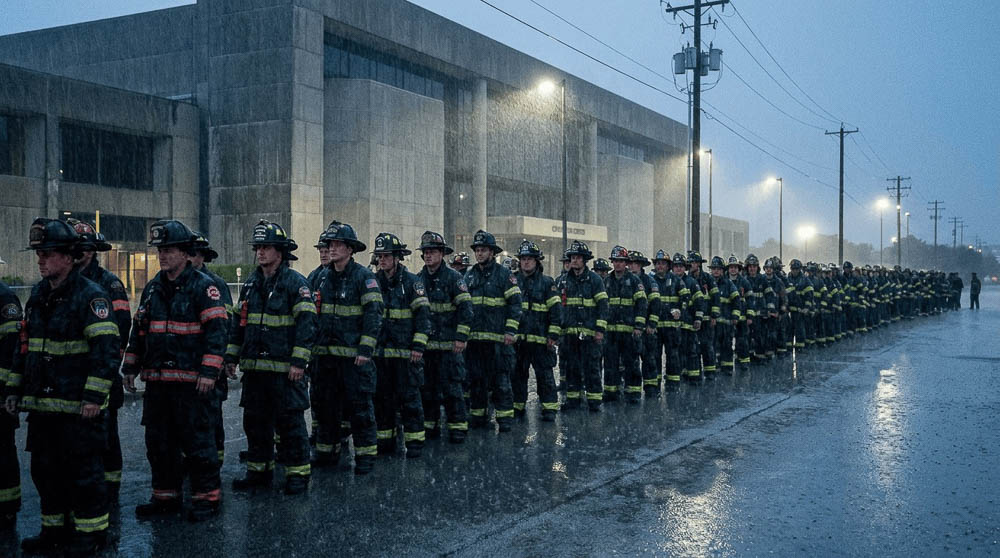
Everyone from all over, of all kinds, coming together just because people needed help. That is what firefighters do. That is what Americans do.
After several hours of standing in the rain, I was soaked to the bone. We were all wearing our full turnout gear, because as you can imagine it is a little more water resistant than normal clothes, so you can stay a bit drier, but it also picks up an extra twenty pounds when it gets wet. Eventually there was an announcement. All firefighters volunteering, this way. As we walked I figured they were just moving the line, and I was sure there would be more waiting. Nope. They started loading us onto buses. This was it. I was going in.
There was not much talking on that bus. We all just sat there silently, taking it in as we went. I am sure we were all tired. I had been up for almost twenty four hours at that point, and a lot of the others had been waiting in line nearly the whole time. We came to a stop a mile or more from the fence line, and the driver told us we would be walking from there, because nothing but fire vehicles were allowed in or out right then. Well, that is just awesome. I am already tired, in full turnout gear, soaked and wet, and now on foot. Oh well. It was probably the best thing, because we got to walk up and take in the whole scene as we went.
As we got closer I still really could not see anything but smoke, and what looked like the glow of flames coming from where we were heading. We arrived at a huge fence that had been put up around the whole area, at least eight feet tall, topped with razor wire, and guarded at every entrance by military personnel. They really did not want any looting, and they made it real clear it would not be tolerated. The entrance had plywood with the word “checkpoint” spray painted on it, which still blocked our view of what was beyond.
As we passed through, we got our first glimpse of what was really going on, from a couple of blocks away. Smashed and inoperable fire equipment that had already been dug out lined the streets. It is an eerie sight, all that ruined equipment, when you are walking toward the place where the damage happened. Each person had to check in at the FDNY chief’s tent along the way, since he was the commanding officer on the scene and he had to keep track of everyone. I am sure he was desperate not to lose anyone else under his command. The ranking officer for each department was called into the tent to give the names of their firefighters so they could be recorded. Since I was the only one from my department, I guessed that meant they were talking to me. I wonder how young and scared I must have looked, standing there barely twenty one and all alone.
I got checked in and tossed in with a group from Pittsburgh so I would not get lost, I guess. We were all formed together into an all volunteer battalion, led by an FDNY captain. To this day I wish I knew his name, but all I can remember is that at the very beginning he told us he had lost a brother and an uncle the day before, not to mention countless friends, so if he could carry on, he sure appreciated the help, because we were going to carry on together now. I will never forget that. I cannot imagine what he felt, seeing all of us from all over, so ready and eager to help. Maybe that is why he got the job. At that moment, he needed to see how much everyone cared.
Into Ground Zero
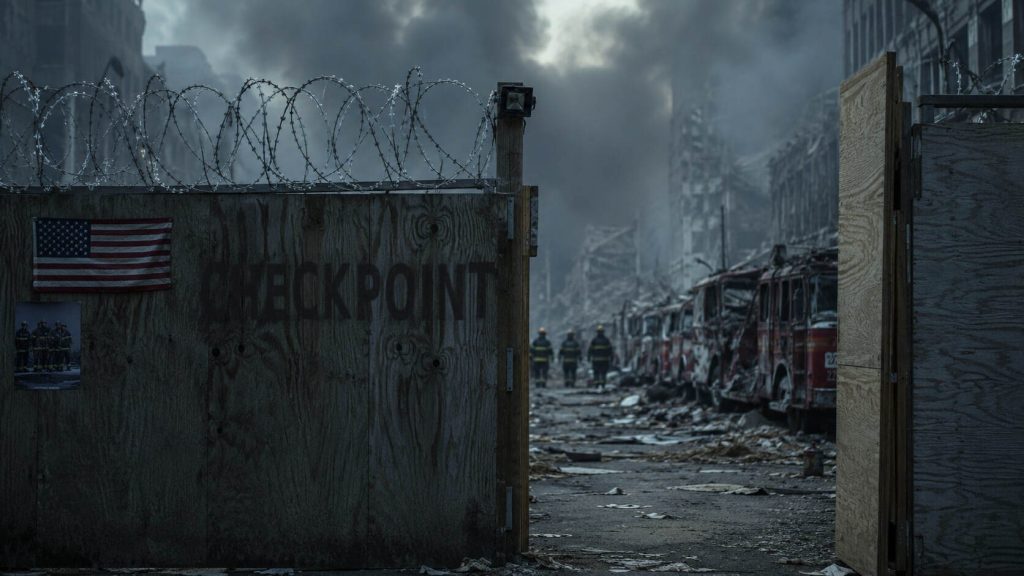
As we got close, you could see where the debris finally stopped, wedged between two buildings, the American Express building and I think the MetLife building. The debris alone stood at least ten stories high, a mangled, nasty mess that looked like it could lose pieces, or the whole thing come crashing down, at any time. We walked past it, stepping over all the fire hoses with makeshift ramps built over them so equipment could still pass through without cutting off the water supply.
We were directed into the American Express building, and our captain flung everything off a table in the lobby, so it all crashed to the floor. I am sure he did not care. It is not like things were not already a mess, and the table he had just cleared was now the cleanest spot in the whole building. It was about 6 a.m. on September 12th when he climbed up on top of that table. The sun had just started to come up, shining light over his shoulder through a huge glass window on the other side. Here is what we are going to do, he said. We are going to start on the first floor and search every floor on the way to the top, looking for people who could not get out, or precious belongings that got left behind. Then, on the way back down, we are going to pull all the broken glass from the windows back into the building, so it does not fall on anyone working below. We are going to get this done fast and safe. We stick together in our groups, and if we hear the sirens blare, we all pull out and meet back at the chief’s tent. Got it.
You see, they were used to those sirens, because they had already had to evacuate several times as more buildings came down. I sure hoped I would not hear them. At least now I had a plan and a job to do. I was ready to finally be helping.
As we marched up the steps, I never expected it to still be so smoky, the air still so clouded with debris. Luckily I had brought a couple of full face respirators with me, and I pulled one out and put it on, like some of the others did. I cannot imagine the logistics of making sure everyone had an air pack, that would have been next to impossible to pull off. It did not take but minutes and my mask was clogged. Since that did not work, I was not left with a lot of options, so I pulled out my handkerchief, wrapped it around my nose and mouth, tied it in the back, and hoped for the best. I am sure it was better than nothing, but probably not a whole lot.
On the landing
That building was tall. I remember when I got to the first landing, probably fifteen or twenty stories up above Ground Zero. We just crawled right out onto it, because enough of the windows were already broken that you could access it easily. The first thing I noticed was the amount of paper and other debris still fluttering around the city. It was like a ticker tape parade, but so much more ominous.
As we walked out onto that landing, I will never forget the sight of Ground Zero below. The closest thing I can say is that it looked about like what I imagine a nuclear bomb set off in downtown would look like. Several square blocks, all destroyed, laid out there before me. I stood there taking it all in for I do not know how long. Probably quite a while. It was like nothing I ever hope to see again.
I noticed some of the other guys taking out cameras and taking pictures, and I remembered that I had a camera in my fire coat too. I ran the website for my department, so I was pretty used to taking pictures of things people would not normally see. But I could not bring myself to take any that day. I remember thinking, what are you doing? This is a tragedy. This is hallowed ground, not a tourist attraction. I had already gotten my fill from the TV, and I knew there would be plenty of pictures if I ever wanted to see them again. I did not need to be another person snapping photos.
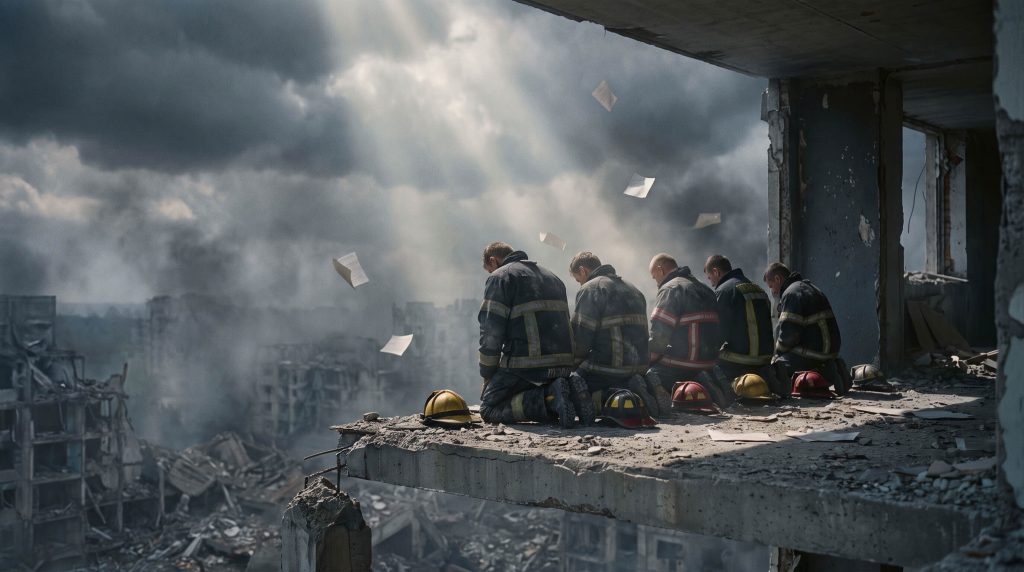
Instead, I removed my helmet, knelt down, and I prayed again. I prayed for us all to stay safe, I prayed for the victims, and yes, I again prayed for my country that I love so much. You may be surprised to know that I actually set off a trend. Every firefighter out on that landing with me knelt down too, and we all prayed together. I do not know how long it lasted, probably a minute, but it is a minute I will never forget, because I have never felt closer to God than I did right then. With all the destruction and chaos below, the sun shined down through the clouds and onto all of us on that ledge. Those of you who know God can understand. Those of you who do not just cannot imagine what an amazing experience that is.
After we were through with that, I looked around and noticed the amount of shoes sitting there among the debris on that landing, twenty stories in the air. Mostly just one shoe, with no match. I could not help but wonder if they had owners at one time, and how they ended up there, already so high in the air.
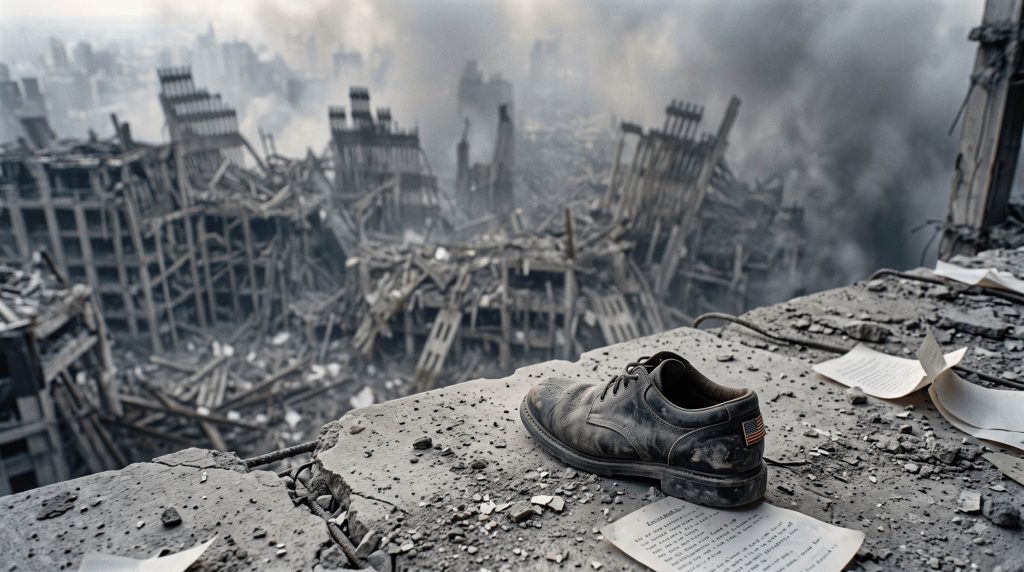
As we moved on searching the building, it was filled with a thick haze and totally empty. It felt strange and unnerving to be in such a large skyscraper, knowing it was completely empty except for us. When we came across a locked door, we smashed it open to see what was on the other side, but we tried to leave as much of the building intact as we could. By the time we made it to the top, my arms were covered with women’s purses. I could not bring myself to let them go. I wanted to make sure they got back to whoever they belonged to, and if the owner did not make it out, that made it even more important to me to get them returned. The captain sent me down with all the purses to drop off at the chief’s tent, and to note which building they came from.
By the time I made it back to my group, I was exhausted. There were really no broken windows above the fiftieth floor, but by the time I climbed back up all those steps in full turnout gear, I was spent. You see, I was not used to climbing all those steps, because where I came from the highest building was three stories tall. We could not risk the elevator, so that left no choice but the stairs. Somehow I found the strength, and I carried on, working methodically back down with everyone else, pulling glass inward from every broken window we could find, so no glass would fall on the workers below.
When we made it to the lobby again, after roughly ten to twelve hours of work, our captain said it was time to rest before we got back to it. I was bone tired, but I did not want to leave, not after it had taken so long to get to that point. So along with everyone else in my group, I found a spot in the main lobby, sat against the wall, and fell asleep. I fell asleep sitting straight up, because I did not even have the strength to fall over.
The days after
I do not know how long he let us sleep there, or if he even got any sleep himself. I had no concept of time. I could only risk turning on my cell phone once a day to check voicemails and call people back, because I had no way to recharge it, and it was my only link to the outside world. After a few minutes of calls to loved ones, we would go to the cafeteria and eat breakfast, or whatever meal it actually was at that hour, in the same American Express building. They had set up to cook for everyone from that location, and you could wander in at virtually any time and get something to eat. It was always filled with FDNY, FBI, ATF, virtually every agency you can think of, along with us volunteers. People from all over the country, of all different origins, coming together to eat. Once again, when the chips are down, that is my America.
My brother volunteered every single day too. I do not think they ever let him work on the pile, but he cleaned up debris and handed out food and water for the Salvation Army. I would never have been able to survive or get by up there without him on the outside, helping to arrange things and secure lodging. It really was a team effort, and I could not have done it without him.
I stayed in touch with my fire department the whole time. Each day I talked with someone, and each day I heard promises that they were coming, that they just had to make arrangements first. It would be the weekend, then next week for sure, and all the while, nobody ever came. I felt betrayed by them for the longest time, and I am not sure I will ever fully forgive them for leaving me hanging like that. But thank God I was not alone.
During all this time, we were given a bunch of FDNY gear and told we were honorary FDNY, and to wear it while we were in town. Well, sure, I was not going to argue with that. And everywhere we went, we were talked to, thanked, and never allowed to pay for food. I did not test it, but we probably could have had anything we wanted in that town. Anyone who has ever been to New York City knows this is not normal. Normally people would spit on you, cuss you out, or worse if you tried to talk to them. Not in the aftermath of September 11th. People came together then. They loved one another then. The whole country came together like I have never seen before or since. Those were the good days, and the times I choose to remember most. That is really what I hope most people take away from this story.
I do not know how long I spent up there in total, but eventually we ran out of money, and life brought us home. On that drive back, I decided I would live the rest of my life like it was September 12th, 2001. I also decided I was going to join the Air Force and take the fight to the terrorists.
Coming home
It was not but a few short months after we got back that I got sick, and eventually the fire department became too much for me. I still battle more diseases than I can keep track of, have had too many surgeries to mention, and have struggled in ways I never expected, all because of my time in New York. I am going to choose not to dwell on those things here, because this story is about the positive parts of life.
Over the years, times have been hard in a lot of ways, but I have a great wife and family right by my side. I have chosen to never forget my experiences, sometimes to my own detriment, but overall I would not change a thing. That whole experience brought me closer to God than I could have ever imagined. It made me appreciate the little things in life, and nature, so much more. It taught me that anything you want to accomplish in life can be done, if you just push yourself hard enough. Most importantly, it taught me to never give up.
I may be strange to some people, and that is okay. Believe me, I am fine with it. If someone is hungry, I feed them. If someone needs help, I help them. I am sure I have helped a lot of people reading this right now, and that is okay too. I was more than happy to. You do not do nice things for recognition, or because you expect to be paid back someday. You do them because it is the right thing to do. People do not ask for anything, because that is just not how it works. If you see a need, just fill it. Do not bother asking any questions.
Live like it is September 12th
Strive to remember what it was like in those days after 9/11/2001, when our whole country came together. We could have that again. Do not let the world drive us apart. Forget all the polarization going on now, pitting black against white, rich against poor, Democrat against Republican, and remember that above all we are Americans, and when times are hard, we come together. We need to remember that more now than at any other time in my life.
If you take one thing away from this story, let it be this: strive to live every day like it is September 12th, 2001. And never forget.
Thank each of you for taking the time to read this, and to get to know me through my story. A simple American story. I care about every single one of you, so know this. We will get through this together.
God bless.
There is a second part to this story now. Twenty five years later, here is what living like it is September 12th actually looks like on an ordinary day, and the one question I keep coming back to: Living Like It’s September 12, 2001.
In loving memory of my mother, Susie. She passed several years ago now and I’ve chosen to leave every word about her exactly as it was. She always loved this story and is the one who encouraged me to share my words with the world the most. She always knew how much I admired her. Now she knows for certain. I love you, Mom.
Where Hope Takes Flight
Meet Gabby: Twenty Years Old, Deeply Misunderstood, and Looking for Someone Who Speaks Amazon
Ruffled Feathers Parrot Sanctuary Inc.
Where Hope Takes Flight
Meet Gabby: Twenty Years Old, Deeply Misunderstood, and Looking for Someone Who Speaks Amazon
Gabby is a blue-fronted Amazon. He is about twenty years old, he has lived in exactly one home his entire life, and he is now looking for his second.
I want to be straight with you from the first paragraph, because that is how we do this here: Gabby bites. That is the whole reason he is on this page. If you are looking for a snuggly shoulder bird who will let strangers scratch his head, keep scrolling. But if you have lived with an Amazon before, if you know what a pinned eye and a fanned tail are trying to tell you, if you have ever looked at a “problem parrot” and thought I bet nobody has been listening to him, then please keep reading. Gabby might be your bird.
Who he is
He came home to his person before he was a year old. He is a striking bird, that classic blue-fronted Amazon look with the yellow face, the turquoise wash across the forehead, and the red flash on the shoulders. In his photos he is perched on a big natural branch tree next to his cage, surrounded by rope rings and foraging toys and a wall of vintage soda signs. It is a nice life. He is not a neglected bird.
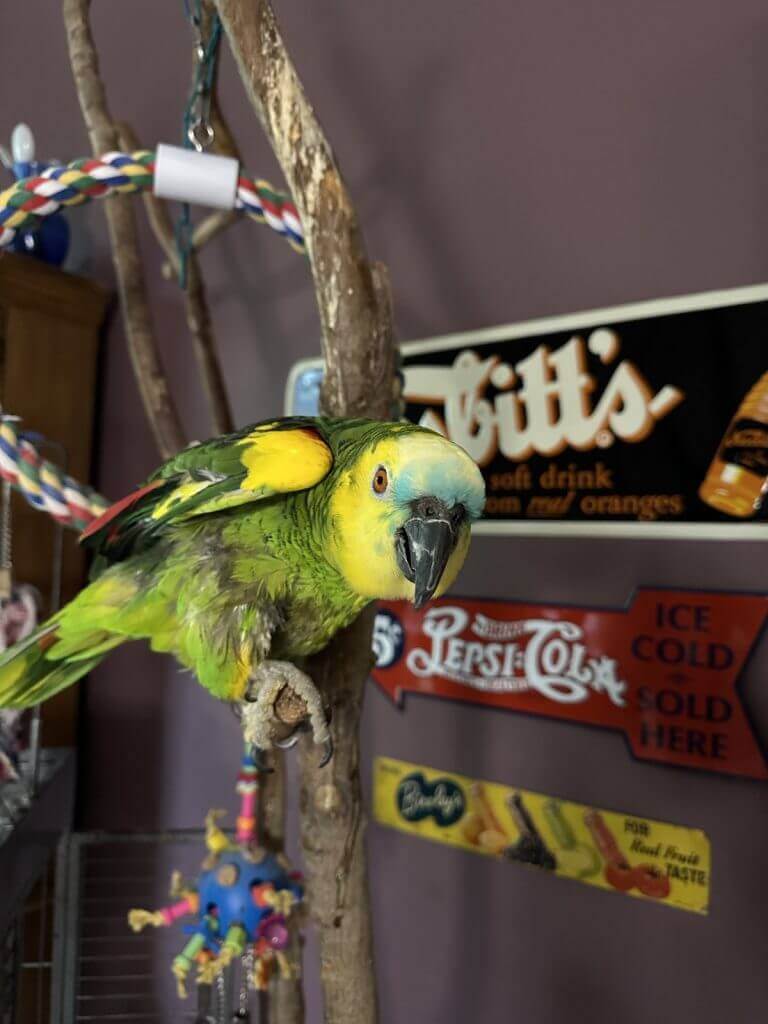
Despite the name, Gabby is not much of a talker. He is more of a commentator. He squawks when he wants attention, which is his most reliable and least subtle move. He says “here you go” after his person feeds the cats, because that is what she says, and he has decided that is simply what one says at that hour. And when she picks up her phone, he either mumbles along or throws out a “hello,” because clearly if someone is talking, he should also be talking.
Twenty years of that. He is not a blank slate. He is a whole personality with a whole set of opinions.
The honest part
Over the years, Gabby has gotten harder to handle. He bites when his person needs to move him. He used to accept head scratches and now he lunges instead, and he does it even when his tail is not fanned and there is no obvious warning first. She lives alone, she does not have many visitors, and she has learned to tell people to keep their fingers to themselves. She does the same.
Here is what I want to say about that, because it matters: this is one of the most common stories in parrot rescue, and it is almost never the bird’s fault.
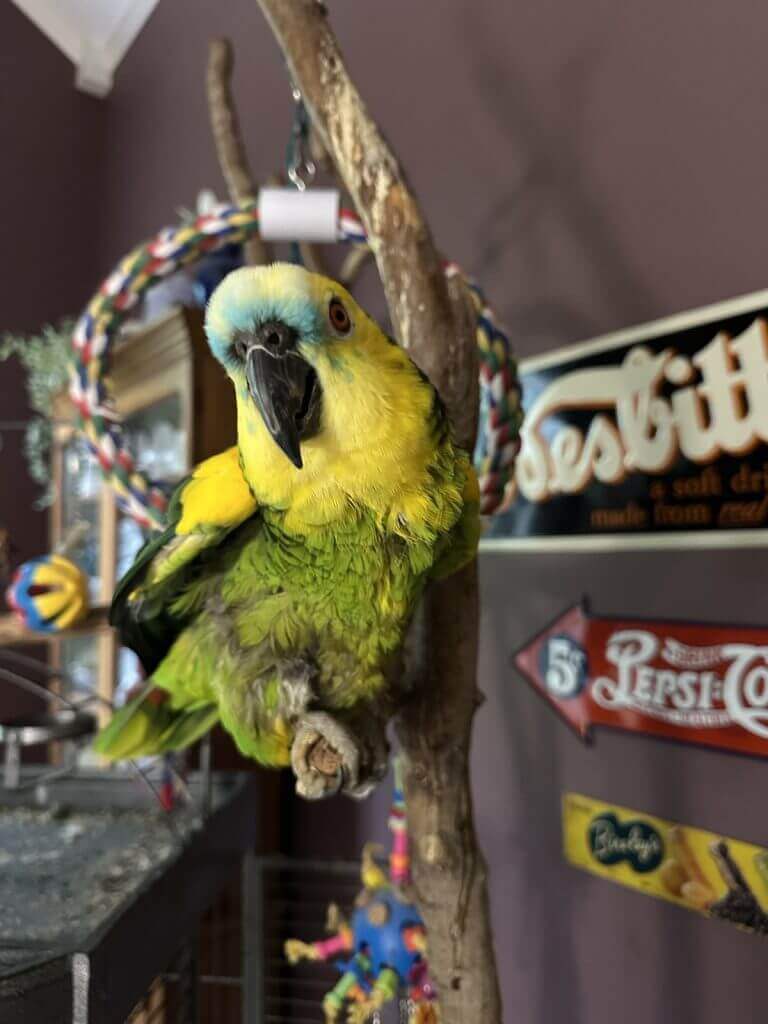
Amazons mature. Males especially. Hormones show up, boundaries get drawn, and a bird who was easygoing at five can be extremely opinionated at fifteen. That is not a behavior problem, that is a parrot growing up and asking for a different kind of relationship than the one he had as a baby. The bite is the last sentence of a paragraph he has probably been saying for years in body language. Somebody just has to learn to read the earlier sentences.
Gabby also never learned to fly. His wings are not clipped, he simply never figured it out, which is common with birds who were clipped young during the window when they would have learned. That matters more than people realize. A bird who cannot fly away has exactly one way left to say “please stop.” Take away the exit and you get the beak. It is not aggression so much as it is the only remaining word in the vocabulary.
What he needs
An experienced Amazon person. Not a first bird. Not a bird for someone who wants to prove something.
A home without small children and without anyone who will stick fingers through cage bars.
Somebody who does not need to hold him. Gabby does not owe anyone a cuddle. Target training, station training, stick training, food-motivated trust building. Handling can be rebuilt later, on his terms, or not at all.
Freedom. His current person lets him come and go from his cage as he pleases, and I want that to continue. Honestly, that detail told me a lot about her. Plenty of people get bitten once and the bird spends the rest of its life behind bars. She never did that to him.
A long-term commitment. He is twenty. A blue-fronted Amazon can live into his sixties or beyond. This is not a ten-year plan. Whoever takes Gabby needs a plan for Gabby after them, too.
What we do not know yet
Gabby has never been to a vet. His person told us that honestly and was embarrassed about it, and I told her what I will tell you: an enormous number of companion parrots have never seen an avian vet, and admitting it is a lot more useful than hiding it. He appears to be in reasonable health. He is bright, active, vocal, and engaged in his photos.
But “appears healthy” is not the same as “is healthy,” especially with a species that hides illness for a living. A full avian workup is going to be part of this placement, and we will be upfront with his adopter about anything we find. If there is an underlying medical piece driving some of the irritability, and sometimes there is, we would all rather know.
About the person letting him go
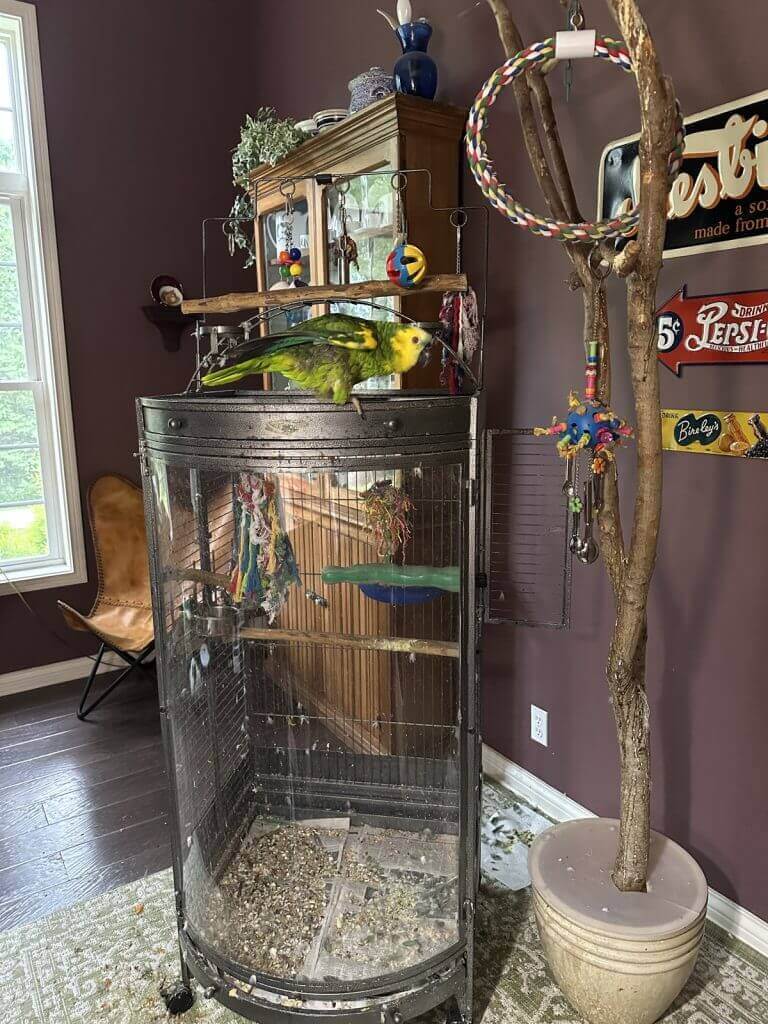
She has had him for two decades. She is not dumping him, she is not tired of him, and she has not stopped loving him. She is getting older, she is worried it will get harder for her to safely handle him, and she knows that he will very likely outlive her. She would rather make this decision now, while she can make it carefully, than leave it to somebody else to make in a hurry later.
I asked her directly whether she wanted to try keeping him instead, and offered to help her learn to work with him. She thought about it and told me she believes this is the right call for both of them. That is a hard thing to say out loud, and I respect it enormously. If you are reading this and quietly wondering about your own bird’s future, that is what doing it right looks like.
If Gabby sounds like your bird
He is currently in the Louisville, Kentucky area. We are handling the placement through Ruffled Feathers Parrot Sanctuary, and we are not in a hurry. Nobody is on a clock here. We would much rather wait for the right person than move him twice.
Start with our adoption application, or reach out to us at [email protected]. Tell us about your experience with Amazons specifically, what your setup looks like, and how you would approach the first six months with a bird who does not want to be touched yet.
Gabby has spent twenty years talking. We are looking for somebody who is ready to listen.
Where Hope Takes Flight