Ruffled Feathers Parrot Sanctuary Inc.
Where Hope Takes Flight


Ruffled Feathers Parrot Sanctuary • Louisville, Kentucky • March 14, 2025
The Neighbor Who Didn’t Look Away: How One Louisville Wildlife Rescue Volunteer Saved an Injured Raccoon
A homeowner with no car, one very angry raccoon, and the Louisville raccoon rescue volunteer network that closed the gap between them.
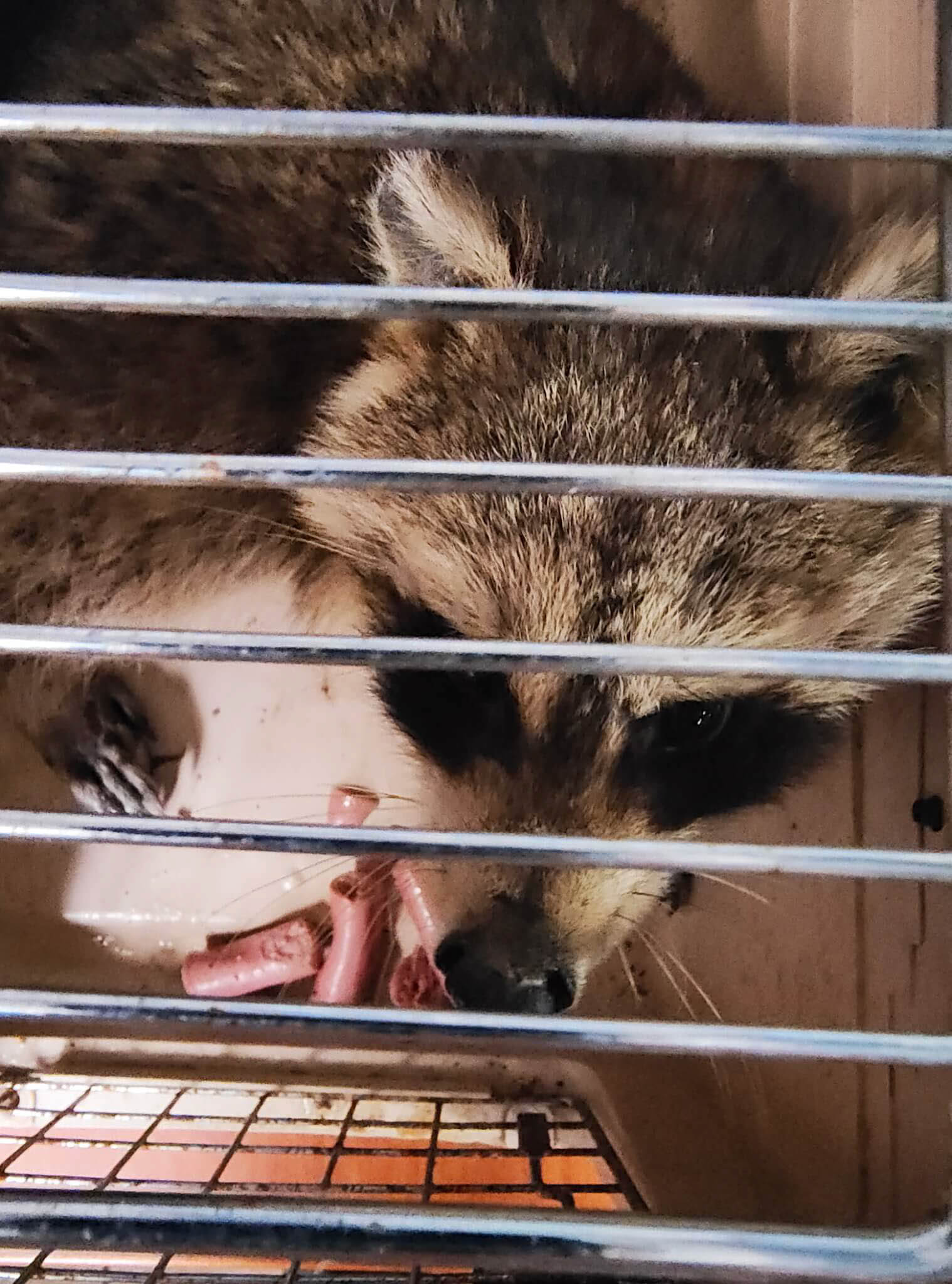
An injured raccoon rescue in Louisville started with one homeowner who refused to look away. With no way to transport the animal herself, she reached out for help, and one of our wildlife rescue volunteers stepped in to make sure the raccoon had a chance.Most rescues do not start with an expert. They start with somebody looking out a window. This one started with a homeowner who noticed a raccoon crossing the yard wrong — one back leg dragging, the whole animal moving at the pace of something that knows it is in trouble. They could have shut the blinds. Plenty of people do, and nobody would ever have known. Instead they picked up the phone, and by the end of that same night an injured raccoon was sitting in a live trap with a real shot at healing.
However, what happened in between is the part worth telling, because it is the part most people assume is impossible. The person who spotted the animal had no way to drive it anywhere. No car, no truck, no ride. In a lot of towns that is where the story ends. In Louisville it is where our wildlife rescue volunteer network picks up the slack — and that hand-off, from a neighbor who cares to a volunteer who can drive, is the single most important link in the whole chain.
A Louisville Raccoon Rescue Call From Someone Who Couldn’t Drive
Here is the thing about wildlife emergencies: the person who sees the animal is almost never the person equipped to move it. They may be at work, elderly, carless, or juggling three kids with no crate. And so an enormous number of injured animals go unreported for the simple reason that the finder does the math, decides they cannot personally solve it, and quietly gives up.
Fortunately, that math is wrong, and this rescue is why. When the call came in, we did not need the caller to have a vehicle. We needed them to have eyes, a location, and about ten minutes of patience on the phone. Everything else — the trap, the transport, the destination — is what the rest of the network exists to supply.
Instead, the ask was small and specific. Watch the animal. Tell us where it is bedding down. Set the trap where it is already traveling. Do not touch it. That last one is not a formality: in Kentucky, raccoons are a rabies vector species, which means handling one without training and vaccination is a genuinely bad idea for you and a legally complicated one for the animal. The whole point of a good rescue dispatch is that nobody has to be a hero with their bare hands.
Night One of the Louisville Raccoon Rescue
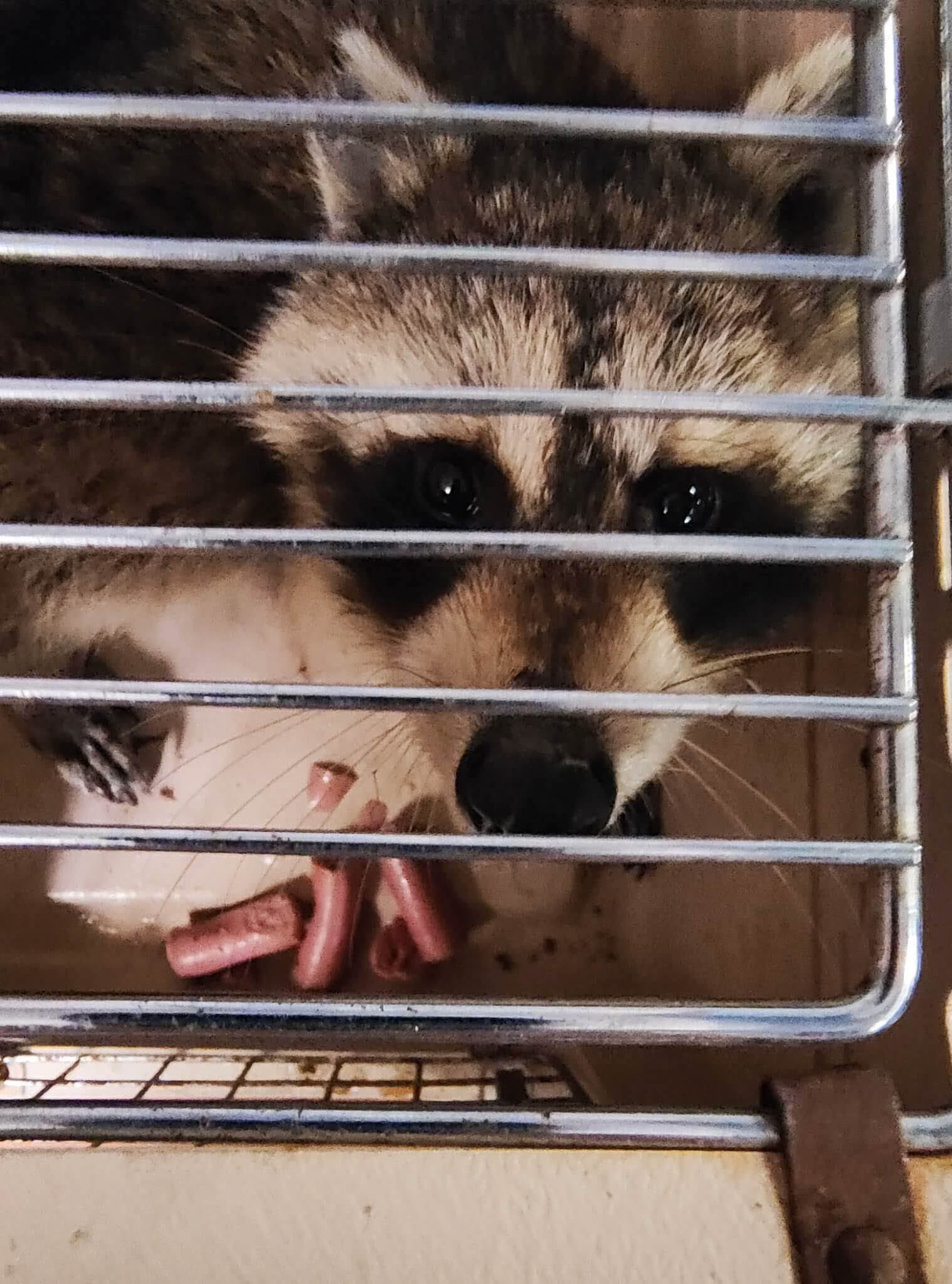
Trapping an injured raccoon usually takes several nights. Animals in pain get cautious, and a raccoon that has been limping for days has already learned that the world is full of things that hurt. We tell people to plan on a week and to not get discouraged.
In this case, the homeowner got it on night one.
More importantly, that was not luck so much as good placement. A trap set along an existing travel route — a fence line, a deck gap, the path worn between the trash cans and the treeline — catches animals that a trap parked in the middle of an open lawn never will. The homeowner had been watching, so they knew the route. Attention is a rescue skill, and it is the one nobody thinks to list on a volunteer form.
By morning there was a raccoon in the trap, an injured leg that clearly needed a professional, and a household with no way to get either of them anywhere.
One Very Angry Passenger in a Louisville Raccoon Rescue
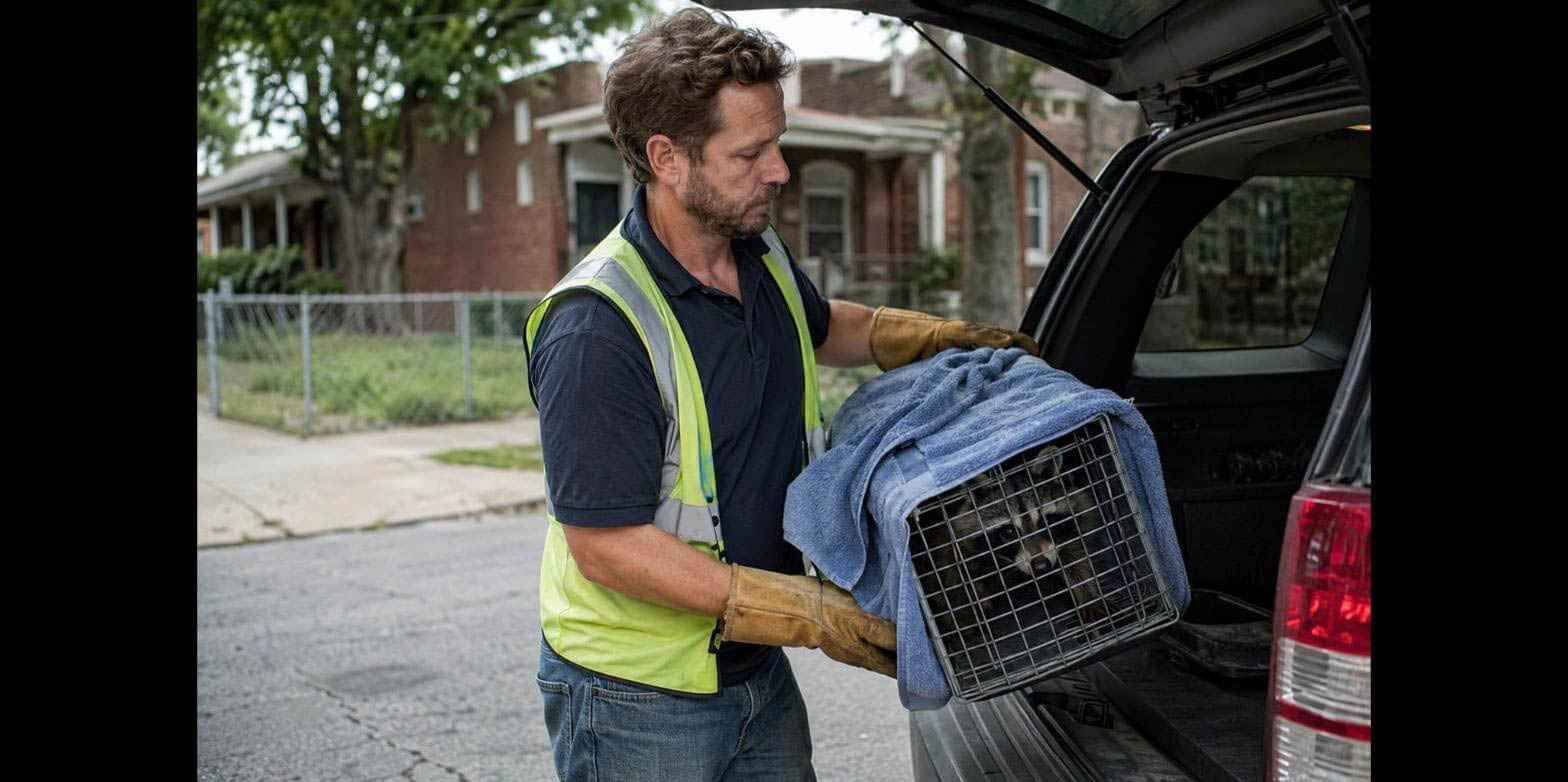
A volunteer took the run. That sentence is four words long and it is the entire reason this animal is alive, so it is worth slowing down on. Then, somebody who had never met this homeowner drove to a stranger’s address, secured a trap containing an extremely displeased wild animal, covered it to cut the stress, and pointed the car toward a sanctuary an hour away.
Meanwhile, the raccoon was, by every account, furious. Growling, chattering, doing the full raccoon repertoire of noises that translate roughly to I have not consented to any of this. Which is exactly what you want to hear. A quiet raccoon in a trap is a raccoon in trouble. Anger is a vital sign.
The Gap Nobody Talks About
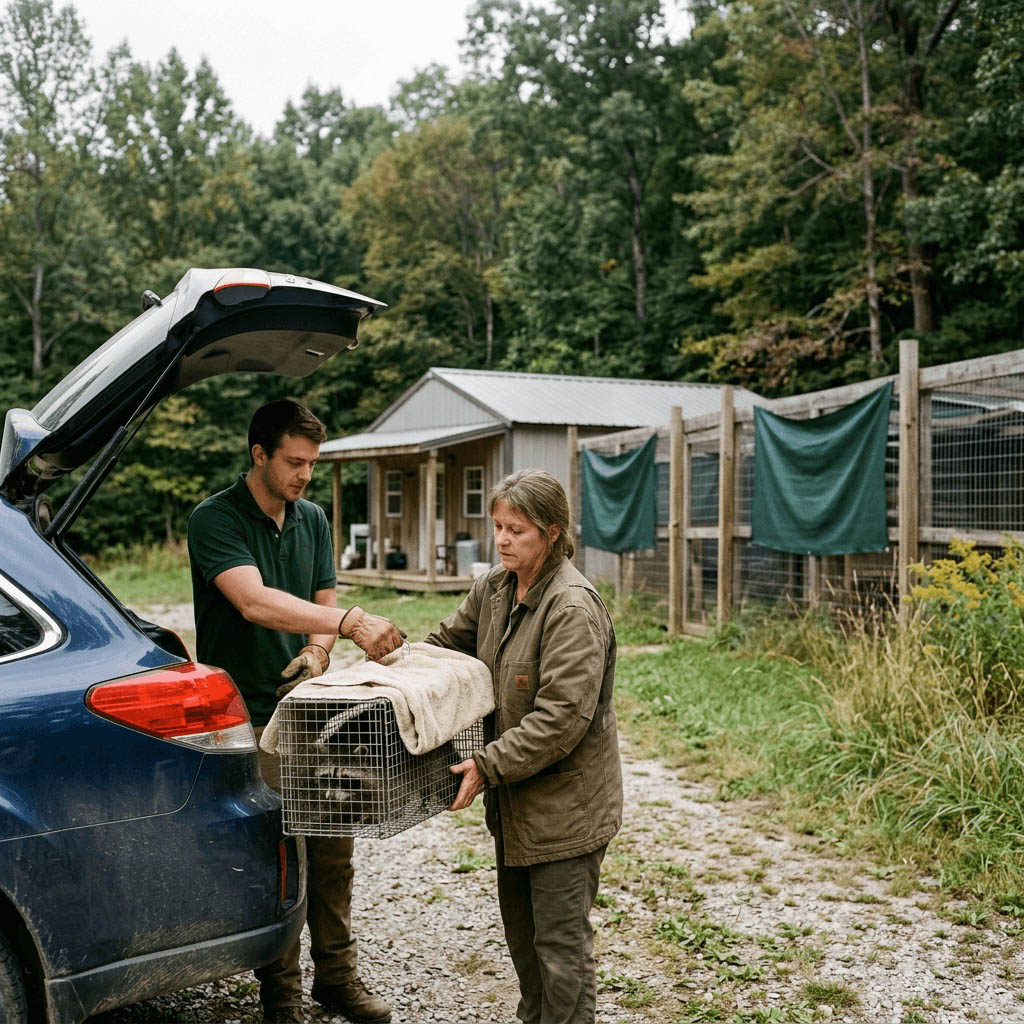
Ruffled Feathers is a parrot sanctuary. We are not raccoon rehabbers, and we do not pretend to be — native wildlife rehabilitation in Kentucky is permitted work, and a raccoon with a leg injury needs someone licensed to assess it, treat it, and eventually decide whether it can be released. Therefore, the animal went where it belonged: to Broadbent Wildlife Sanctuary, where wildlife of this kind actually gets care.
In fact, this is the part of the operation people underestimate. Rescue is mostly logistics. The medical expertise already exists in this state and it is excellent. What is chronically missing is the connective tissue — the driver, the dispatcher, the person who answers at 10:45 at night and knows which facility takes what species. Every animal that dies in a ditch within twenty miles of qualified help dies from a transportation gap, not a knowledge gap.
Ultimately, closing that gap is not a fundraising problem. It is a volunteer problem. It is people with a car and an evening.
What To Do If You Find an Injured Raccoon
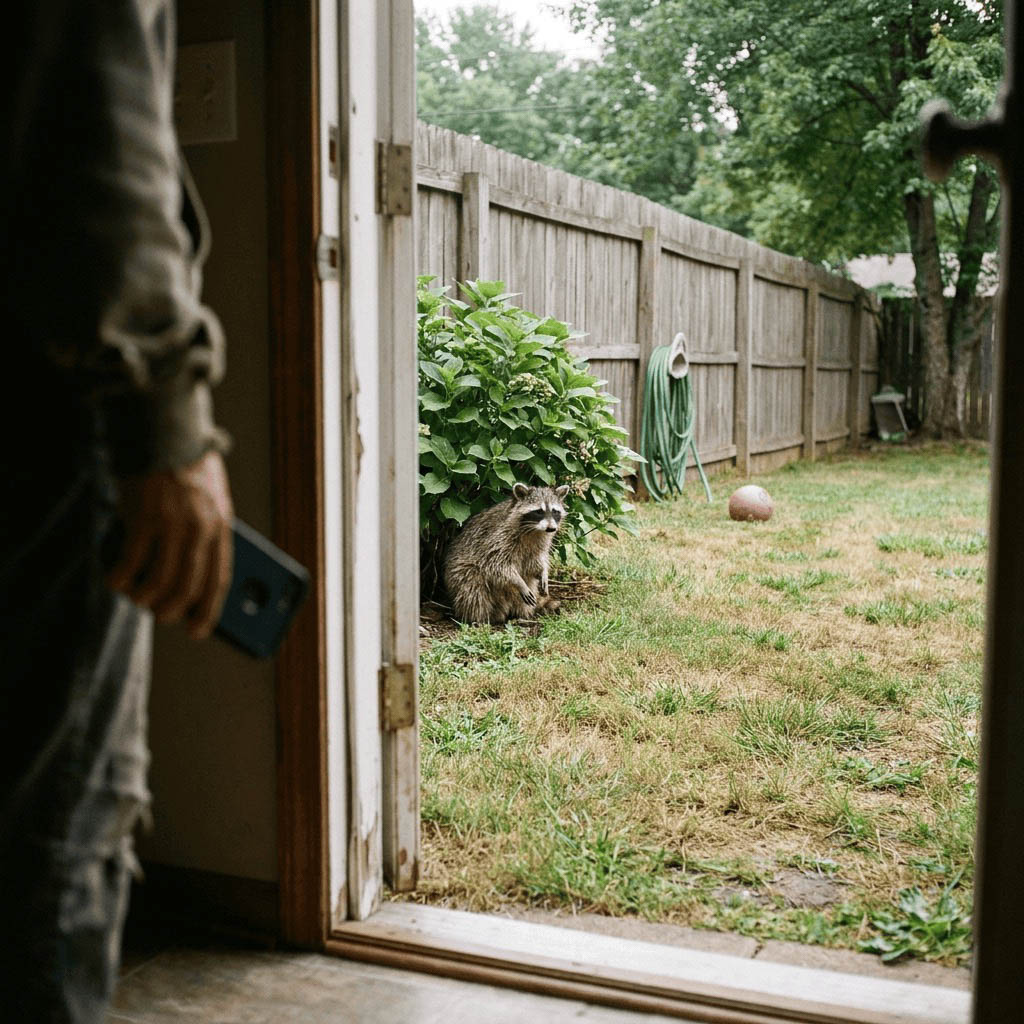
If you find a hurt raccoon — limping, dragging a leg, sitting exposed in daylight, unresponsive at the roadside — here is the short version, and it applies to most injured wildlife in Jefferson County, not just raccoons.
- Do not touch it, and do not let pets or children near it. Raccoons are a rabies vector species in Kentucky. A bite or scratch turns a simple rescue into a public-health file and can cost the animal its life.
- Do not feed it and do not give it water. Well-meant food can cause real harm to an animal that is dehydrated, in shock, or facing sedation.
- Write down exactly where it is. Cross streets, landmarks, which side of the fence. Rescues fail on vague addresses more often than on anything else.
- Take a photo from a distance if you safely can. A picture lets a rehabber triage over the phone instead of guessing.
- Call it in. Reach out to us, to a licensed Kentucky wildlife rehabilitator, or to your local animal services. You do not need to have a plan. That is our job.
- If you can safely watch it, keep watching. Knowing the animal’s travel route is what let this homeowner trap on night one.
- If a trap goes out, cover it once the animal is inside. Darkness dramatically lowers stress during transport.
Finally, the one people always ask: what if I can’t drive it anywhere? Then you have done your part completely. That is what this whole story is about.
How Our Dispatch Turns Neighbors Into a Rescue Network
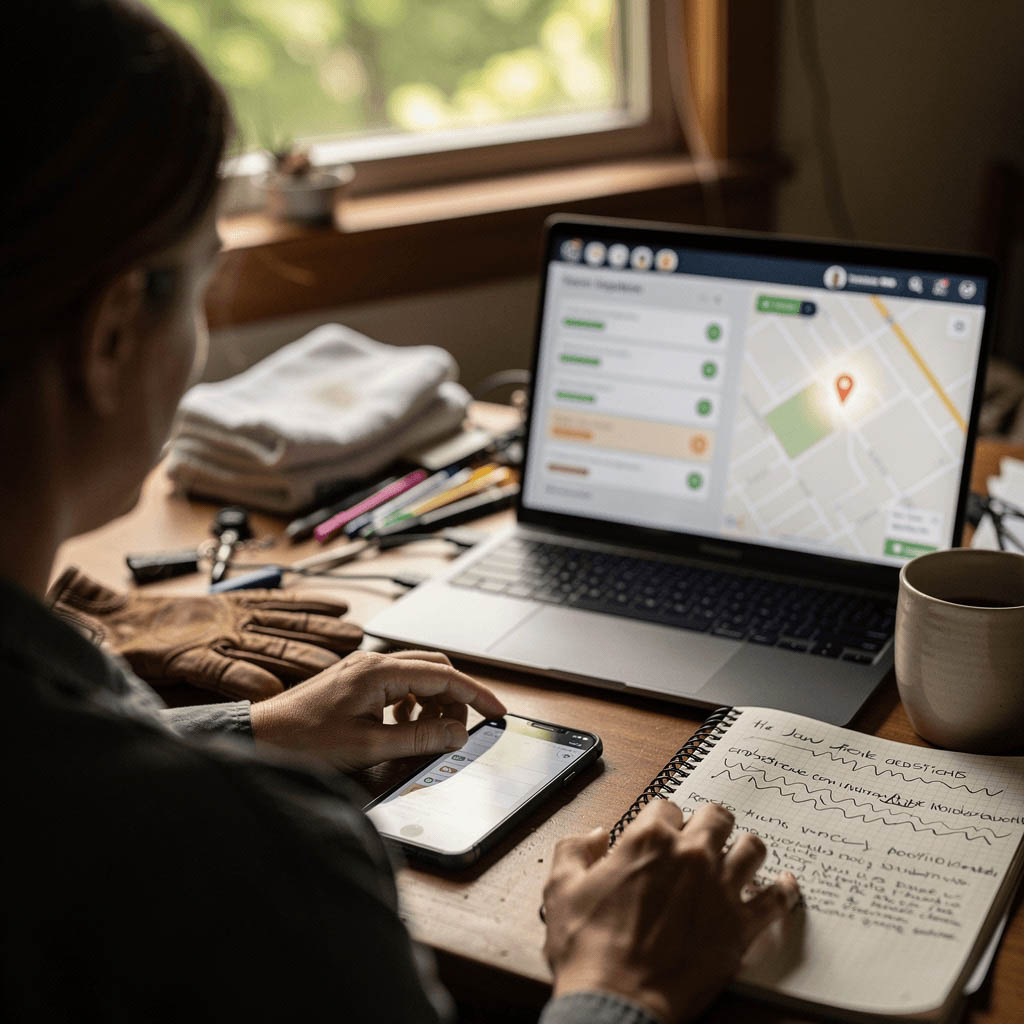
Behind the scenes, an intake like this one runs through our AI-assisted dispatch system. It takes the details as they come in, sorts species and severity, figures out which facility is the right destination, and pushes the run to volunteers who are actually near it and actually free.
As a result, what that buys is time, and time is the only currency in this work. A call that used to sit in a voicemail box overnight now finds a driver while the animal is still findable. It is not magic and it does not replace anyone — it just means a volunteer never has to reconstruct the whole situation from scratch before they can help.
Of course, the system is only as good as the number of people in it. Right now that number is the constraint.
Become a Wildlife Rescue Volunteer in Louisville
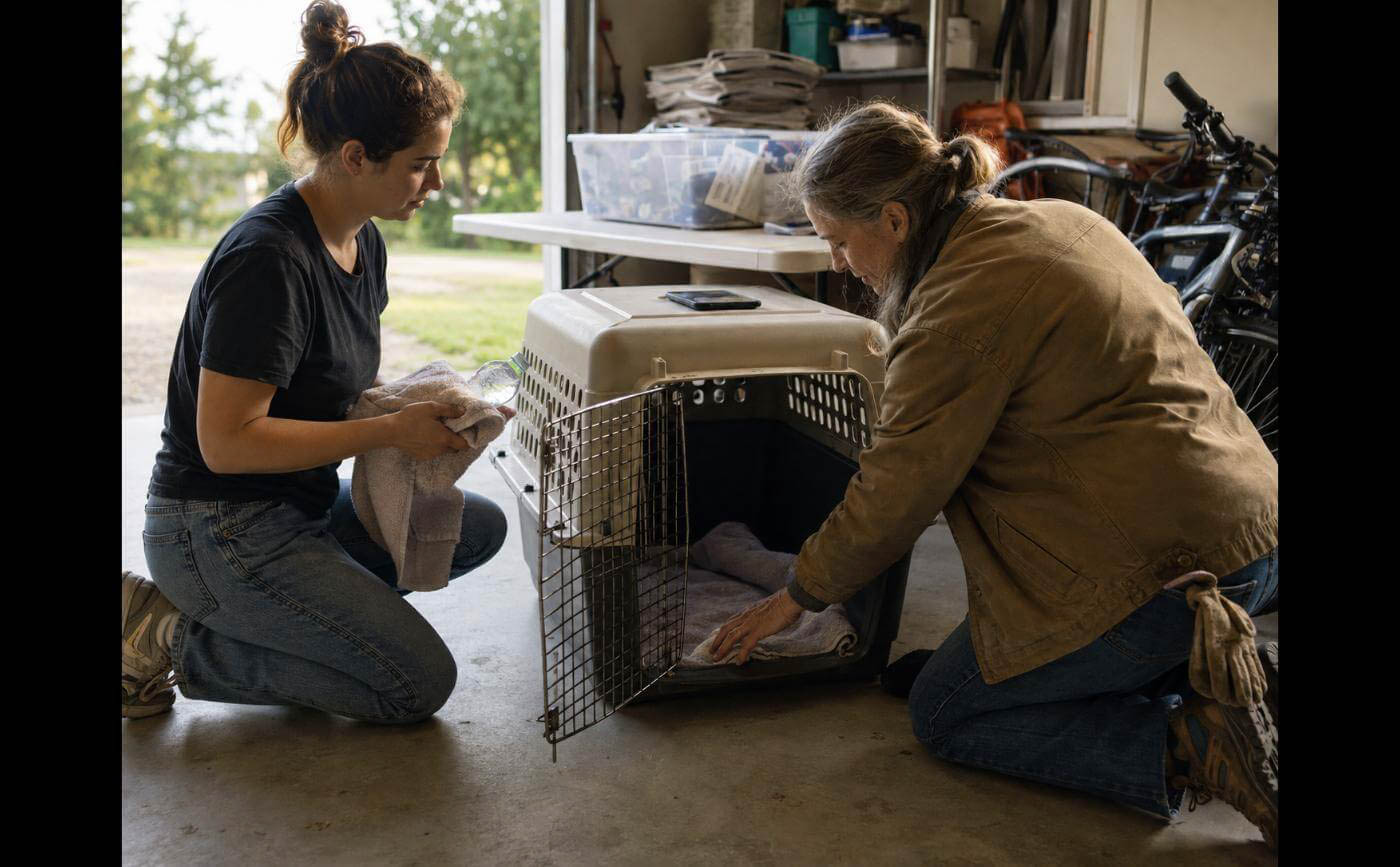
We need people. Not a vague, someday kind of need — a this-week, there-is-an-animal-in-a-trap-right-now kind of need. And the roles are more varied than most people expect:
- Transport drivers. The backbone. You pick up, you drive, you hand off. Take the runs that fit your schedule and skip the ones that don’t. This is the single highest-impact thing you can do for local wildlife with an ordinary car.
- Phone and intake volunteers. Calm voice, good notes. You can do this from your couch, and you are the reason a panicked caller doesn’t hang up and give up.
- Field rescue helpers. Setting traps, containing animals, being the second pair of hands. Training provided — nobody is thrown at a rabies vector species on day one.
- Fosters and facility support. For the birds who live with us, and for the everyday work of keeping a sanctuary running.
- Remote and admin help. Scheduling, records, social media, grant writing. Unglamorous, absolutely essential.
You do not need a wildlife background, and you certainly do not need to be fearless. What matters is being reachable and reasonably reliable, and we will handle the rest.
Fill out the volunteer application →
Not able to volunteer? Share this with the one person you know who owns a truck and a soft spot. That is a real contribution, and it is how most of our best drivers found us.
More Rescues From the Same Network
Somewhere out at Broadbent there is a raccoon who is not grateful, will never be grateful, and would bite every single one of us given the chance. That is the goal. A wild animal that stays wild, healed by people it never has to like, because a neighbor with no car made a phone call and a stranger with one showed up.
Keep wildlife wild.
From all of us at Ruffled Feathers.
Where Hope Takes Flight