Ruffled Feathers Parrot Sanctuary Inc.
Where Hope Takes Flight



Our first of 2025
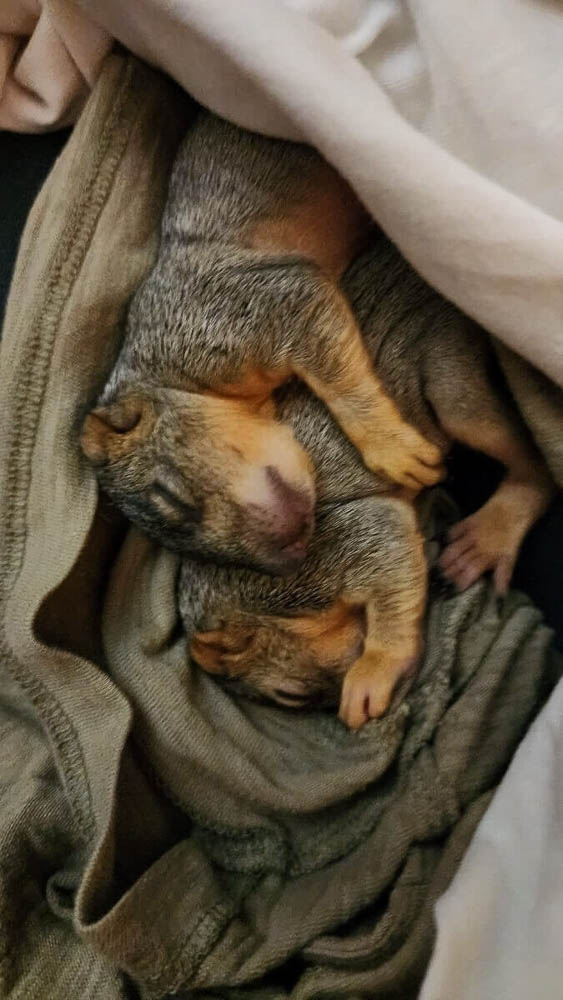
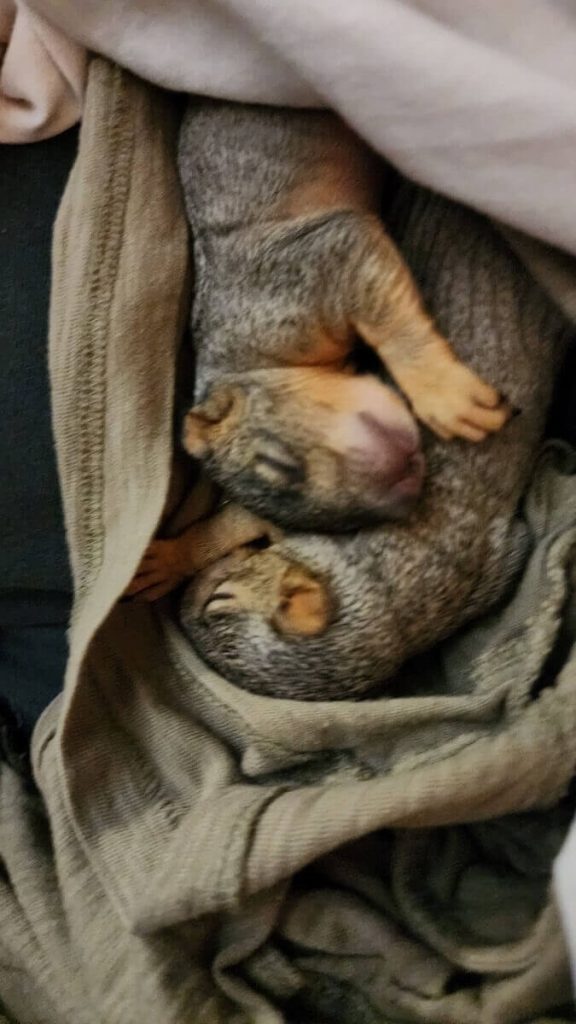
Orphaned Baby Squirrel Rescue After Their Nest Was Destroyed
These little ones had their entire world turned upside down yesterday when the tree holding their nest was cut down. In all the noise and chaos, their mother took off, leaving her babies behind.
Unfortunately, with cold weather setting in overnight, she wasn’t able to make it back to them.
That meant these tiny squirrels needed help.
They were quite a distance from us, but wildlife rescue is rarely a one-person operation. Thanks to our incredible network of volunteers, otherwise known as our wildlife rescue dream team, we were able to guide their temporary care and keep them safe until a volunteer could reach them today.
Getting the Rescued Baby Squirrels to Safety
Tonight, these little ones will be safe, warm, and in experienced hands.
Tomorrow, they’ll hitch a ride to Broadbent Wildlife Sanctuary, where their new team will take over where mom left off. The goal will be to give them the specialized care they need while preparing them to eventually return to the wild where they belong.
In other words, they’ll be raised to become healthy, independent squirrels.
No tiny squirrel-sized therapy sessions needed.
Hopefully.
Want to Help Save Wildlife? It’s Easier Than You Think!
Can you drive a car?
Can you safely deliver a box?
Congratulations! You just might be wildlife rescue material. 😂
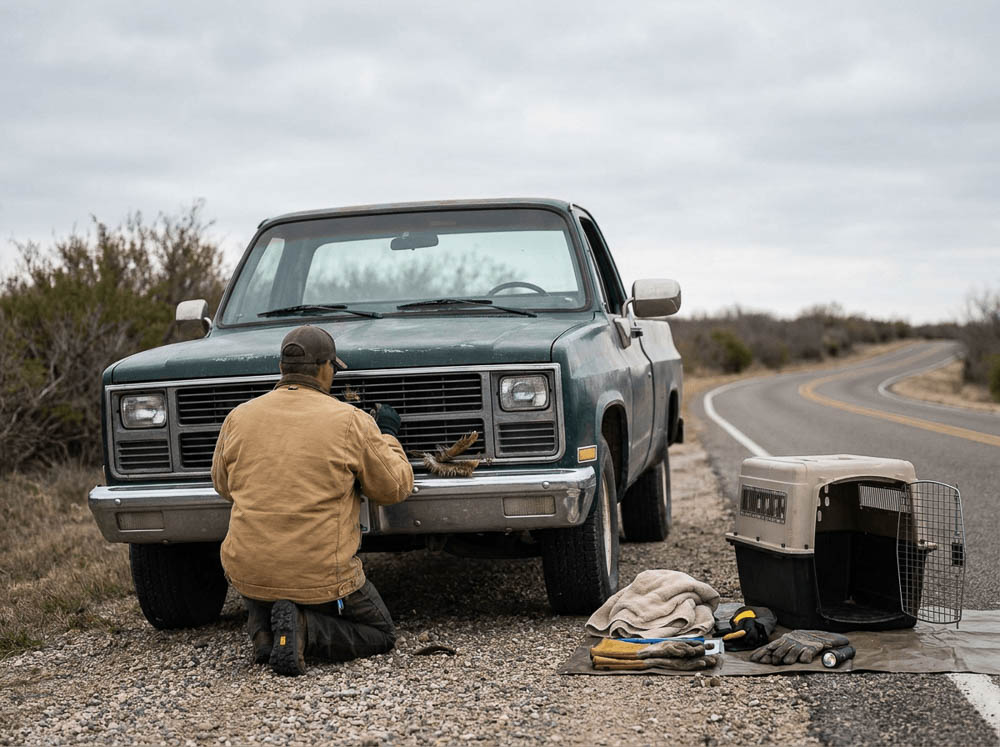
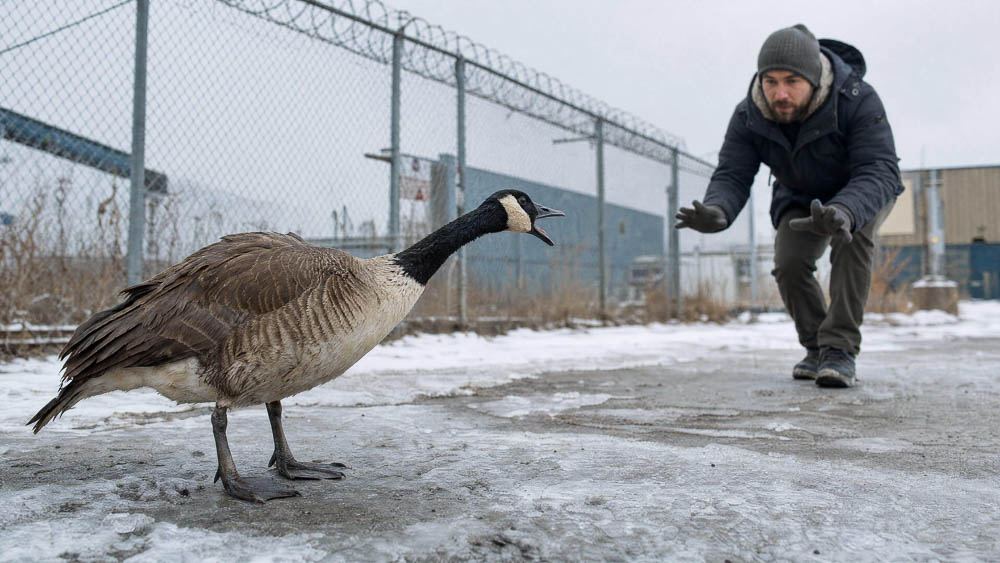
People are often surprised to learn how many different volunteers it takes to make wildlife rescue possible. Not everyone needs to climb trees, wrestle angry geese, catch injured animals, or spend the night feeding babies.
We have volunteer opportunities for many different skill levels and physical abilities.
If you have a reliable vehicle and can safely drive, you may be able to help save lives simply by transporting animals.
If you’re looking for a bigger role and want to learn more about hands-on wildlife rescue, there are opportunities for that too, especially as baby season kicks into high gear.
Baby Season Means Wildlife Rescue Gets Busy
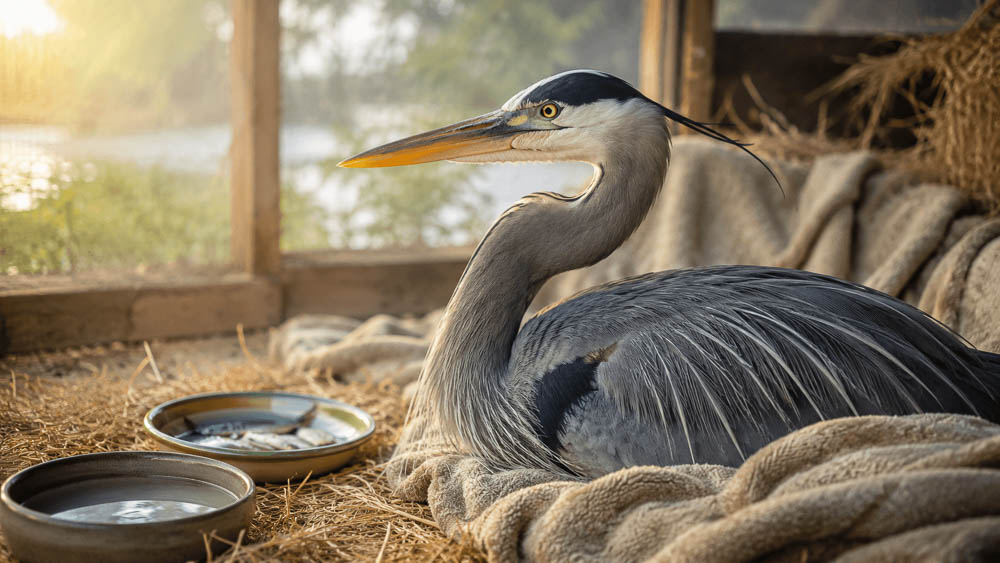
When baby season arrives, we can quickly have more animals needing help than people available to help them.
That means I sometimes end up with dozens of unexpected overnight guests.
None of them pay for their stay.
Most complain about the room service.
A few poop on the staff.
Wildlife rescue is glamorous like that. 😂
The truth is, though, every volunteer who helps transport an animal, answer a call, pick up supplies, or assist with another part of the rescue process makes a difference.
If you’ve ever thought about getting involved, now is a great time.
I’m working on getting our volunteer forms added to the website. Soon, I promise!
In the meantime, you can send us a message through the Ruffled Feathers Parrot Sanctuary Facebook page or contact us through the website. I’ll get back to you as soon as possible with information about the next steps.
Found a Baby Squirrel? Here’s What to Do
Before you swoop in to play wildlife hero, it’s important to assess the situation.
Finding a baby squirrel alone does not automatically mean it has been abandoned. Mother squirrels may temporarily leave their babies while searching for food, relocating a nest, or dealing with a disturbance.
Whenever it is safe to do so, giving mom an opportunity to return is usually the best first step.
Step 1: Observe the Baby Squirrel Before Intervening
If the baby squirrel is not visibly injured, bleeding, cold, weak, or in immediate danger, watch from a safe distance.
Keep people and pets away from the area and give the mother an opportunity to return.
She might just be on a coffee run.
Or, more realistically, trying to figure out what happened to her house.
Step 2: Try to Reunite the Baby Squirrel With Mom
When it is safe and appropriate, place the baby in a secure container near the tree or area where it was found.
The container should protect the baby from wandering away while still allowing the mother to find and retrieve it.
Then move away and monitor the area from a distance.
Mother squirrels may be reluctant to approach if people or pets remain nearby.
Baby squirrel distress sounds can sometimes help attract a mother’s attention. However, use caution because those sounds may also attract predators.
The Humane World for Animals also recommends giving healthy baby wildlife an opportunity to reunite with their mother when it is safe to do so.
Reuniting a healthy baby squirrel with its mother is almost always preferable to removing it from the wild when reunion is still possible.
Step 3: Keep the Baby Squirrel Warm
If a baby squirrel is cold, warmth is one of the most important things you can provide while contacting a wildlife rehabilitator.
Place the baby in a small, secure container lined with soft, smooth material.
You can provide a gentle heat source using:
A warm water bottle wrapped securely in cloth
A heating pad set on low and placed under only half of the container
Providing heat under only half of the container allows the animal to move away from the warmth if it becomes too hot.
Never place a baby squirrel directly against a heating pad or other heat source.
Step 4: Contact a Licensed Wildlife Rehabilitator
If the mother does not return, or if the baby squirrel is injured, cold, weak, lethargic, covered in fleas or fly eggs, or has been in contact with a cat or dog, contact a licensed wildlife rehabilitator as soon as possible.
Baby squirrels require specialized diets, feeding techniques, housing, and care.
The wrong food or feeding method can cause serious injury or death, even when someone is genuinely trying to help.
What NOT to Do With a Baby Squirrel
Please do not take a baby squirrel home and attempt to raise it yourself.
Baby squirrels need specialized care, not peanut butter sandwiches and cuddles.
Do not attempt to feed the baby anything unless specifically instructed to do so by a qualified wildlife rehabilitator. Giving water, cow’s milk, homemade formulas, or other inappropriate foods can cause aspiration, digestive problems, and other life-threatening complications.
Do not leave a baby squirrel exposed in an open area while waiting for its mother to return. Keep it safely contained, protected from predators, and near the location where it was found whenever reunion is appropriate.
Most importantly, don’t assume that finding a baby animal alone automatically means it has been abandoned.
Sometimes the best rescue is giving mom a chance to come back.
Every Wildlife Rescue Takes a Team
These little squirrels lost their home in a matter of moments.
Thankfully, they didn’t have to face what came next alone.
From the people who first found them, to the volunteers who helped coordinate their care and transportation, to the rehabilitators who will continue raising them, every person involved became another link in the rescue chain.
That is how wildlife rescue works.
One animal.
One volunteer.
One ride.
One act of kindness at a time.
If you find an injured or orphaned wild animal and aren’t sure what to do, reach out to a licensed wildlife rehabilitator for guidance.
And if you’ve ever wondered whether you could make a difference as a wildlife rescue volunteer, the answer might be much simpler than you think.
Sometimes saving a life starts with nothing more complicated than having a car, a little time, and the willingness to help.
That’s what we’re here for. ❤️
Some of our related links:

Where Hope Takes Flight