Ruffled Feathers Parrot Sanctuary Inc.
Where Hope Takes Flight


The Topknot Pigeon: Australia’s Wandering Fruit Fanatic With a Double-Decker Hairdo
I run a parrot sanctuary. I have been screamed at by a cockatoo for the crime of leaving a room. I have negotiated peace treaties between a macaw and a cardboard box. I figured the bird world had shown me its entire hand. Then I met the Topknot Pigeon, and I had to go sit on the porch and rethink a few things.
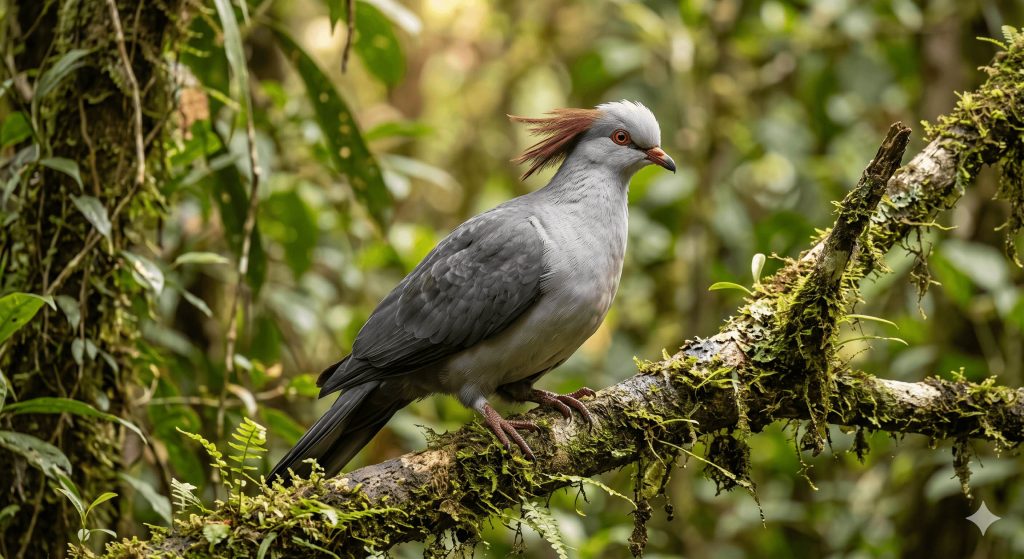
The Topknot Pigeon is a big, nomadic, fruit-obsessed pigeon from the rainforests of eastern Australia. It travels in flocks of hundreds, chases the fruit season around the continent like the fruit personally owes it money, and wears a hairstyle so committed it looks like two separate birds started fighting and called it a draw. This is not a creature that does anything at fifty percent.
It even comes with a paperwork problem. Its scientific name is Lopholaimus antarcticus, which is a bold choice for a bird that has never once been to Antarctica, does not own a coat, and lives somewhere warm and full of figs. Somewhere back in the day a naturalist squinted at a map, guessed, and the poor pigeon has been carrying that around like a misspelled name tag ever since. So before we have even begun, our hero has survived two crests and a clerical error. Buckle up.
Topknot Pigeon: A Hairdo That Clearly Went Through a Committee
Most pigeons keep things humble. Round head, soft little coo, files its taxes on time. The Topknot Pigeon looked at the standard-issue pigeon and said absolutely not. This bird has two crests. One would have been plenty. Instead, it grew two. A pale grey crest sweeps forward over the bill like a bang caught in a wind tunnel, and a long reddish-brown crest sweeps backward off the crown like it is forever walking out of a shampoo commercial in slow motion. Business in the front.
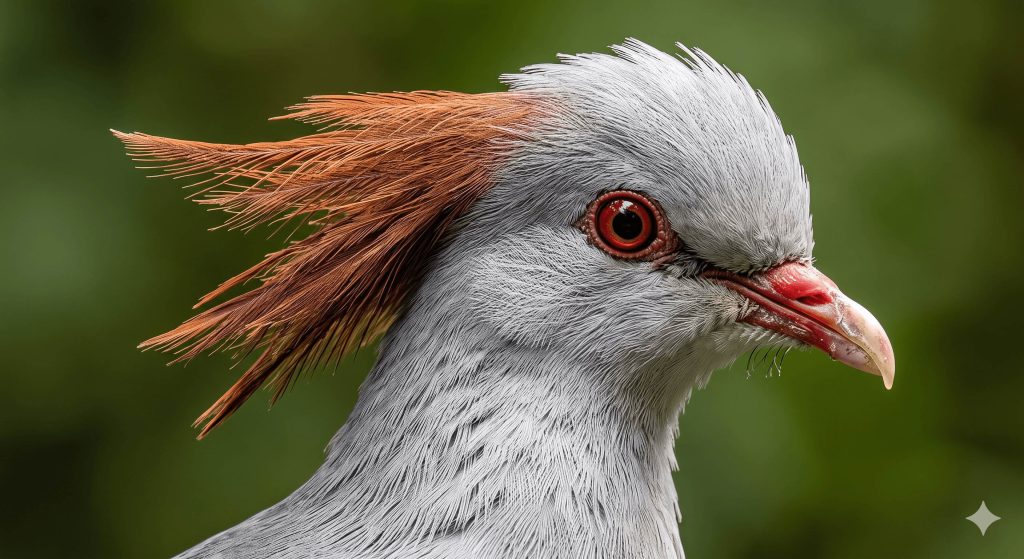
Meanwhile, the party stayed in the back. Both happening at once, on a pigeon, in the wild, with full confidence and zero explanation. If you have ever seen a cockatoo fling its crest up to make a dramatic point, imagine that, except the Topknot Pigeon woke up one day, picked the look, and has refused to take it off since roughly the Pleistocene.
I have birds here at the sanctuary who would file for emotional damages over this hairdo.
Why the Topknot Pigeon Refuses to Settle Down
Here is the part that made me fall completely in love. This bird refuses to put down roots, and I mean that as a lifestyle, not a complaint.
The Topknot Pigeon is a true nomad.
Rather than settling in one patch of forest, it follows the fruit wherever it ripens.
Each season sends the bird to another corner of the rainforest. Figs over here. Palm fruits over there. A rumor of something delicious three valleys away. And off it goes, no forwarding address, leaving the other birds to wonder where it went.
Essentially, this bird follows the harvest the way certain people follow a band on tour. No lease. No mailbox. No “we should really put down roots” conversation. Just a permanent road trip with one rule, which is go where the snacks are.
I have caught myself genuinely jealous of a pigeon, which is a sentence I did not expect to write today.
And here is the kicker. Oddly enough, that wandering habit is the exact thing that saved its entire species. Hold that thought, because it pays off later.
When the Flock Pigeon Shows Up, It Shows Up
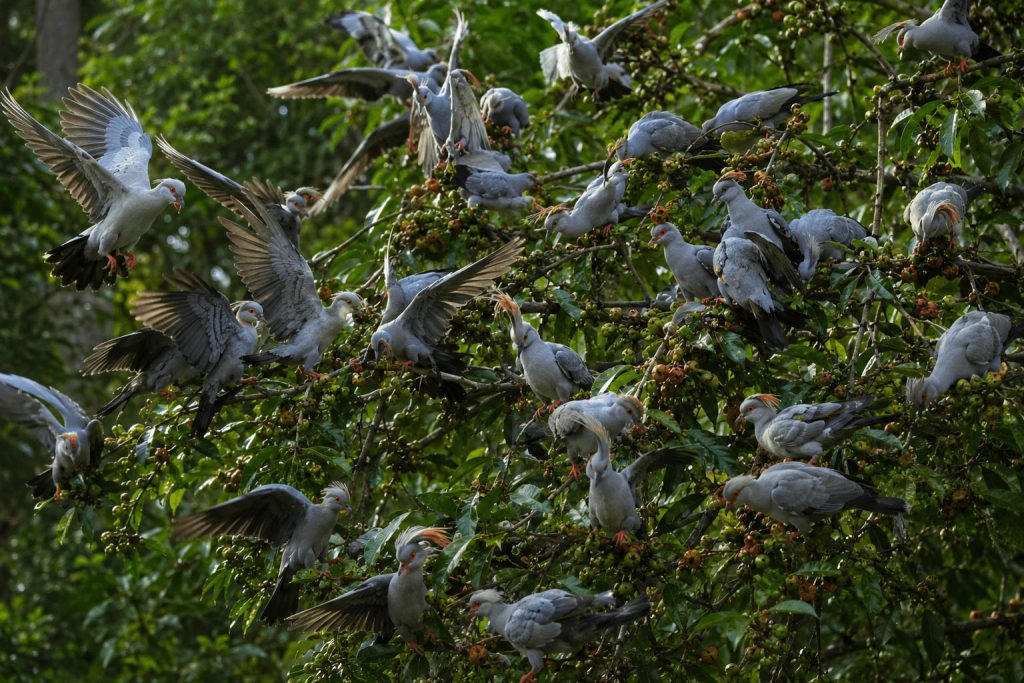
People also know the Topknot Pigeon by another name. Folks also call it the Flock Pigeon, because this bird does not understand the concept of a small, tasteful gathering.
When these birds travel, they roll in flocks of hundreds. A quiet, peaceful little fruiting tree can go from total serenity to complete pandemonium in about ninety seconds flat, because the entire flock has decided, all at the same instant, that this is the tree.
Picture the doors flying open on the first morning of a holiday sale, except every single shopper has wings, a double crest, and very strong opinions about figs. The Flock Pigeon does not call ahead. It does not RSVP. It does not text “omw.” It simply materializes, in catastrophic numbers, and starts eating.
I would pay real money to watch one tree try to brace for that.
How the Topknot Pigeon Accidentally Plants Rainforests
All that enthusiastic eating has to go somewhere, and I am sorry to report that the Topknot Pigeon dines like a toddler who has never once been told no.
Walk underneath a tree where a flock has been roosting and feeding, and the forest floor is carpeted, and I do mean carpeted, in the seeds they have dropped and otherwise sent on their way. Wild figs. Bungalow palm fruits. Cabbage-tree palm seeds. If it grew on a tree and looked vaguely snackable, it is now on the ground in a thick layer beneath the roost. It looks like the aftermath of a food fight where only one side showed up and the other side was a tree. But here is the twist, and it is honestly the most charming thing about the whole bird. That mess is not a mess. It is a forest.
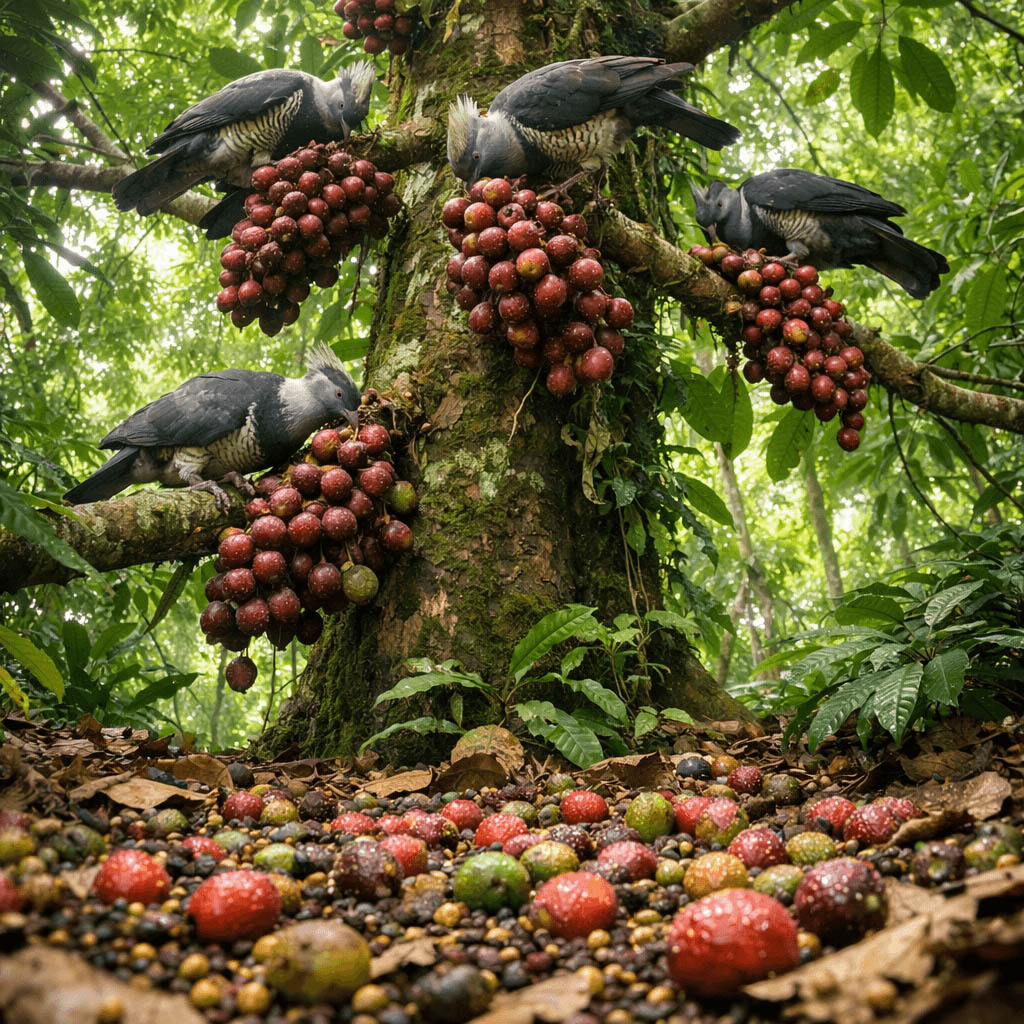
Every seed they fling around is a future tree, which makes the Topknot Pigeon one of the most important seed dispersers in the entire Australian rainforest. So this slob, this absolute disaster of a dinner guest, this bird that would never get its security deposit back, is quietly out there replanting the very rainforest that feeds it.
It is doing volunteer conservation work and it does not even know. Nobody told it. It just thinks it is making a mess.That is my favorite kind of hero. The one who saves the world entirely by accident and would be baffled to hear about it.
Not a Morning Bird, and Frankly, Good for It
I want to take a second to respect this bird’s daily schedule, because it is the schedule of someone who has their priorities in order.
The Topknot Pigeon does not bolt out of bed at dawn like some feathered overachiever with a 5 a.m. cold plunge routine. It sleeps in. The whole flock lounges up in the tall hillside trees until late in the morning, and only then, fully rested and in no particular hurry, drifts down into the valleys and ravines to eat.
Then come evening, back up the hill they go to roost. A leisurely brunch, a long lazy afternoon of snacking, an early night. That is it. That is the entire agenda. No notes. No complaints.
This is a bird that has cracked the code the rest of us are still paying a life coach to find.
From the Dinner Plate to a Protected Treasure
Now I have to slow down and tell you the part that actually matters, because for all the jokes, this bird earned a real comeback.
It was not always easy going for the Topknot Pigeon. In the past it was shot heavily for food, the way far too many wild birds were back when nobody stopped to think about what tomorrow would look like. The numbers dropped. This story could have ended somewhere very sad.
But this is where all that restless, rambling, will-not-stay-put nonsense finally cashed in. Because the Flock Pigeon roams so far and so wide and never settles into one easy place to find, it slipped through. It held on. The species is protected by law now, those once-depleted numbers have bounced back, and today it sits comfortably listed as a species of least concern.
A genuine redemption arc, written by a bird whose entire personality is “you cannot pin me down,” and it turns out that was the superpower all along.
For more straight-laced bird facts, the Australian Museum has a helpful Topknot Pigeon profile, Birds in Backyards also covers its Flock Pigeon name, and BirdLife International tracks its conservation status.
Why I Am Completely Charmed by a Bird Like This
I will probably never get to stand in an Australian rainforest and watch a flock of these come wheeling in over the canopy at dusk. It is on the list. We all have that list, do we not? The places we want to go and the animals we want to see in the wild before our time is up.
But I love knowing that right this minute, somewhere over eastern Australia, there is a bird ignoring its alarm clock, sporting a mullet that no committee actually approved, showing up to a fig tree with three hundred of its closest friends, and accidentally planting next century’s rainforest one dropped fig at a time. Nature does not always make sense. Sometimes she just builds a pigeon with a double crest and a wandering heart, hands it zero instructions, and somehow that ends up being exactly what the whole forest needed.
Sweet dreams, everyone. Maybe tonight you will dream of green canopies and wild crested birds with no fixed address.
Brad Ruffled Feathers Parrot Sanctuary
Some of our related content:
Where Hope Takes Flight