Ruffled Feathers Parrot Sanctuary Inc.
Where Hope Takes Flight


Found a Baby Deer? Here’s Why Mom Isn’t Gone

Picture it. You found a baby deer while walking the edge of your yard, cutting across a field, or pulling weeds by the treeline. There it is, folded up in the tall grass like a little spotted question mark. Big dark eyes. Ears too big for its head. Not moving a muscle. And your very first thought is, “Oh no, it is all alone, I have to help it.”
Here is the part that surprises almost everybody: that fawn is probably exactly where it is supposed to be, doing exactly what it is supposed to do. The kindest thing you can do, most of the time, is back away quietly and leave it be.
I know that feels backwards. Let me walk you through why, because we get these calls every single spring, and once you understand how a mama deer actually operates, the whole thing makes beautiful sense.
The Sneakiest Parenting Trick in the Woods
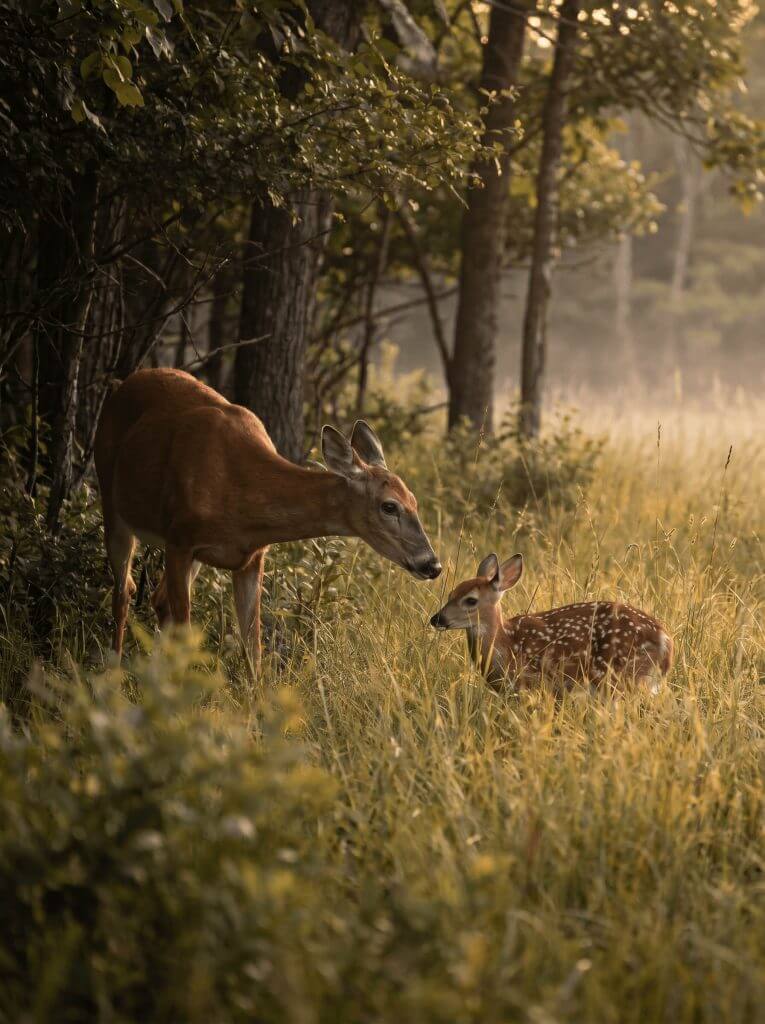
Here is the one fact that explains everything. Newborn fawns are born nearly scentless, and those white spots are built to look like dappled sunlight on the forest floor. A mother deer uses both on purpose. She tucks her baby into a quiet spot, walks away, and keeps her distance for most of the day. Why? Because she is big, she smells like a deer, and predators can find her from a long way off. Her fawn, curled up and odorless and still, is nearly invisible. Staying away is how she protects it.

She comes back to nurse a few times a day, usually around dawn and dusk. She slips in quietly, feeds her baby, and disappears again. To a fawn, lying perfectly still and silent is not fear. It is the job. It is literally what its little body was built to do.
So when you found a baby deer alone, you are usually not looking at an orphan. You are looking at a very good hiding spot, and a mom who is watching from somewhere you cannot see.
Found a Baby Deer? How to Tell if a Fawn Needs Help
Sometimes a fawn genuinely is in trouble, and here is how you tell. Call a licensed wildlife rehabilitator right away if you see any of these:
It is crying or bleating over and over for a long stretch. A little sound is normal. Constant crying is a cry for help.
It is crying after dark. This one matters. A fawn calling out at night is not just upset, those cries pull predators straight to it, so night crying means it needs help now.
It is covered in fly eggs (little rice-like specks), maggots, ticks, or ants.
It is lying on its side, cold, limp, weak, or not responding to you.
It is clearly hurt, or a dog caught it, or it was hit by a car.
You know the mother is dead, like a doe you saw on the road nearby.
It is up and wandering, walking toward people or pets, obviously lost and wobbly.
If you see any of that, do not try to fix it yourself. Make the call and let a trained rehabber take it from there. Kentucky Fish and Wildlife says the same thing: a fawn should only be removed when it clearly needs medical care, and then it should go straight to a permitted rehabilitator.
Found a Fawn? What NOT to Do
This part is just as important as knowing when to help.
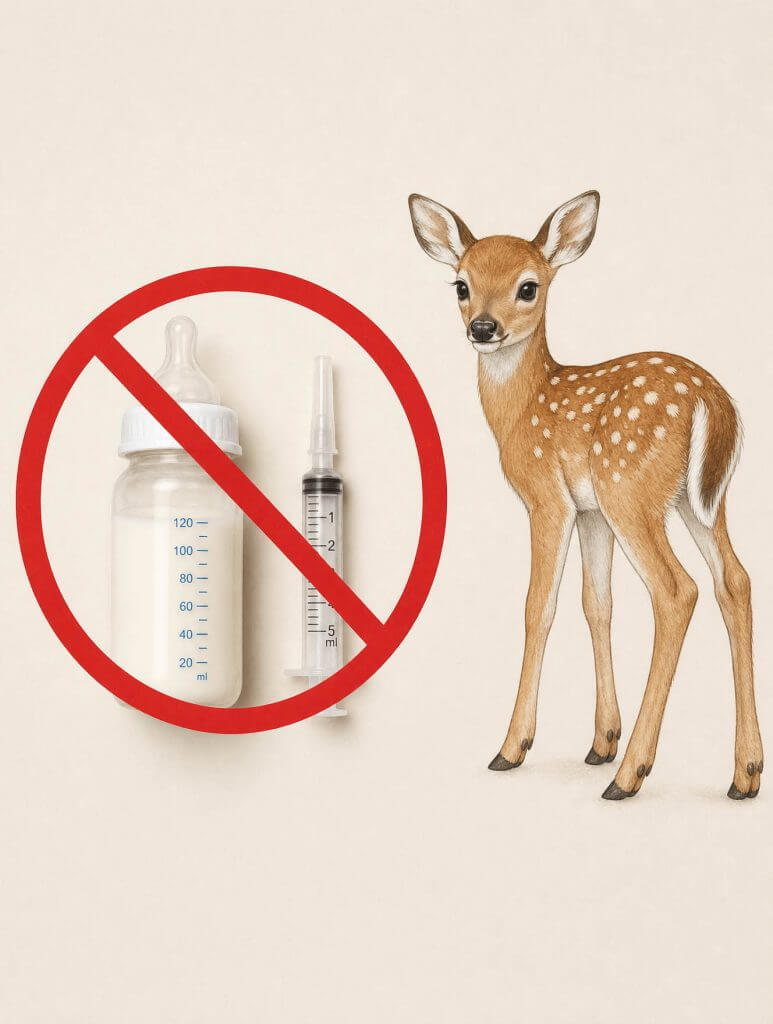
Do not feed it. I mean it. Cow’s milk, goat’s milk, formula, whatever is in your fridge, it can kill a fawn fast. Their stomachs are delicate and specialized, and the wrong milk brings on bloating, diarrhea, and death. Even water can go down the wrong way. Feeding is one of the most common ways good-hearted people accidentally lose a fawn.
Do not take it home. Raising a deer without a permit is illegal in most places, including Kentucky. Hand-raised fawns also imprint on people, lose their fear of us, and usually cannot be released. A cute little fawn grows into a large, unpredictable animal, and the ending is rarely a happy one.
Do not fall for the old myth. “If you touch it, the mom will reject it” is not true. A doe will not abandon her baby over your scent. But that is not a green light to handle it, because a healthy fawn simply does not need handling, and every minute a human hovers adds stress and risk.
Do not move a healthy, hidden fawn. If it is curled up quietly in the grass, a yard, or the woods, leave it right where it is. That is not danger, that is mom’s hiding spot, and moving it only separates it from her. The one exception is real, immediate danger. If a fawn is in the middle of a road or somewhere it could be killed in the next few minutes, get it to safety first. Move it the shortest distance out of harm’s way, to the nearest cover on the same side it was heading, set it down gently, and then call a rehabber or your state wildlife office for what comes next. Save the life first, make the call second
A Quick Word for Mowers and Dog Owners

Two easy habits save a lot of fawns. If you are about to mow a field in late spring, walk it first, and if you spot a fawn or a nest, drop a flag nearby and mow around it, or just wait a couple of weeks. Fawns lie low in tall grass for their first two weeks of life, and a mower gives them no warning at all.
And if you live where deer roam, keep your dogs leashed during fawning season. A loose dog is one of the top reasons healthy fawns end up hurt, and it is one of the easiest to prevent.
Who to Call (and the Kentucky Catch)
When in doubt, make a call before you make a move. A licensed wildlife rehabilitator can tell you in two minutes whether that fawn needs help or needs to be left right where it is.
Here in Kentucky, you can reach the Kentucky Department of Fish and Wildlife information line at 1-800-858-1549, weekdays 8 a.m. to 4:30 p.m. Eastern. Their orphaned and injured wildlife page is a solid, plain-English resource worth bookmarking.
Anywhere in the country, Animal Help Now will find the closest wildlife rehabber to you in seconds.
One honest heads-up for my Kentucky neighbors. Our state has strict rules about deer because of chronic wasting disease, and in certain counties, rehabbing a fawn is not allowed at all. It is a hard reality, and it is exactly why the first step is always a phone call to the experts, never a rescue in your back seat. They will know the rules where you live and what is truly best for that baby.
The Bottom Line
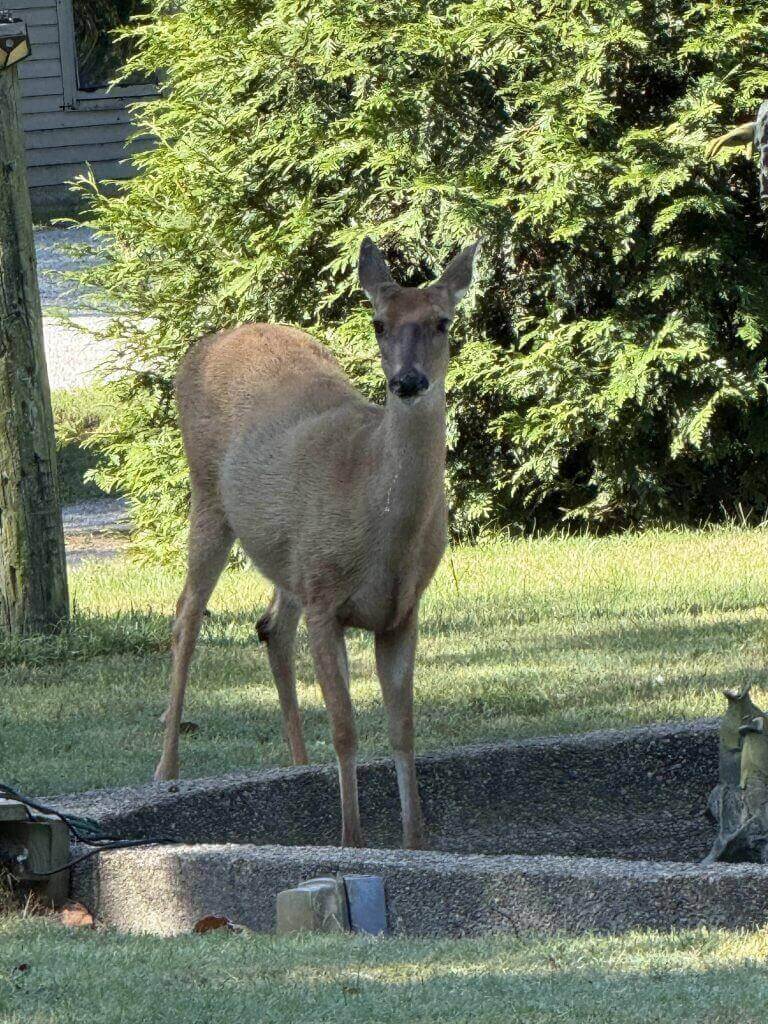
If you remember one thing, remember this. A quiet fawn curled up alone is usually a fawn whose mom is doing her job perfectly. Watch, do not touch, keep the dog in, and call a pro if anything looks wrong. You are not being cold by walking away. You are giving that little one its best possible shot at growing up wild, which is the whole point.
And if you ever find yourself standing over a fawn with your heart in your throat, unsure what to do, that is what we are here for. Reach out to us at Ruffled Feathers and we will help you figure out the right next step. Sometimes the bravest, most loving thing you can do for a wild baby is trust its mother, and step back.
Some of our related content:

Where Hope Takes Flight


