Ruffled Feathers Parrot Sanctuary Inc.
Where Hope Takes Flight


One-Legged Goose Rescue: How She Outsmarted Us
A one-legged goose rescue should be easy, right?
Anybody can catch a goose with one leg.
Well, not so much.
Tara and I are both pretty experienced goose catchers. One of us may be slightly more experienced than the other, but I will let everyone argue over that part later. Somehow, this one-legged goose still managed to completely outmaneuver us.
We had two or three good chances to catch her, but she hopped, dodged, and escaped like she had been training for this moment. For a goose with one working leg, she had entirely too much confidence.
One-Legged Goose Rescue Attempt Number One
After she got tired of playing hop-away from us, she escaped to a pond on the golf course.
Since we were about 35 minutes from home, we really did not want to leave and come back again. We were frustrated, slightly disgusted with ourselves, and probably more tired than either of us wanted to admit.
So we decided to take a break.
Maybe lunch would help. Maybe giving her a little time would help. Maybe she would waddle back onto land, settle down, and forget that the out-of-shape couple with the net had ever existed.
That was the plan, anyway.
Waiting for the Goose to Come Back
We found a nice spot nearby for lunch and texted the homeowner to see if our feathered friend had returned.
Sure enough, after they tossed some snacks in her usual spot, our target came back and settled in for a nap.
Perfect.
Except this time, she saw us coming and knew exactly what we were up to.
She was on the 12th green, way too close to the water for my liking. Tara tried to distract her with corn while I snuck around to cut off her escape route.
That did not work.
She spotted me and escaped into the water behind her, because apparently this goose had already read the rescue playbook and highlighted all the important parts.
Injured Goose Rescue on a Frozen Creek
Here is where things finally turned in our favor.
She picked a small, mostly frozen creek that flowed into the larger pond. What she did not know, but we did, was that a one-legged goose does not do nearly as well on ice as she does on land.
We saw our chance and took it.
Tara had to get a little wet in the process, because of course she did. That is just part of the glamour of wildlife rescue. One minute you are offering corn to a goose, and the next minute you are half in a frozen creek wondering what life choices brought you here.
But we got her.
Getting Her Warm and Safe
It was cold outside, so we moved fast and got her warmed up in the truck.
My fingers were already numb from the short walk back. Wet hands and winter weather do not mix. I am not saying I complained, but I may have made a few deeply dramatic facial expressions.
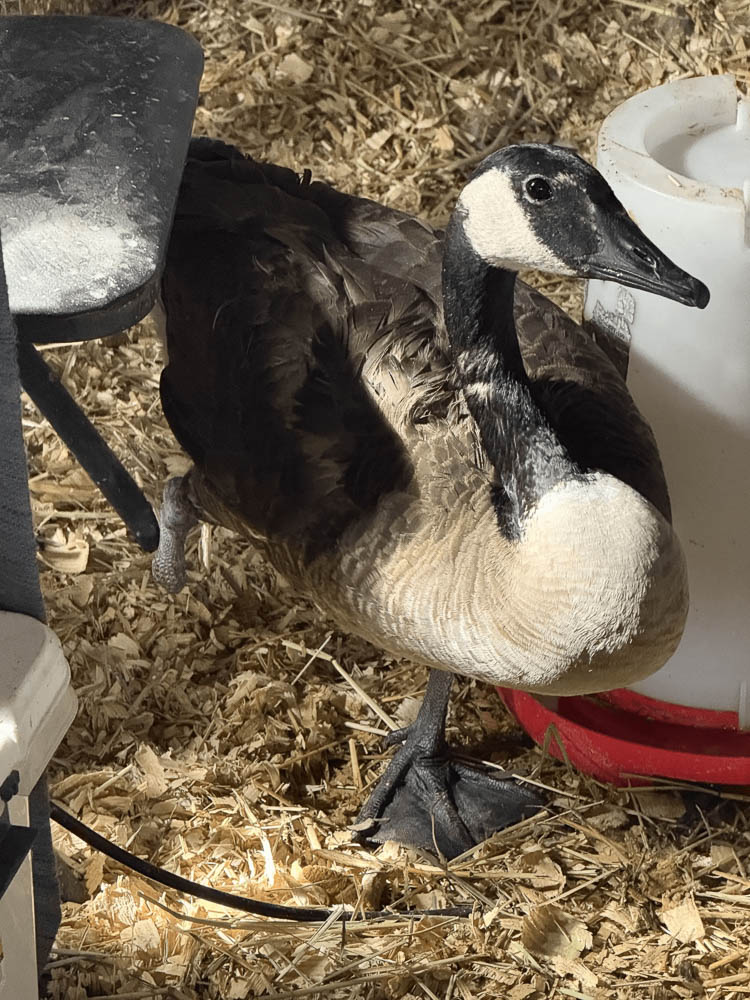
Once we examined her, we realized she was really skinny. That made sense. A one-legged goose has a much harder time finding food, keeping up, and staying safe.
She also seemed to have trouble gaining height when flying. Maybe she had a real flight problem, or maybe she was just cautious about landing with one leg. Either way, she needed help.
Why a Lonely Goose Matters
The homeowner told us she had been alone for a couple of weeks.
If there is one thing I really do not like, it is a lonely goose.
Geese are flock animals. When they are happy and thriving, they are usually not alone. They have other geese around them. They have a rhythm, a routine, and somebody to yell at for no good reason.
A lonely injured goose is not just sad to see. It is a sign that something is wrong.
A Safe Place With Other Handicapped Friends
Our previous skinny goose had already fattened up and reunited with family, so we had a perfect spot open.
That meant this girl could come home, recover, gain some weight, and have a real choice.
If she gets strong enough and decides she wants to leave, she can live life on her own terms. If she decides our yard is safer, she can stay with other disabled goose friends who will not leave her behind even if they wanted to.
Around here, we give them the option when we can.
Fishing Line Injuries Hurt Wildlife
And yes, you probably guessed it.
The old, healed injury was most likely caused by fishing line.
Fishing line can wrap around legs, cut into tissue, stop circulation, and leave birds permanently disabled. This goose survived the injury, but she paid for it with a leg.
That is why discarded fishing line matters. It may look like trash to us, but to wildlife, it can become a trap.
One-Legged Goose Rescue With a Happy Ending
This one-legged goose rescue did not go smoothly.
She outran us. She outsmarted us. She made us take a lunch break. She made Tara get wet. She made me question my cardio.
But in the end, she also got help.
She is warm, safe, fed, and no longer alone. For a stubborn one-legged goose who managed to embarrass two humans on a golf course, that is a pretty good start.
Some of our related content:
Where Hope Takes Flight