Ruffled Feathers Parrot Sanctuary Inc.
Where Hope Takes Flight


Ruffled Feathers Parrot Sanctuary • Birds of the World: Eurasia
The Ptarmigan: The Arctic Bird With a Closet Full of Disguises
A chubby little grouse that wears snowshoes on its feet, sleeps inside a snowbank, and changes its whole outfit every time the seasons turn. I have parrots who take longer to pick a perch.
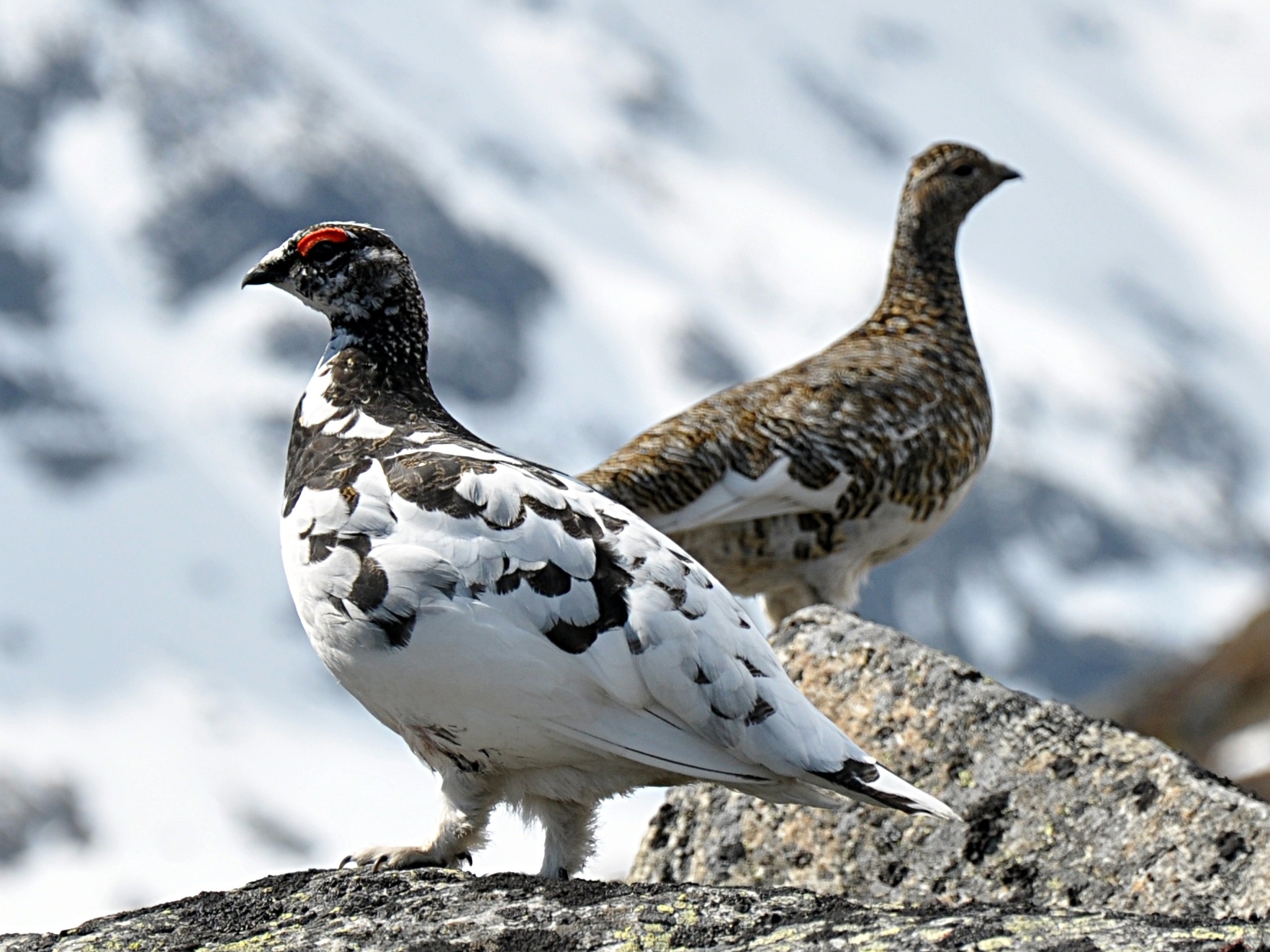
Back in October of 2018 I wrote a little post about a bird most folks in Kentucky have never heard of, and I have been thinking about it ever since. The ptarmigan. Say it with me: TAR-mi-gun. The P is silent, the same way a ptarmigan is silent when a Golden Eagle flies over, which is to say completely, and with its whole heart. This is a bird that looked at the coldest, windiest, emptiest places on the planet and said, “Yeah, this will do. I am staying.”
Most birds with any sense pack up and head south when the Arctic winter shows up. Not this one. The ptarmigan is one of the very few birds that lives up there full time, all year long, through months of darkness and temperatures that would make my whole flock file a formal complaint. It does not do this by being tough. It does it by being clever. And by changing clothes. A lot.
Meet the Ptarmigan
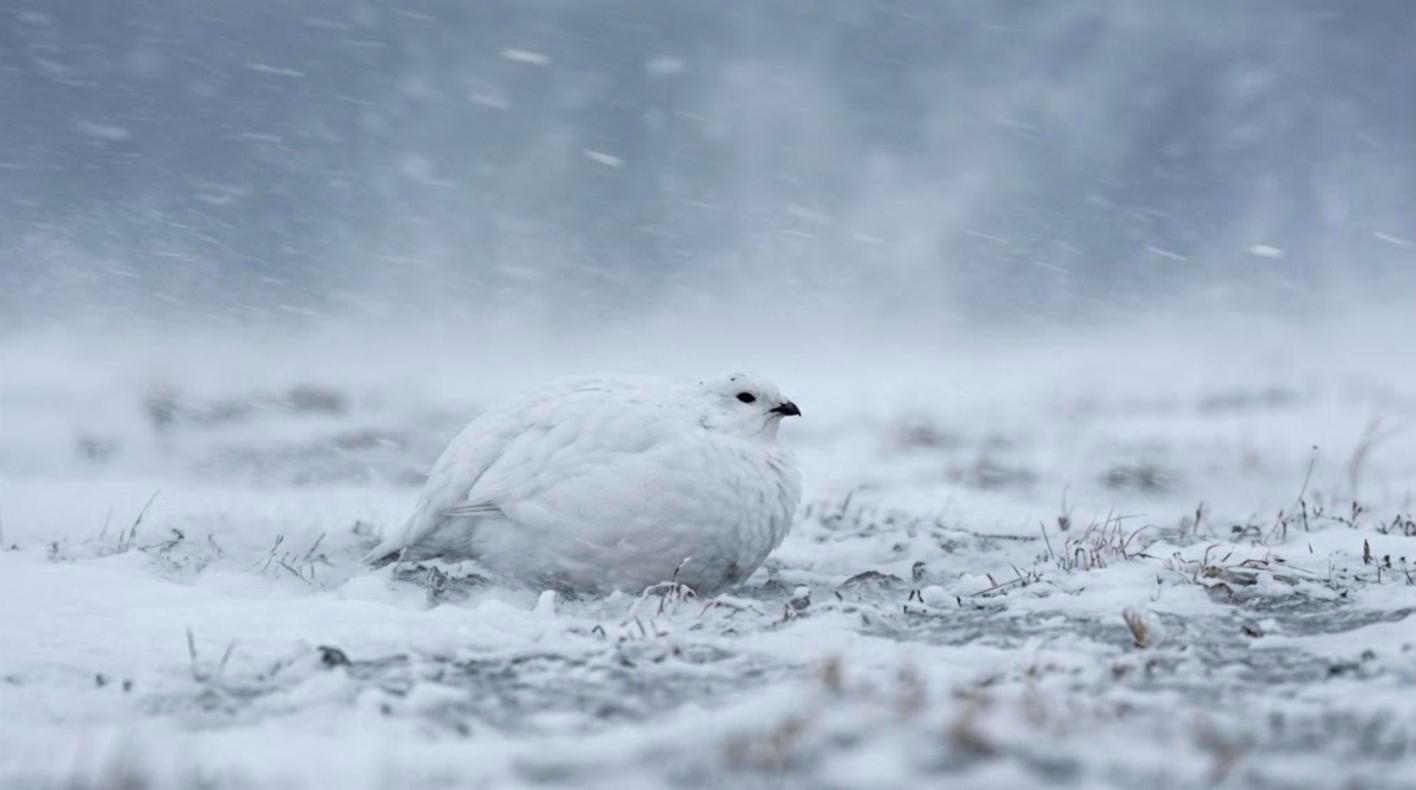
Ptarmigan are grouse, which makes them cousins of the chickens and turkeys you already know. They are about the size of a small chicken, round, soft, and built a little like a feathered loaf of bread. The one I am mostly talking about today is the Rock Ptarmigan, the species that ranges right across the top of Europe and Asia and over into North America and Greenland.
Here is the history lesson. When the last ice age ended and the glaciers pulled back north, the ptarmigan went with them. A few groups got stranded on mountaintops as the land warmed up underneath them, which is why you can still find ptarmigan in the Alps, the Pyrenees, the Scottish Highlands and the mountains of Japan. Little islands of ice age birds, hanging on up where it is still cold enough to suit them.
These remarkable Rock Ptarmigan adaptations have helped the species survive in some of Earth’s harshest environments.
Their scientific name is Lagopus, which means “hare foot.” Hold that thought. We will get to the feet, and the feet are amazing.
Rock Ptarmigan Adaptations: A Wardrobe for Every Season
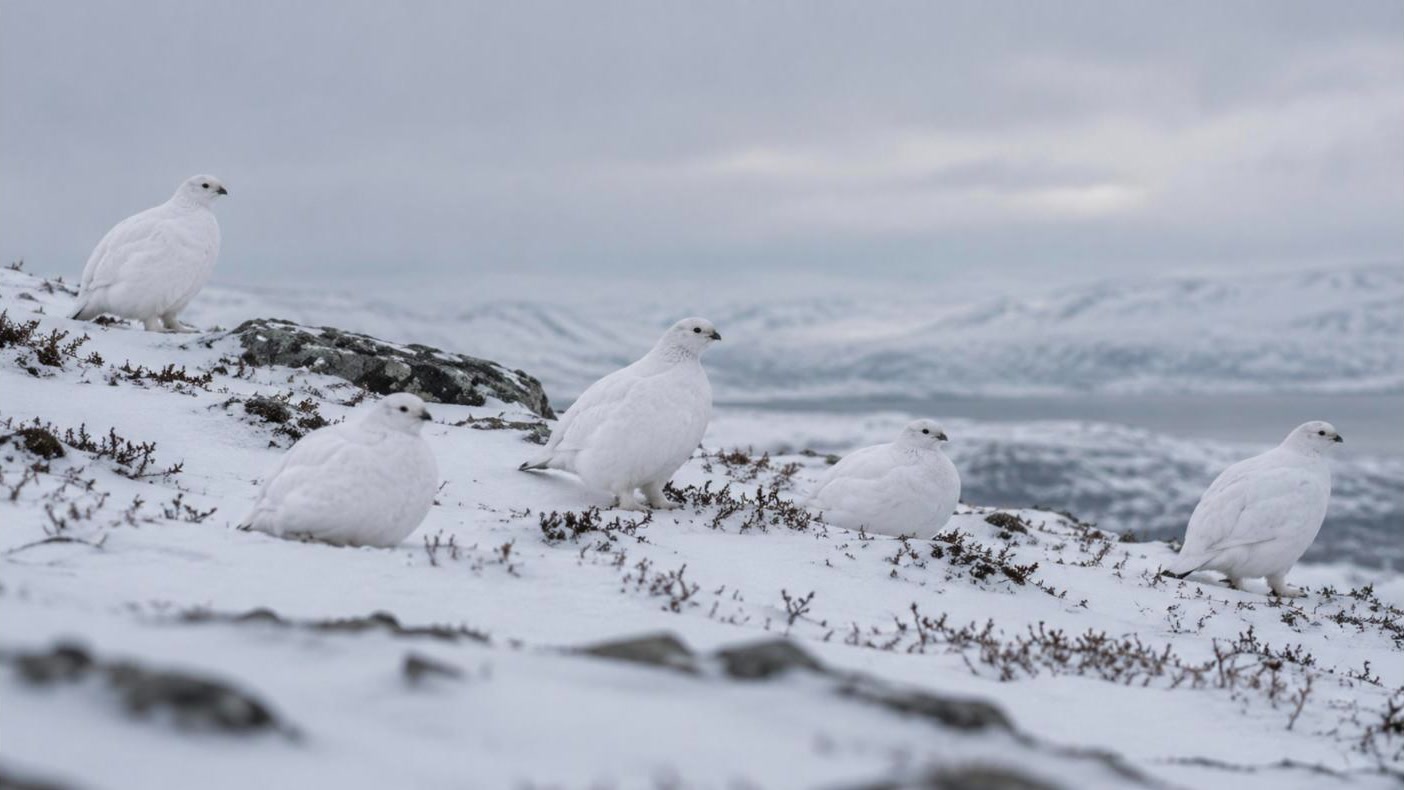
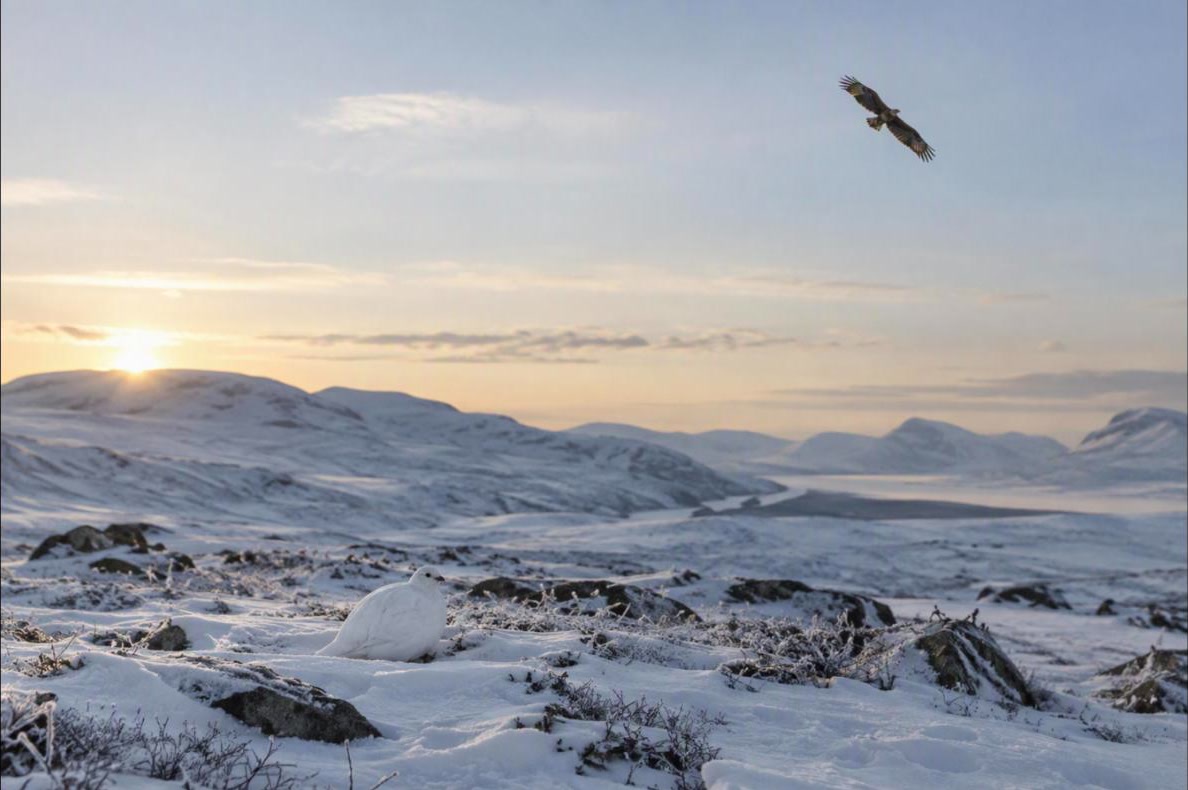
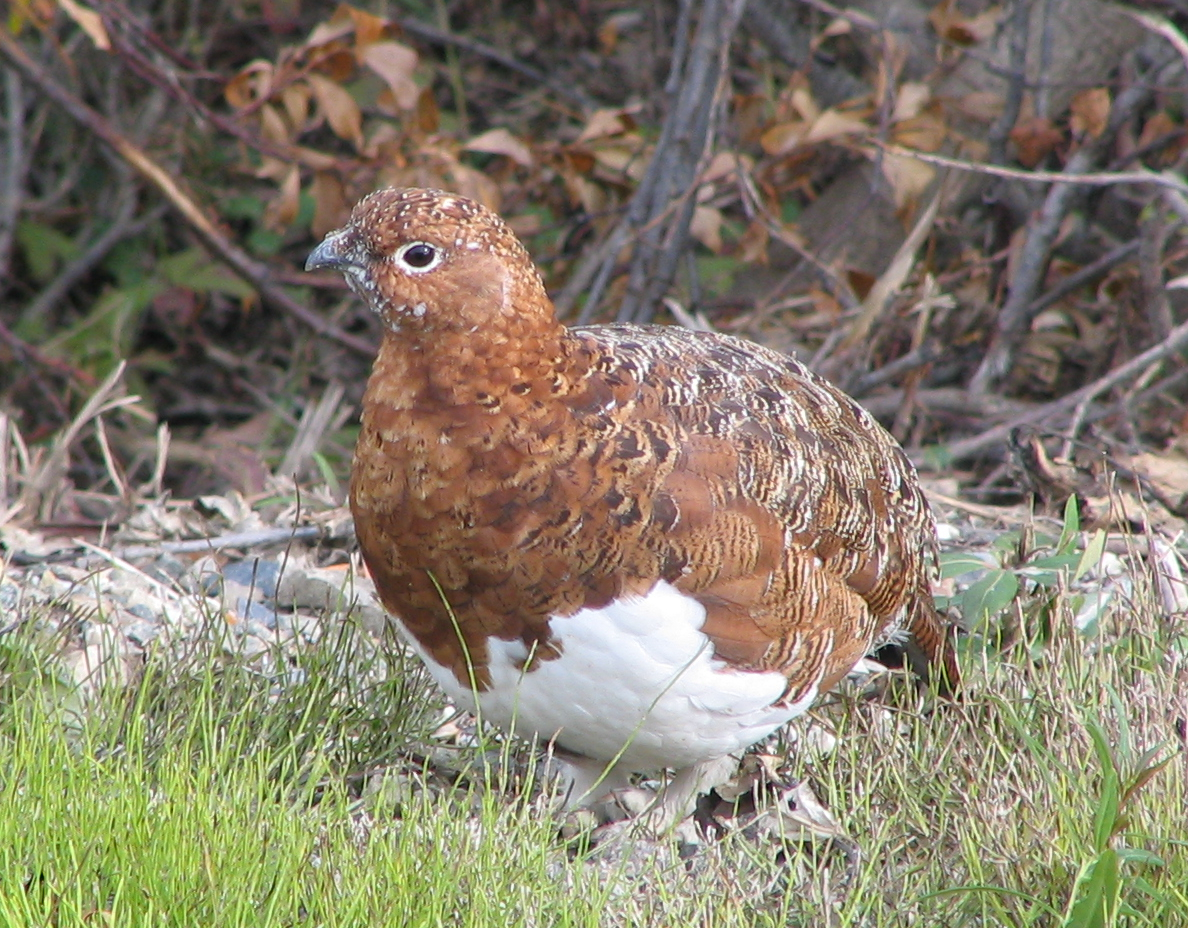
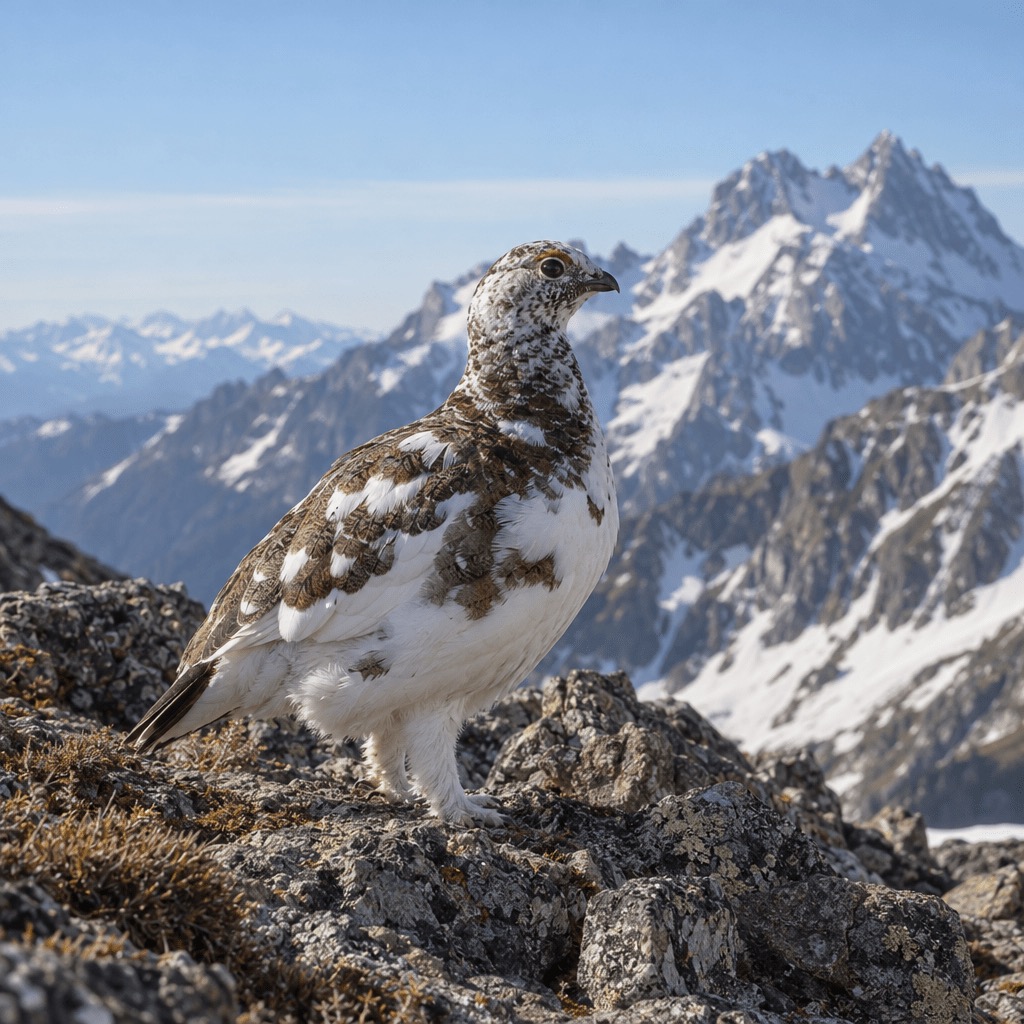
This is the ptarmigan’s whole superpower. In winter it turns almost completely snow white, with a dense coat of feathers that holds heat like a down comforter. Against snow, it simply vanishes. In summer it swaps that out for mottled brown, black and gold that matches the rocks, lichen and low heather where it nests. In between, spring and fall, it wears a patchwork of both, which matches the patchwork of melting snow and bare ground around it.
Among all Rock Ptarmigan adaptations, changing feather colors with the seasons may be the most impressive.
Even in its summer clothes, it keeps white feathers on the belly and wings. And because a moving bird is a spotted bird, the ptarmigan spends most of its life on the ground, walking, sitting very still, and trusting the outfit to do the work. It only bursts into flight when it absolutely has to.
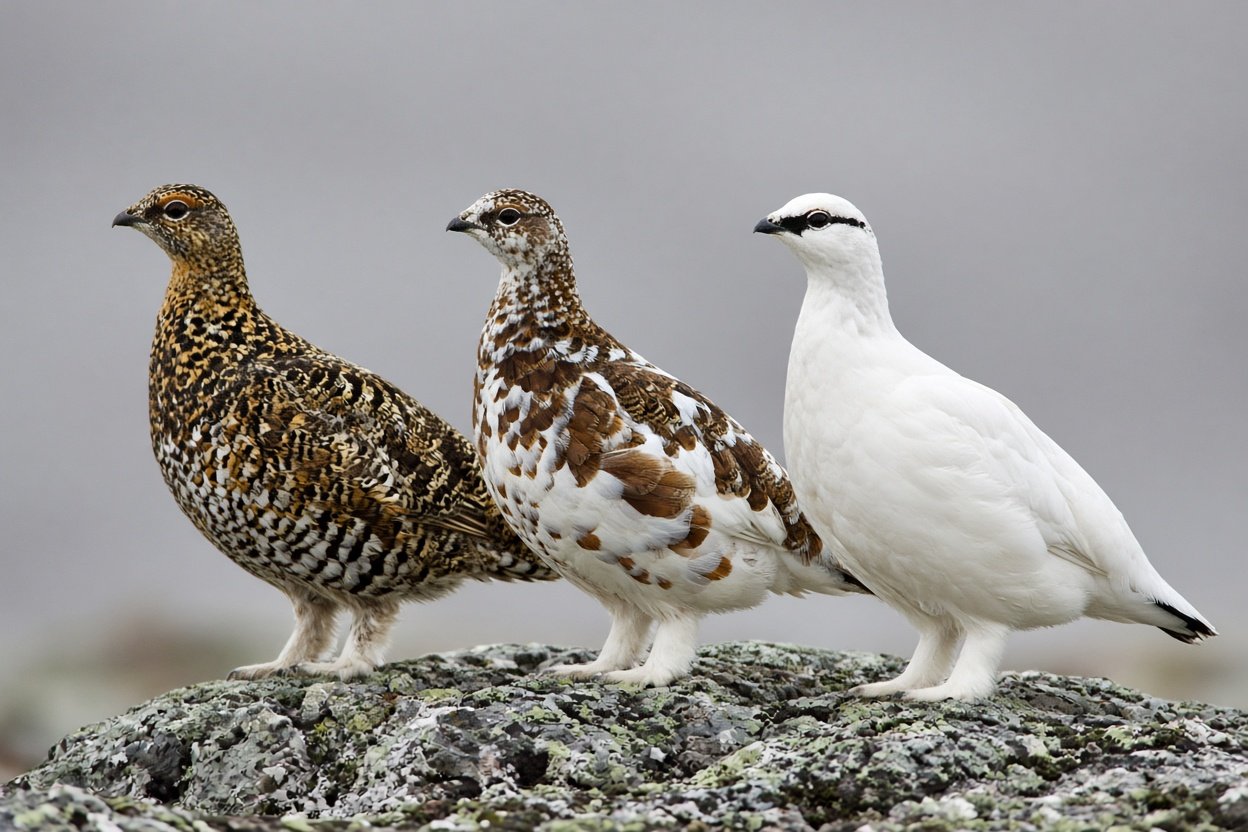
I have birds here at the sanctuary who will not tolerate a new food bowl in a different color. The ptarmigan redoes its entire look a few times a year and never complains once.
According to the Cornell Lab of Ornithology, Rock Ptarmigan adaptations include remarkable seasonal camouflage that helps these birds survive in the Arctic.
Rock Ptarmigan Adaptations: Built-In Snowshoes
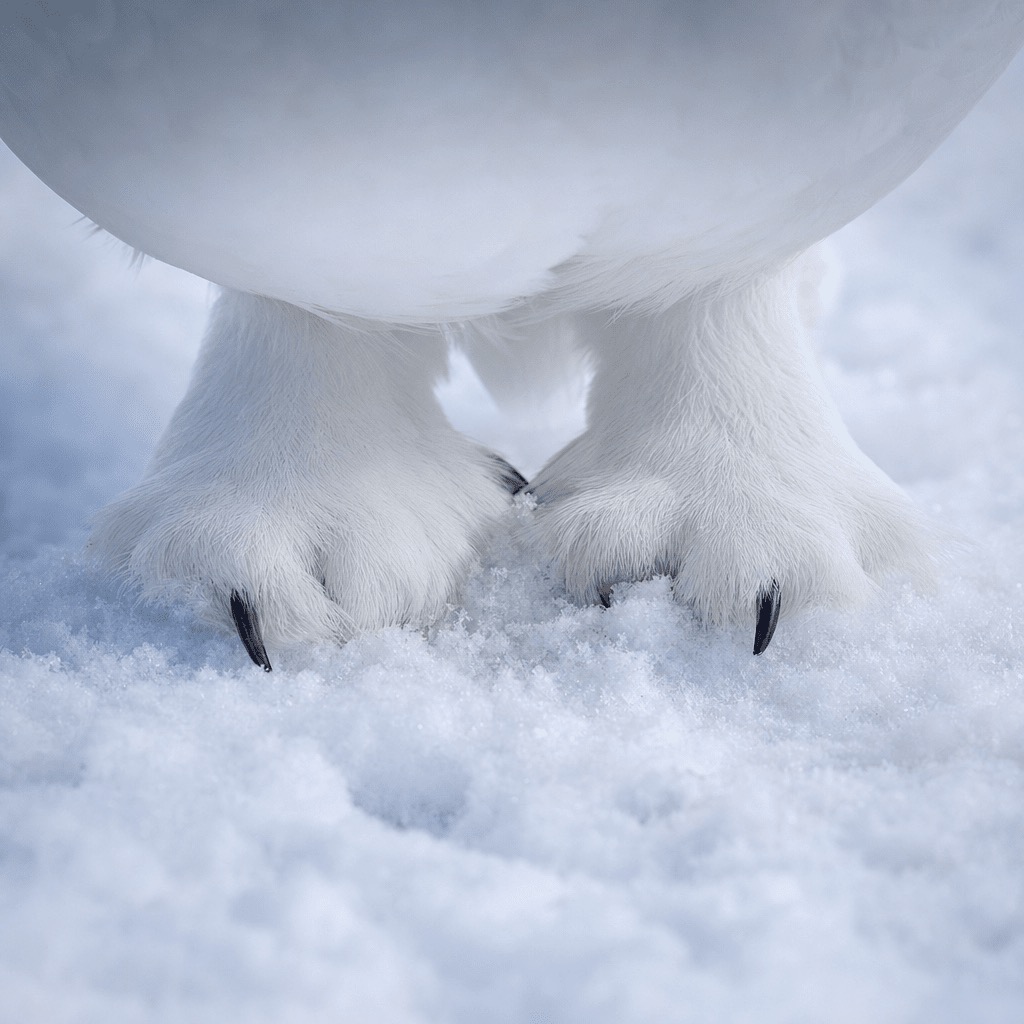
Told you we would get to the feet. Remember, Lagopus means hare foot, and that is exactly what they look like. A ptarmigan’s legs and toes are covered in thick feathers, like a pair of fuzzy slippers. Those feathers keep its feet warm, and they also spread the bird’s weight out so it can walk across soft snow without sinking in. Snowshoes, issued at birth, no assembly required.
Rock Ptarmigan adaptations even extend to their toes, giving these little birds built-in snowshoes.
The National Audubon Society offers an excellent field guide covering the Rock Ptarmigan’s habitat, behavior, and incredible survival abilities.
They also make a pretty good shovel, which brings us to my favorite part.
How Rock Ptarmigan Survive in the Arctic Snow
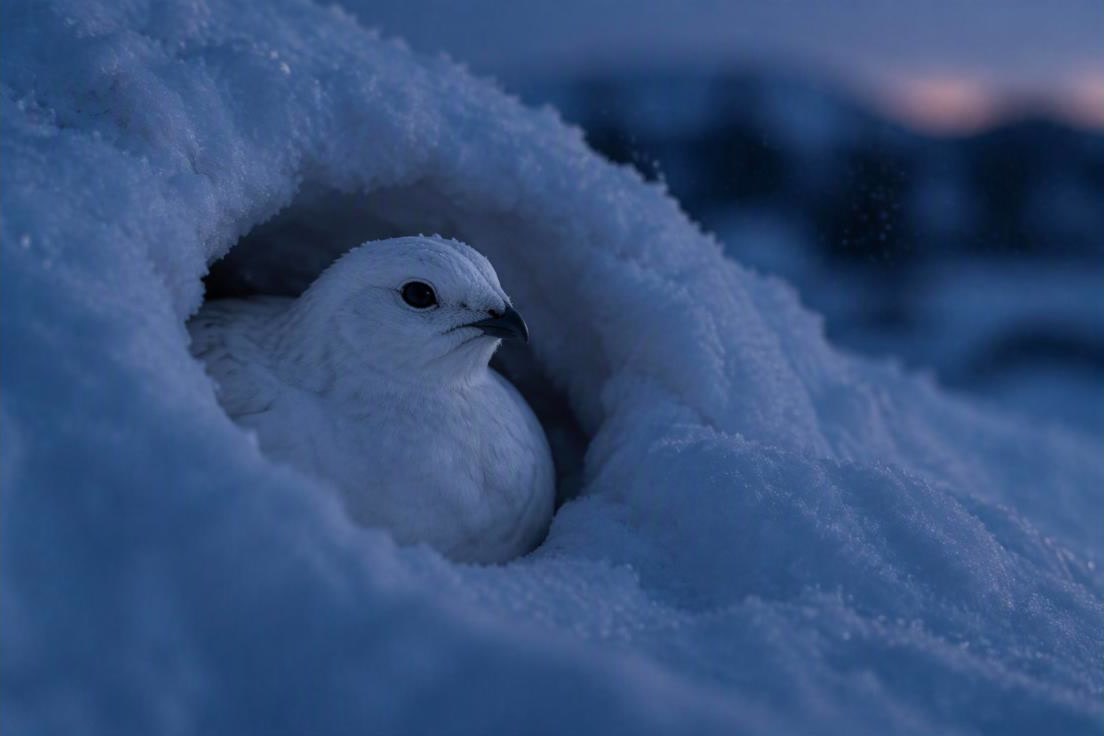
When the wind is howling and the night is long, the ptarmigan does something that sounds backwards. It digs into the snow and sleeps there. Snow is full of trapped air, and trapped air is insulation, so a little tunnel in a snowdrift stays a whole lot warmer than the open tundra above it. Sometimes it will even dive straight down from the air into soft snow and disappear, leaving no tracks for a fox to follow.
One of the most fascinating Rock Ptarmigan adaptations is the ability to shelter beneath the snow during brutal Arctic nights.
Think about that the next time you are standing in your kitchen in January complaining about the thermostat. I know I will.
The Dad Who Rolls in the Dirt on Purpose
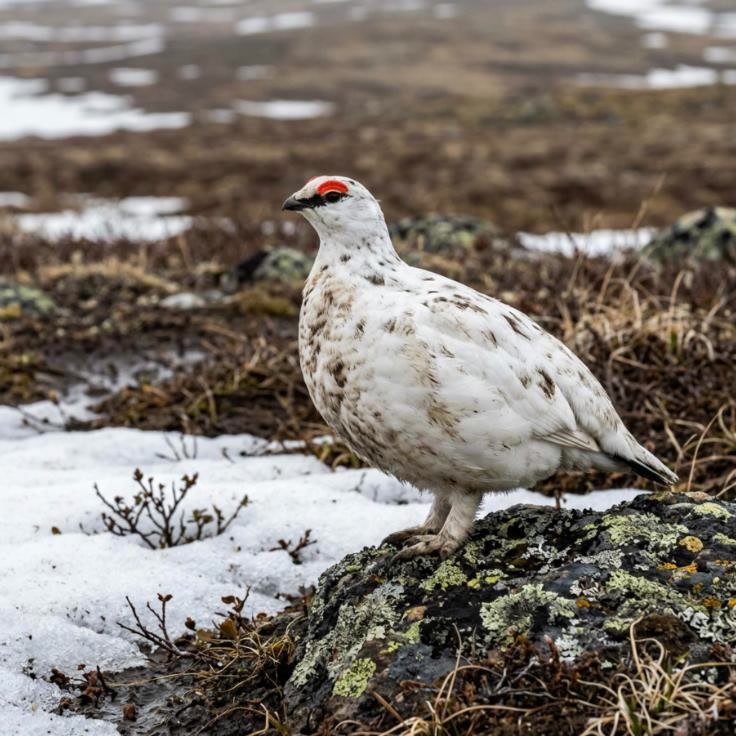
Okay, this one made me laugh out loud. In spring, the male Rock Ptarmigan hangs onto his bright white plumage longer than the hen does. That gleaming white is how he shows off, and a courting male can be seen from hundreds of yards away. Great for romance. Terrible when the snow melts and everything around him turns brown.
Some Rock Ptarmigan adaptations are downright hilarious, including a male deliberately dirtying his bright white feathers.
So once courtship is over, he deliberately dirties himself up. He smudges that white plumage until it looks grimy, which helps hide him from predators until his brown summer feathers come in. Researchers have watched this happen. I have raised a few boys in my day, and I can tell you this is the first time I have ever heard of anybody getting dirty on purpose for a good reason.
Five to Nine Eggs and a Very Brave Mom
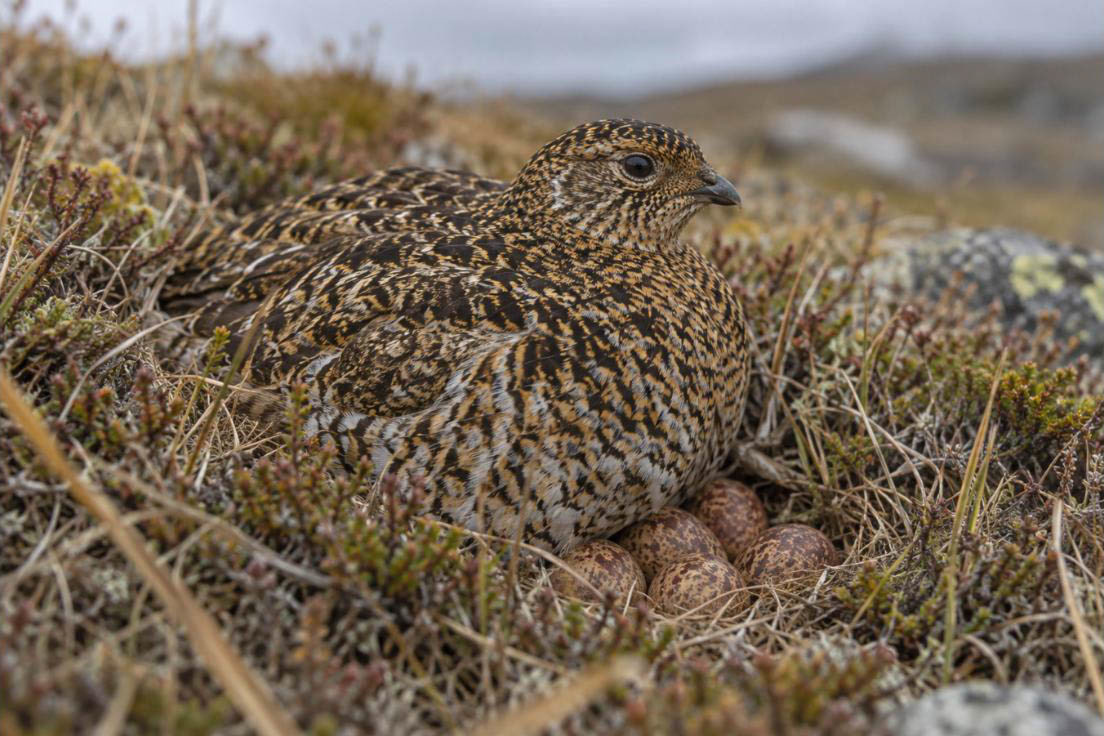
The hen lays a clutch of five to nine mottled, reddish brown eggs in a shallow scrape on the ground, and she does the incubating herself. Her summer camouflage is so good that people have nearly stepped on nesting hens without ever seeing them.
Rock Ptarmigan adaptations aren’t just about surviving winter; their camouflage also helps protect vulnerable nests.
Once the chicks hatch, they are up and walking almost right away, pecking at bugs and plants. When a predator comes close, the parents put on a show. They flutter, fake an injury, drag a wing and make a big racket to pull the danger away from the babies, putting their own lives on the line. In the Willow Ptarmigan, the dad sticks around and helps guard the family, which is unusual for grouse. Rock Ptarmigan dads mostly leave the chick raising to the hen. I am not going to say anything about that. I am just going to let it sit there.
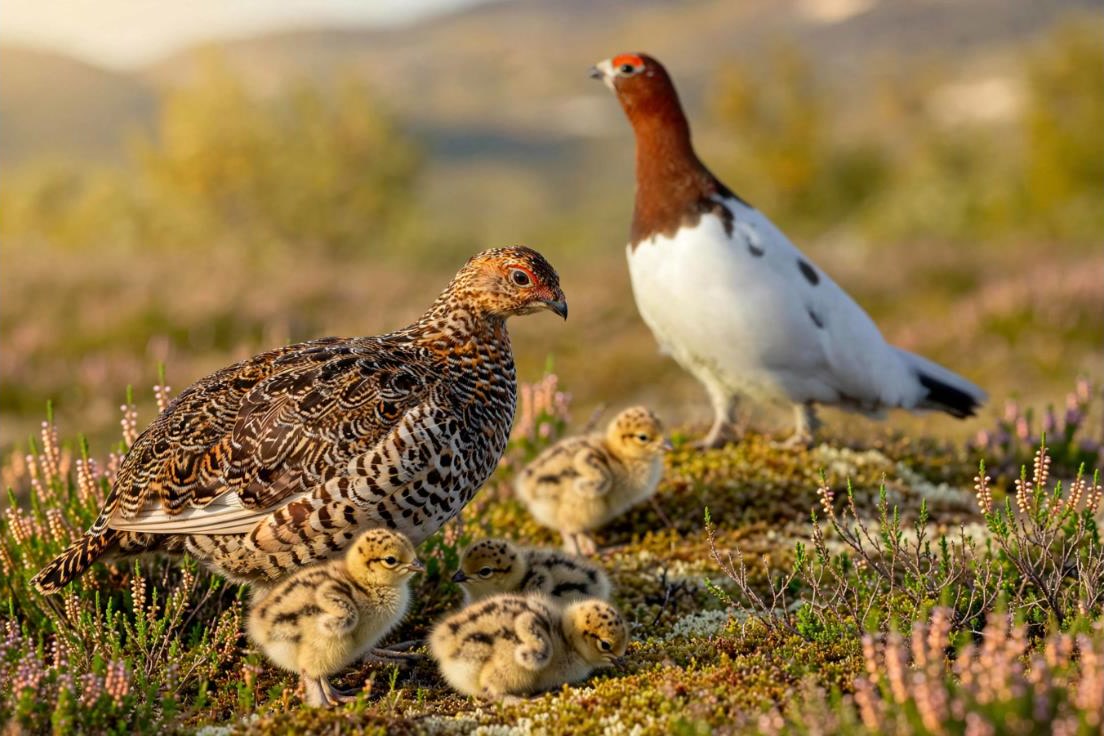
Speaking as somebody who has spent a lot of years putting himself between a scared animal and whatever is after it, I have a lot of respect for a pound and a half of bird that will run straight at trouble to give its kids a head start.
Who Is Hunting the Ptarmigan
Pretty much everybody. Up in the far north, the ptarmigan is one of the few things on the menu all year, so Golden Eagles, Gyrfalcons, Snowy Owls, Arctic Foxes and others all keep an eye out for it. That is the whole reason for the disguises, the stillness and the snow tunnels. This bird lives every day of its life knowing it is somebody’s dinner, and it still gets up and goes about its business.
Without these Rock Ptarmigan adaptations, avoiding hungry Arctic predators would be considerably harder.
Willow for Breakfast, Lunch and Dinner
In summer, ptarmigan eat a little of everything: leaves, flowers, berries, seeds and the occasional bug. Then winter comes, the ground disappears under snow, and the menu gets very short. They switch to the buds, twigs and catkins of dwarf willow, birch and alder poking up through the drifts.
Rock Ptarmigan adaptations also include a flexible diet that changes with the seasons.
It is low in calories and not exactly fine dining, but it is there all winter long. That steady, boring, reliable food is the reason the ptarmigan can stay put in the tundra after almost every other bird has left for someplace warmer. Sometimes the secret to surviving is just being willing to eat the salad nobody else wants.
A Bird a Lot of Places Claim
For a bird most of us will never see, the ptarmigan has a lot of fans. The Willow Ptarmigan is the official state bird of Alaska. The Rock Ptarmigan is the official bird of the Canadian territory of Nunavut. In Scotland it lives up on the high tops of the Cairngorms. And in Japan, where a small population lives high in the Japanese Alps, it is called raicho, which means “thunder bird,” and it is protected as a national treasure.
Doing Fine, For Now
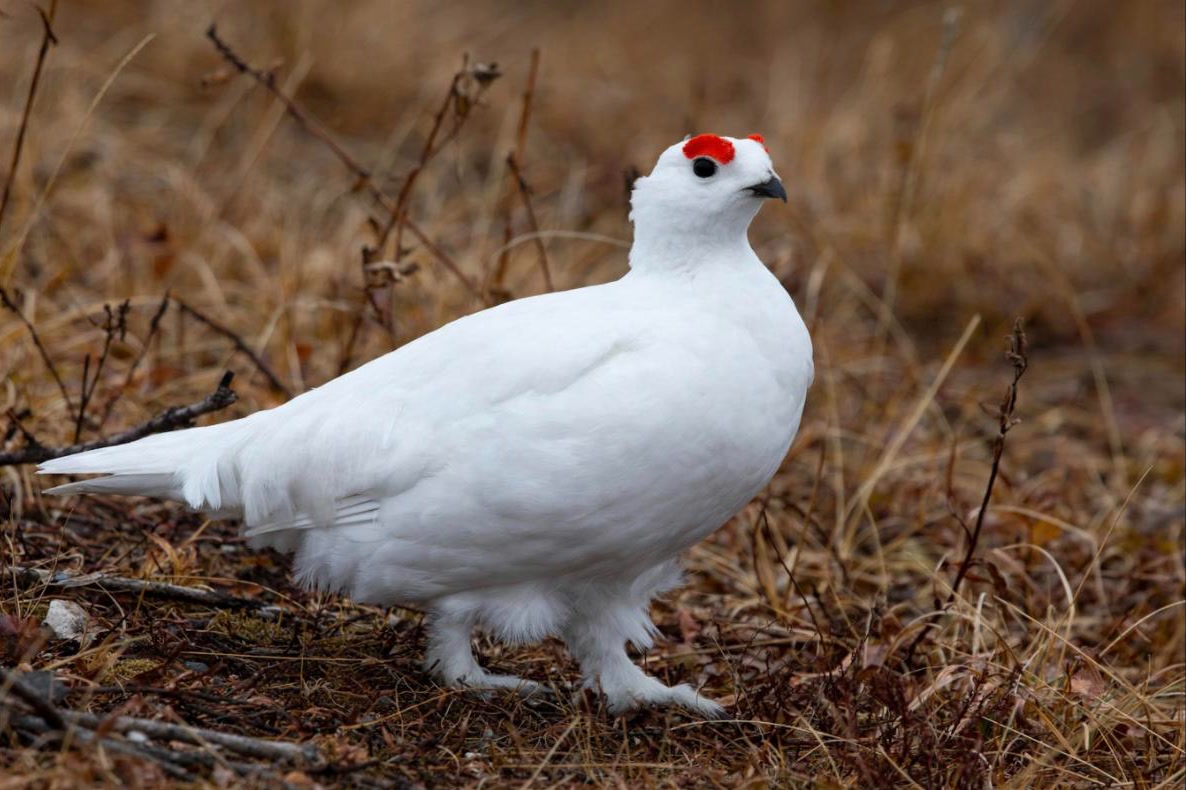
Here is the good news. Across its huge range, the Rock Ptarmigan is still listed as a species of least concern. There are a lot of them, spread over a lot of empty country.
Unfortunately, even extraordinary Rock Ptarmigan adaptations face challenges as Arctic temperatures and snow conditions change.
Here is the part I keep chewing on. Those little mountaintop groups in the Alps, the Pyrenees, Scotland and Japan are living at the warm edge of where a ptarmigan can survive. And a bird whose whole plan depends on being white when the snow comes and brown when it leaves gets into real trouble when the snow shows up late or melts early. A white bird sitting on brown ground is not hiding. It is a billboard. When we talk about wild places changing, this is what that looks like for one chubby little grouse.
What a Parrot Sanctuary Is Doing Talking About Ptarmigan
Fair question. There are no ptarmigan in Louisville, and I would not wish a Kentucky August on one. But I started our Birds of the World series because every bird I learn about makes me a better caretaker for the ones who live here. The ptarmigan reminds me that every animal comes with a plan, built over thousands of years, for exactly the place it belongs. Our job is to understand that plan, respect it, and when we can, keep its home in one piece.
And honestly? Any bird that sleeps in a snowbank and rolls in the dirt on purpose deserves a little fan club. Consider this the first meeting.
The birds in this series live wild. The ones here at the sanctuary live on your kindness.
Rock Ptarmigan adaptations are some of the cleverest survival tricks in the bird world.
More From the Cold Side of the Map
Birds of Eurasia: The Wild, Wacky World of the Rough-legged Buzzard, another Arctic bird with feathered legs, and one who would very much like to meet a ptarmigan.
Somewhere up on the tundra tonight, a little white bird is tucked inside a snowdrift, warm and invisible, waiting for morning. It has been doing that since the ice age. I think it has earned a little admiration from the rest of us.
Stay warm out there.
From all of us at Ruffled Feathers.

Where Hope Takes Flight


