Ruffled Feathers Parrot Sanctuary Inc.
Where Hope Takes Flight


Birds of the World · North America
Arctic Loon
Gavia arctica · also called the Black-throated Loon
Updated 23 August 2026 · Photographs are labelled ID confirmed where the bird pictured is Gavia arctica and Representative where a related loon stands in.
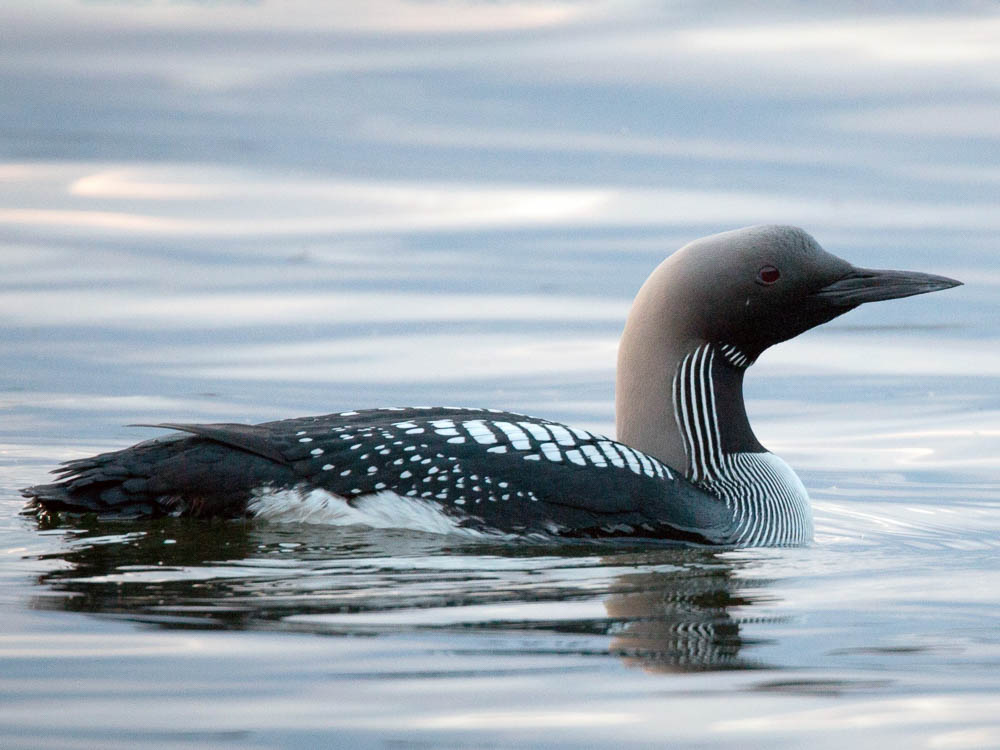
Somewhere on a lake in far western Alaska, an Arctic Loon is about to make a sound that will ruin the silence in the best possible way. This sleek diving bird has striking breeding plumage, serious underwater skills, and one of those haunting calls that can make an otherwise quiet northern lake sound like the opening scene of a mystery movie.
It is much more common across Eurasia than it is here. In North America the Arctic Loon is a rare and very local bird, which makes it one of those species that technically belongs in a Birds of North America series while simultaneously making most North American birdwatchers work ridiculously hard to see one.
So grab the binoculars. We’re going north. Way north.
Field Notes
- Range
- Northern Eurasia; in North America primarily far western AlaskaTaiga and tundra lakes; in Alaska, brackish lakes, bays and lagoons
- Size
- Length 68–72 cmLarger than a Red-throated Loon, smaller than a Common Loon
- Diet
- Mostly fishAquatic invertebrates also appear on the menu
- Voice
- Eerie, far-carrying wails and croaksLoudest and most frequent on the breeding grounds
- Nesting
- On lakeshores, right at the water’s edgeBoth parents raise the chicks
- Status
- Least Concern (IUCN)Least Concern is not the same as no concern
What Is an Arctic Loon?
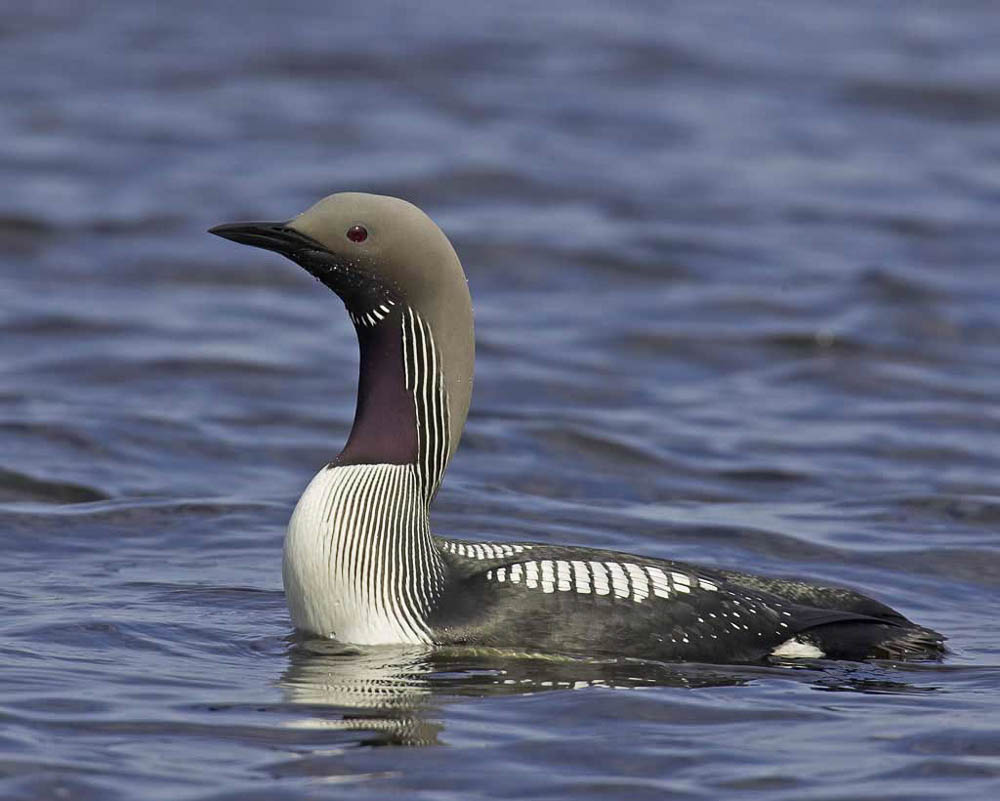
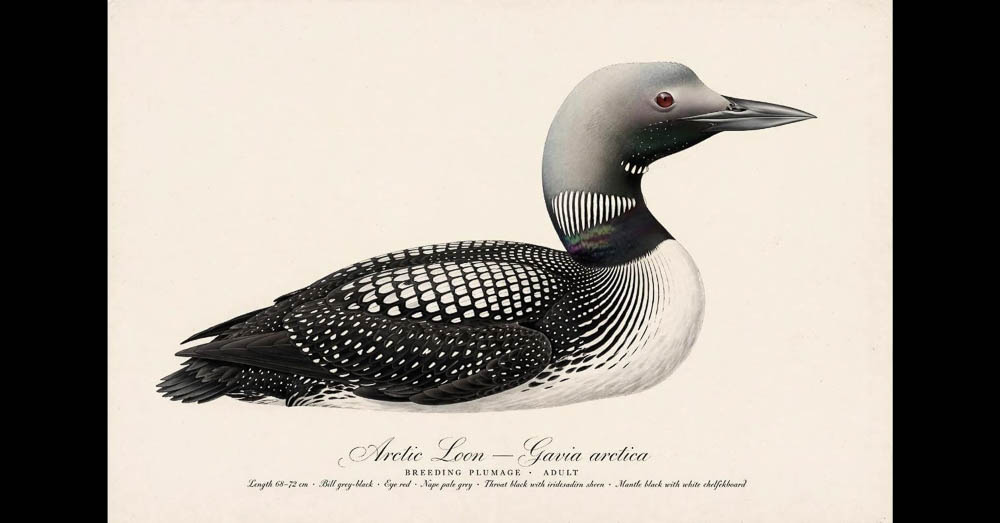
The Arctic Loon is one of only five loon species in the world. During breeding season, adults are pretty hard to criticize in the wardrobe department. They have a soft gray head, a beautifully patterned black-and-white back, bold striping along the neck, and a dark throat that can show a greenish or purplish sheen.
They are medium-sized as loons go — larger than a Red-throated Loon, smaller than a Common Loon. And then there is their closest look-alike, the Pacific Loon. The two look so similar that they were once considered the same species. They were eventually split, leaving birdwatchers everywhere with another opportunity to stare through binoculars and mutter, no, wait… look at the flank.
Arctic Loon Habitat: Life in the Far North
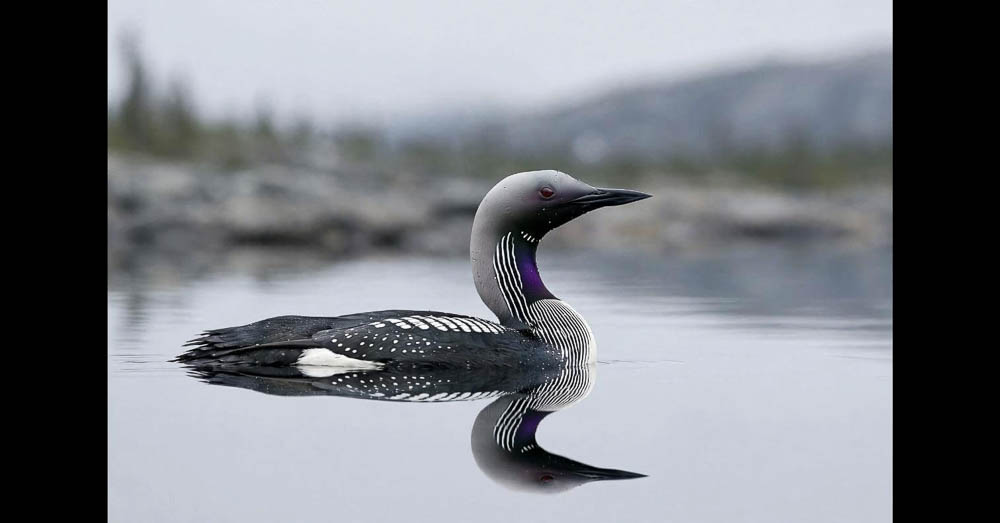
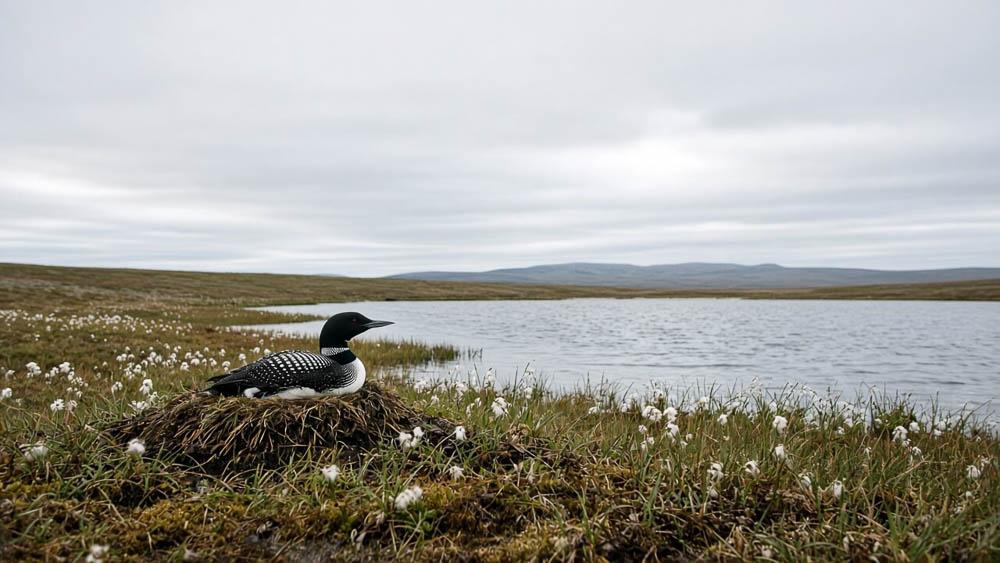
The Black-throated Loon breeds on freshwater lakes across the northern taiga and tundra. Most of its global range lies across Europe and Asia. In North America, things get much more exclusive: Arctic Loons occur primarily in far western Alaska.
And the North American birds do not use quite the same water. Across Eurasia this is a bird of large, deep freshwater lakes. In western Alaska it turns up instead on brackish lakes, tidal bays and lagoons — close enough to the coast that the tidy “freshwater taiga lake” description we use for the rest of the range does not really fit the handful nesting here.
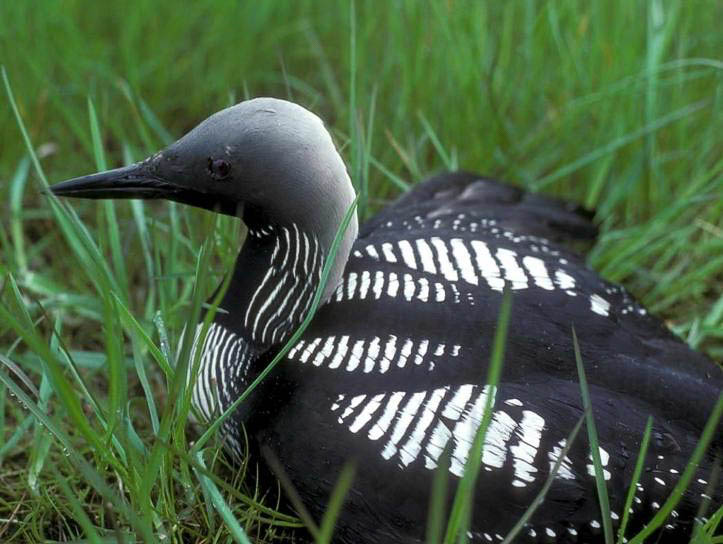
They spend much of their lives around water, and there is a very good reason for that. Loons are built for it. Their legs sit far toward the rear of their bodies. That is fantastic engineering for swimming and diving, but not particularly useful if your goal is to stroll gracefully across the beach.
Basically, Mother Nature built a submarine and then remembered at the last minute that it needed legs.
Arctic Loon Migration: Where Do They Actually Go?
Arctic Loons do migrate, but we should not pretend scientists have every part of their North American movements figured out. The species is considered a short- to medium-distance migrant. Outside North America, Arctic Loons generally move from inland breeding lakes toward coastal waters for the nonbreeding season.
The movements of the relatively small number breeding in Alaska are less well understood. Some may winter in waters around the Aleutian Islands, and Arctic Loons are observed moving through parts of the Bering Sea. So no, we are not giving them a frequent-flyer itinerary from Alaska to Baja anymore.
Correction to an earlier version
An earlier version of this article gave the Arctic Loon a tidy Alaska-to-Baja migration route and claimed its calls carry five miles. Both have been retired. Apparently somebody handed our old Arctic Loon the Common or Pacific Loon’s boarding pass, and we are not slapping an exact mileage on a bird’s voice without evidence to back it up.
The Arctic Loon: A Feathered Submarine
If you want to understand a loon, watch one underwater. Arctic Loons dive from the surface and pursue fish beneath the water using their powerful feet for propulsion. Their streamlined bodies and rear-positioned legs make them remarkably efficient hunters.
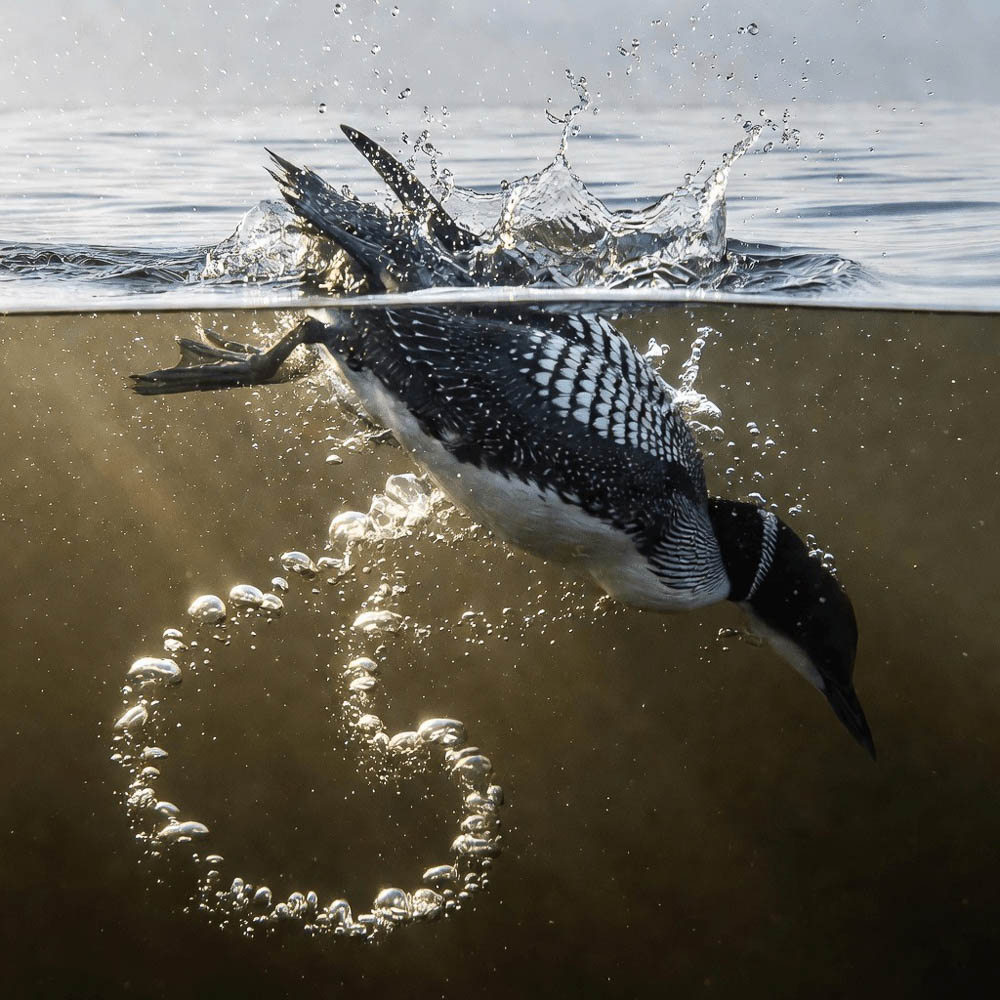
Arctic and Pacific Loons even have their own characteristic diving technique. They extend the neck forward and make a slight leap as they disappear beneath the surface. One second they are there. The next second you are staring at ripples wondering where your bird went.
Why a Loon Needs a Runway
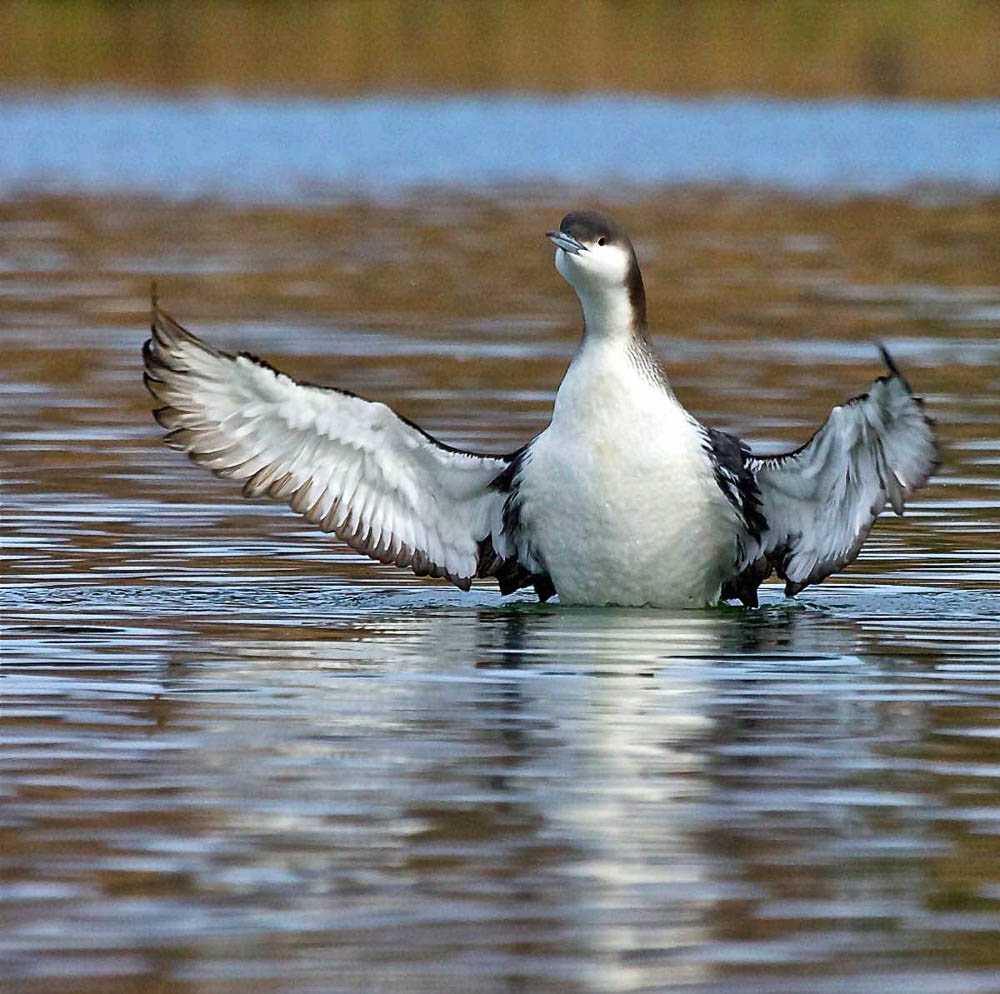
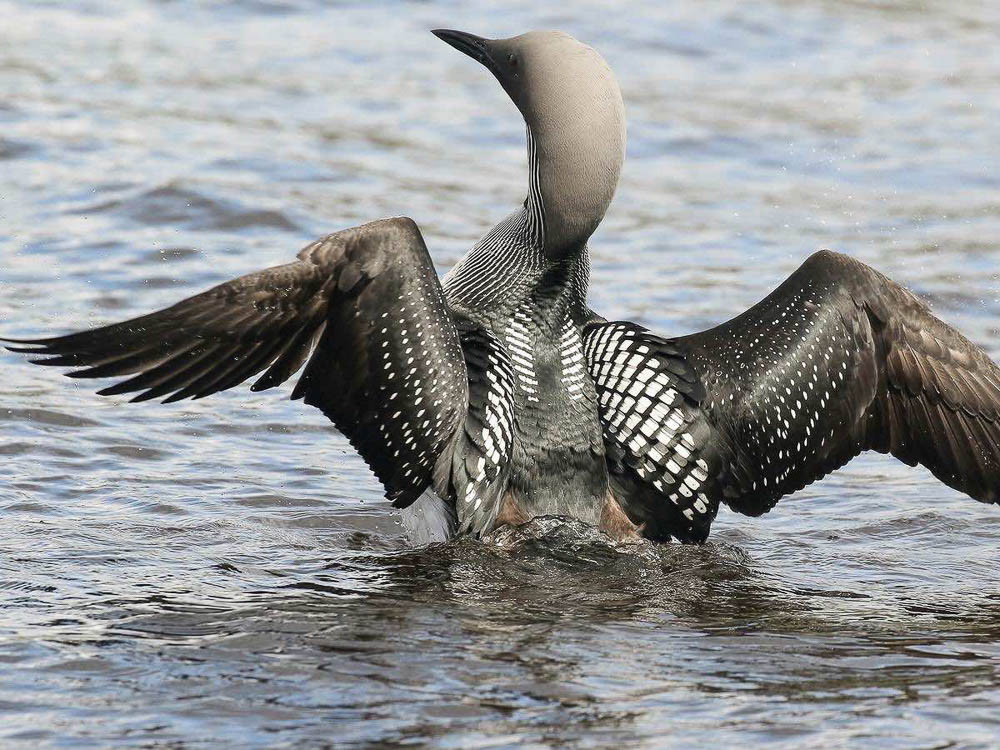
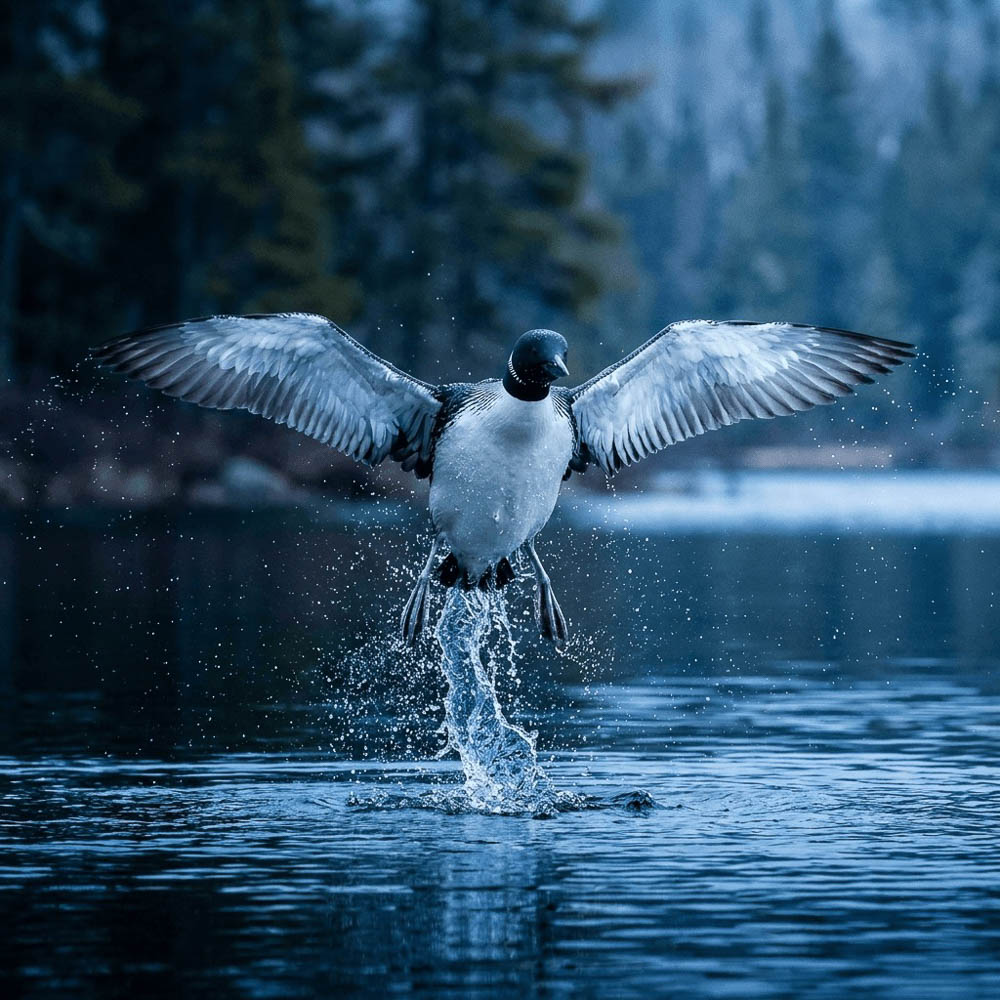
Loons are excellent swimmers and powerful fliers. The awkward bit is getting from one to the other. Unlike a songbird that can spring off a branch and go, many loons need open water to build up speed. They flap while pattering across the surface until they finally become airborne.
Think airplane runway. Except the airplane has feathers, catches fish, and is probably yelling while it takes off.
That dependence on open water is also one reason loons are so poorly suited to life on land — which matters more than it sounds, and we will come back to it.
Black-throated Loon Family Life
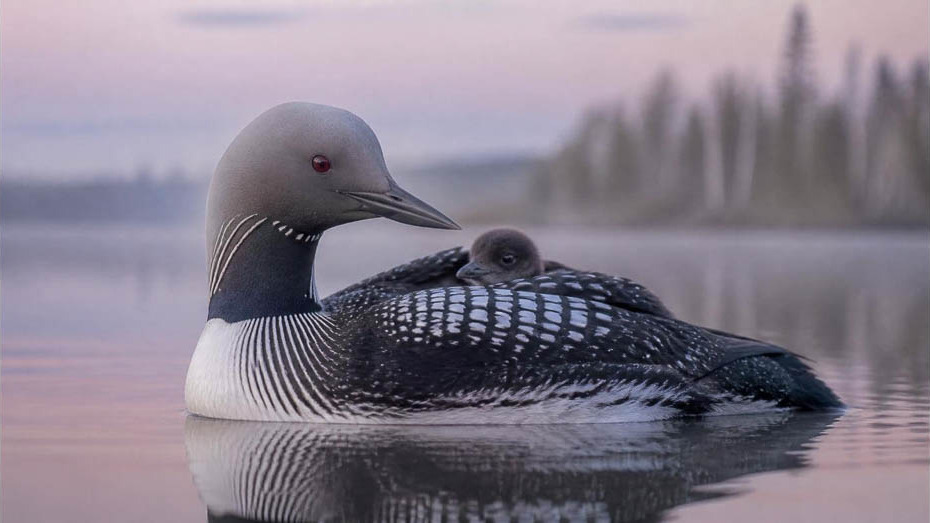
When breeding season arrives, Arctic Loons return to northern lakes — freshwater across most of the range, brackish coastal water in Alaska. Like other loons, they place their nests very close to the water. That makes perfect sense when you are an excellent swimmer equipped with legs that make walking look like an unfortunate design flaw.
The young hatch covered in down and leave the nest very early. Both parents care for the chicks, bringing them food as the youngsters develop the swimming, diving and eventually flying skills they will need. It is an intensive parenting job. No daycare. No babysitter. Just fish, chicks, and the constant possibility that something nearby would also like to eat your children.
Nature is beautiful. Nature is also stressful.
Listen For
A long, rising wail that carries a very long way across open water, plus a range of croaks, barks and growls near the nest. (We are saying wail rather than yodel on purpose — “yodel” is a specific territorial call most associated with Common Loon, and it is not the sound this bird is best known for.) It is the sound people mean when they say a lake feels lonely. Their calls are loudest and most frequent on the breeding grounds, where sound travels over long stretches of water and tundra.
Arctic Loon or Pacific Loon?
Now the fun part. Or the maddening part, depending on how long you have been holding those binoculars. The Arctic Loon and Pacific Loon are extremely similar — in fact they were considered a single species until the 1980s. Arctic Loons tend to be slightly larger and heavier-billed, and in breeding plumage they can show a darker gray nape and stronger white neck striping.
That white flank patch is the mark everyone reaches for first, and it is the one that will let you down. How much white shows depends on posture — a relaxed bird floats high and shows plenty, a bird about to dive compresses its feathers and shows almost none — and a Pacific Loon riding high can show white flanks too. Use it as a starting point, then confirm with the marks that hold still:
- Chinstrap.Arctic Loon shows a thin white line along the top edge of the black throat patch. On Pacific Loon it is extremely hard to detect.
- Nape colour.Arctic Loon is a uniform dark gray behind the head. Pacific Loon is a pale, silvery gray.
- Neck striping.Arctic Loon carries bolder, higher-contrast black-and-white striping on the sides of the neck — visible at surprising distance.
- Shape.Arctic Loon looks longer-necked and flatter-headed, closer to a Common Loon. Pacific Loon looks puffy and round-headed.
Get two or three of those to agree and you have something. Get only the flank patch and you have a hunch. And remember that Pacific Loons are far more widespread in North America — they breed across Arctic and subarctic Alaska and Canada and migrate in impressive numbers along the Pacific Coast. So if you are staring at a loon on the West Coast thinking you have discovered an Arctic Loon, do not buy yourself a celebratory cake quite yet. Check the Pacific Loon first.
Where to Actually Look for One
Saying “far western Alaska” four times is not directions, so here is the practical version.
The reliable North American window is the breeding season on the Seward Peninsula, with Nome as the usual base — it has an airport, rental vehicles and three long gravel roads running out of town past exactly the kind of coastal water this bird wants. Look on brackish lakes, tidal bays and lagoons near the coast rather than the deep inland freshwater lakes you would search in Eurasia. June and early July is the window worth planning around: the birds are on territory, they are in full breeding plumage, and every field mark in the section above is actually visible.
Before you go, set up an eBird rare bird alert for the Nome census area — it will tell you what has been seen and where, which is considerably more current than any article, this one included. And check recent checklists rather than trusting the range map alone. There are not many of these birds, and they do not distribute themselves evenly for anyone’s convenience.
One more time, because it is the mistake almost everyone makes: if you are not in western Alaska, start from the assumption that your bird is a Pacific Loon. Pacific Loons breed across Arctic and subarctic Alaska and Canada and stream down the Pacific Coast in enormous numbers. Arctic Loon records away from western Alaska are genuinely rare and are reviewed carefully by state records committees. That is not a reason not to look. It is a reason to photograph the flanks, the nape and the throat before you tell anyone.
Are Arctic Loons Endangered?
Globally, the Arctic Loon is currently considered a species of relatively low conservation concern and is classified as Least Concern. That does not mean loons are immune to the problems affecting aquatic birds. Healthy lakes, wetlands and coastal ecosystems matter enormously to species that depend on clean water and abundant aquatic prey.
It is also worth reading the label closely. The species qualifies as Least Concern because the global population is very large and spread over an enormous range — but BirdLife’s assessment records the overall population trend as decreasing. Least Concern describes the size of the cushion, not the direction of travel.
Pollution, fishing activity, shoreline disturbance and habitat change can all create problems for waterbirds. Least Concern should never mean no concern. It means we still have an opportunity to keep common wildlife common.
RFPS Educational Note — When a Loon Is on Land
We do not expect Arctic Loons to start lining up outside Ruffled Feathers Parrot Sanctuary anytime soon. If one does, we are going to have several questions. But there is a lesson here that applies to loons in general.
A loon found stranded on land may need help. Their bodies are specialized for swimming, diving and taking flight from water. Rear-positioned legs make movement on land extremely difficult, and many loons need a substantial stretch of open water to become airborne. That also means you should not simply toss a grounded loon into the nearest little pond and assume you have solved the problem. Species, injuries, weather, the size of the water body and the reason the bird became grounded all matter.
When wildlife gets into trouble, the safest approach is usually to contact an experienced wildlife rehabilitator or rescue organization before trying to fix the situation yourself. Sometimes helping wildlife means picking it up. Sometimes helping means leaving it alone. Knowing the difference is one of the most important things we can teach.
Quick Facts
- Scientific nameGavia arctica
- Also calledBlack-throated Loon
- FamilyGaviidae
- N. American rangePrimarily far western Alaska
- Real estateNorthern lakes — brackish and coastal in Alaska
- Where to lookSeward Peninsula near Nome, June–early July
- Favorite foodFish, plus other aquatic prey
- Special talentPowerful underwater pursuit diving
- Walking abilityLet’s be charitable and call it limited
- Closest look-alikePacific Loon
- Conservation statusLeast Concern
More From the Lake
Your Turn
Have you ever seen an Arctic Loon, or heard a loon calling across a lake? Which member of the loon family is your favorite — Arctic, Pacific, Common, Red-throated or Yellow-billed?
And for the serious birders: have you ever confidently identified a loon, only to look at your pictures later and realize the bird had other plans? We have all been there. That is half the fun of birdwatching — that, and spending several thousand dollars on camera equipment to photograph a bird that immediately turns around and shows you its butt.
Learn More
- Cornell Lab of Ornithology – All About BirdsPhotographs, identification notes, range maps and sound recordings.
- All About Birds – Arctic Loon life historyHabitat, food and nesting, including the brackish-water detail for the Alaskan birds.
- eBird – Arctic Loon species pageLive sightings map, recent checklists and the place to set up a rare bird alert.
- BirdLife DataZone – Gavia arctica factsheetThe IUCN Red List assessment itself: category, population estimate and trend.
- ABA – Notes on Identifying Arctic and Pacific Loons in Alternate Plumage (PDF)The source for the chinstrap, nape and neck-striping marks used above.
- National Audubon Society Field GuideIdentification, behavior, habitat and migration.
We will keep doing our part here at Ruffled Feathers Parrot Sanctuary by adding the questionable jokes. Because apparently that is our contribution to ornithology.
Stay With Us
Free field guides keep coming, and the birds here keep eating. You can help with either one.
Birds of the World — a species series from Ruffled Feathers Parrot Sanctuary Inc.
Photographs are labeled ID confirmed where the bird pictured is Gavia arctica, and Representative where a related loon stands in for atmosphere. We would rather tell you than let you assume.

Where Hope Takes Flight


